

 Phoenix 24
Decoupling is not rupture, it is rerouting.
Washington, February 2026.
The most revealing number in the latest US trade data is not a deficit headline or a political slogan. It is the value of goods the United States imported from China in 2025: roughly 308 billion dollars, a level described as the lowest in about 15 years, and a share that has fallen to around 9 percent of total US goods imports. Less than a decade ago, Chinese products were closer to one in five foreign-purchased items in the American market. The trend does not read like a cyclical dip. It reads like a structural reallocation of where “China content” enters the US economy.
This is why the drop matters even for observers who no longer react to trade-war theatrics. For thirty years, China’s role in US consumption was not simply volume, it was architecture: an industrial platform that anchored electronics, household goods, machinery, and intermediate inputs at scale. When that platform loses share at this speed, the system does not quietly shrink. It reconfigures, shifting costs, timelines, and geopolitical exposure across new corridors. The question is no longer whether the US buys Chinese-made goods. It is how much of that production is now arriving through different flags, routes, and invoices.
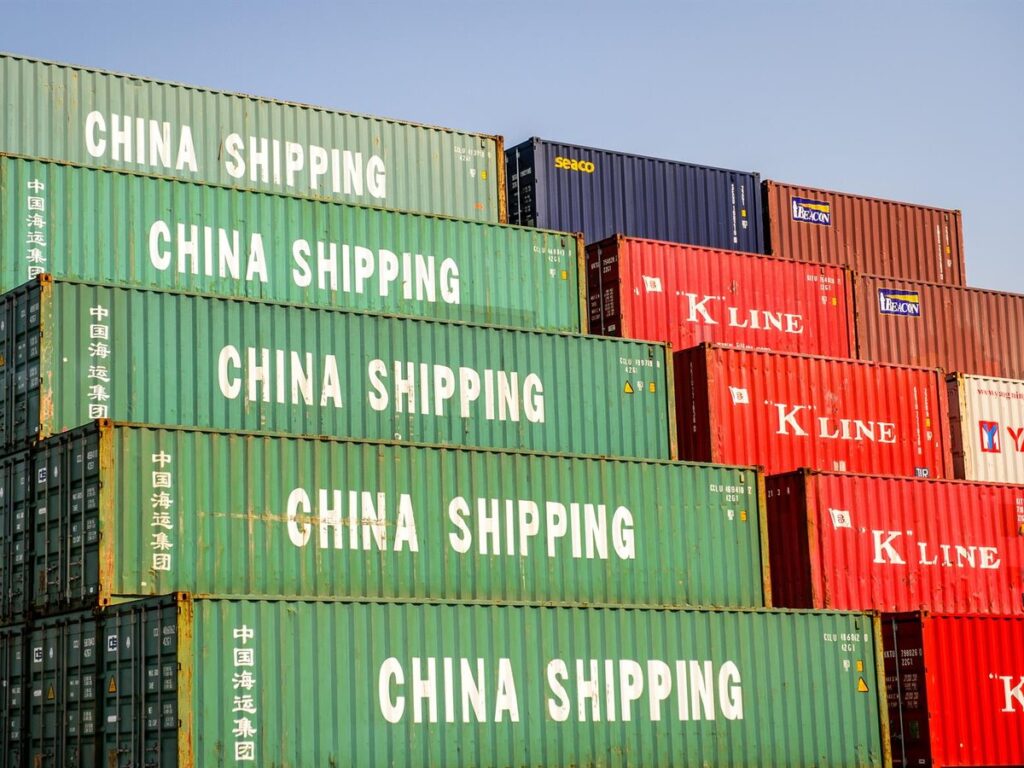
US government figures show the direction with unusual clarity. The annual goods deficit with China has narrowed markedly, and the reduction is driven largely by lower imports rather than a surge in US exports. That pattern is important because it signals constraint, not conquest: it reflects deliberate friction introduced into the import channel, plus corporate re-engineering of supply chains to reduce direct China dependence. It also exposes the quiet tradeoff. When direct imports fall, firms often pay more elsewhere for redundancy, compliance, and political insurance.
From Beijing’s side, the story does not look like industrial collapse, it looks like market substitution. Chinese customs data has pointed to weaker exports to the United States alongside stronger performance in other destinations, especially parts of Southeast Asia, Africa, and continued shipments to Europe. That is the operational meaning of the current phase: not decoupling as separation, but decoupling as diversification. Chinese factories keep producing, but the destination mix changes, and the US becomes a less reliable end market. When that happens, Beijing’s incentive shifts toward strengthening alternative trade ecosystems rather than negotiating a return to the old dependency.
Europe’s analytics reinforce the same structural reading from a third angle. European Central Bank work on trade diversion has argued that Chinese export performance can remain strong even when a specific destination weakens, because supply chains can re-route through new intermediary economies and because demand shifts across regions do not occur in sync. Europe is also learning that trade redirection does not remove the underlying competition. It redistributes it, often intensifying pressure in sectors where European industry is most exposed, from clean-tech inputs to certain categories of machinery. In effect, the US-China reconfiguration becomes a global diffusion problem, not a bilateral dispute.
The most immediate winners of this rerouting are visible in the US trade map. As direct trade with China contracts, deficits with other Asian exporters have surged, reflecting a partial relocation of final assembly and a rapid expansion of alternative sourcing. Taiwan’s role has grown sharply, driven by technology components tied to the AI investment cycle. Vietnam’s footprint has expanded as well, consistent with a model where Chinese firms and supply networks shift portions of production outward while keeping upstream capability anchored in China. This is the new geometry: China loses share at the border, but retains influence through upstream control, financing, and industrial depth.
Mexico sits in a different position, closer to the core of North American industrial integration. As US policy adds friction to trans-Pacific flows, nearshoring becomes less a buzzword and more a constraint response, especially in autos, electronics assembly, and selected manufacturing inputs. Yet nearshoring is not a clean victory. It concentrates strategic exposure in North America, and it makes tariff policy, compliance rules, and political volatility inside the US system more consequential for corporate planning. A world that is less dependent on China can still be highly dependent on Washington’s rule-making tempo.
Behind the numbers, a power logic is hardening. Tariffs and industrial policy are no longer only economic instruments. They are signaling tools used to shape corporate behavior and to broadcast resolve. Institutions that track tariff incidence have warned that the effective US tariff burden has moved toward levels not seen in many decades, and that such shifts can reprice entire categories of trade even when consumer inflation appears muted. The point is not that tariffs instantly kill demand. The point is that tariffs change where firms place factories, how they structure contracts, and which jurisdictions become risk hubs.
This also explains why the fall in Chinese imports should not be read as a straightforward indicator of US industrial revival. Reduced imports can reflect substitution, yes, but it can also reflect higher costs absorbed through longer supply chains, duplication, and compliance overhead. The strategic benefit is resilience, the ability to withstand shocks and political coercion. The strategic cost is efficiency, the loss of the old model where the cheapest producer could be treated as politically neutral. The system is making a deliberate choice to pay for redundancy, and that choice is becoming permanent.
The deeper pattern is that globalization is not ending. It is being rewired into blocs, buffers, and intermediaries. China’s share of US imports can hit a multi-decade low while Chinese industrial capacity remains globally central, simply expressed through different routes and partnerships. The United States can reduce direct dependence while discovering that the price of strategic autonomy is a more complex, less transparent supply chain landscape. In this environment, the key metric is no longer volume alone. It is traceability: who truly controls the upstream inputs, the financing, the logistics chokepoints, and the standards that define what “compliant” means.
By that measure, the 15-year low is less a victory banner than a diagnostic. It signals that the old trade architecture has been intentionally weakened, but it does not guarantee that the strategic exposure has disappeared. It has moved, it has multiplied, and it now hides in the seams between jurisdictions. That is the new reality of trade power in 2026: the border is only the visible layer of a much deeper system.
Más allá de la noticia, el patrón. / Beyond the news, the pattern.