

 Phoenix 24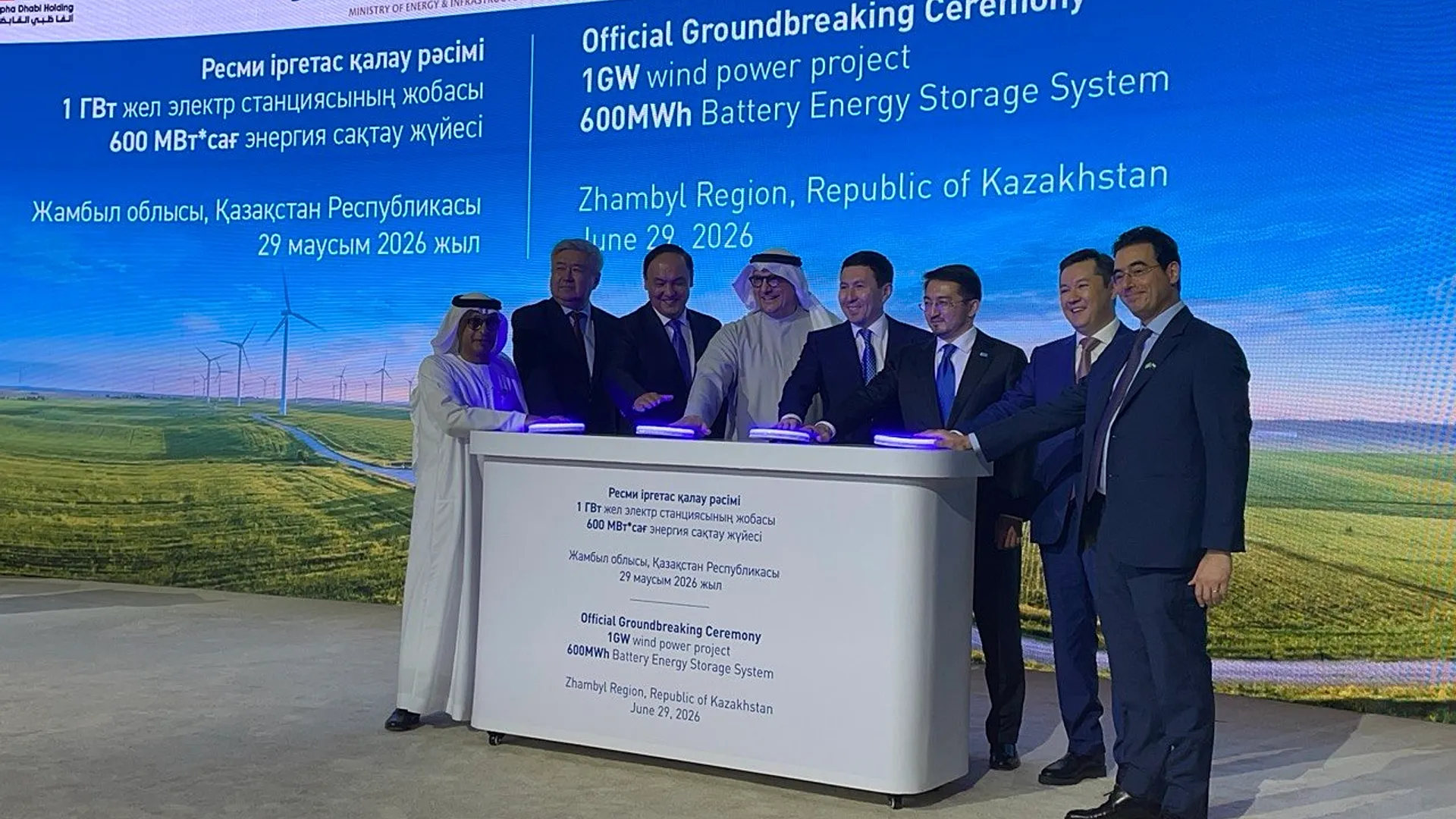
A €1.2 billion investment strengthens Central Asia’s energy transition
Astana, Kazakhstan | June 2026
Kazakhstan and the United Arab Emirates have launched a major wind power project valued at approximately 1.2 billion euros, marking one of the most significant renewable energy investments in Central Asia. The initiative reflects Kazakhstan’s effort to diversify its energy matrix, reduce dependence on fossil fuels and attract foreign capital into strategic infrastructure. For the UAE, the project strengthens its growing role as an international investor in clean energy beyond the Gulf region. Together, both countries are presenting the wind farm as a symbol of economic cooperation, energy modernization and long-term sustainability.
The project is expected to expand Kazakhstan’s renewable generation capacity at a time when the country continues balancing traditional energy production with climate commitments. Kazakhstan remains rich in oil, gas, coal and uranium, but it has also recognized the need to develop cleaner sources of electricity to support future growth. Wind energy is particularly relevant because several regions of the country have strong natural conditions for large-scale generation. By investing in this sector, Kazakhstan seeks to reduce emissions while strengthening energy security and industrial competitiveness.
The partnership with the UAE also carries geopolitical and financial significance. Emirati companies have increasingly invested in renewable energy projects across Asia, Africa and Europe, using energy diplomacy as part of a broader economic diversification strategy. For Kazakhstan, cooperation with Gulf investors offers access to capital, technology and project management experience. The agreement therefore goes beyond a single wind farm and reflects a wider pattern of investment ties between Central Asia and the Middle East.
Large-scale renewable projects can also generate local economic benefits. Construction and operation of the wind farm may create jobs, require new technical training and support the development of supply chains connected to energy infrastructure. If managed effectively, the project could help local communities benefit from the transition while strengthening Kazakhstan’s domestic expertise in clean technology. The long-term value will depend not only on installed capacity, but also on how the investment is integrated into the national grid and regional development plans.
The wind farm also arrives at a moment when global energy markets are being reshaped by climate policy, geopolitical tension and demand for more resilient infrastructure. Countries with strong fossil fuel traditions are increasingly seeking to maintain energy relevance by investing in renewables rather than resisting the transition. Kazakhstan’s decision to support a major wind project indicates that energy diversification is becoming a strategic necessity. It also positions the country as a potential renewable energy hub in Central Asia.
For the UAE, the project reinforces its transformation from a traditional hydrocarbon economy into a global energy investor with a broader portfolio. Emirati participation in renewable infrastructure abroad allows the country to project influence, support climate diplomacy and secure economic opportunities in emerging markets. This approach is consistent with the UAE’s broader effort to remain central in global energy conversations even as the world moves toward lower-carbon systems. Investments like this help connect financial ambition with environmental positioning.
The success of the project will depend on several technical and regulatory factors. Wind farms require stable grid connections, predictable regulation, financing certainty and maintenance capacity to operate efficiently over time. Kazakhstan will also need to ensure that renewable energy expansion is matched by transmission infrastructure capable of carrying electricity from generation sites to demand centers. Without that planning, even large investments can face delays or underperformance.
The Kazakhstan-UAE wind project demonstrates how the energy transition is increasingly driven by international partnerships. Clean energy development now depends on capital flows, technology transfer, infrastructure planning and diplomatic alignment between countries with different strengths. Kazakhstan brings territory, wind resources and strategic location, while the UAE contributes investment capacity and experience in large-scale energy projects. The result is a partnership that could influence future renewable initiatives across the region.
As construction moves forward, the project will be closely watched by energy analysts, investors and governments interested in Central Asia’s renewable potential. The 1.2 billion-euro commitment signals confidence in Kazakhstan’s ability to host major clean-energy infrastructure and in the UAE’s capacity to expand its global investment footprint. More broadly, the wind farm represents a practical example of how energy-producing nations are adapting to a world where sustainability and competitiveness increasingly move together.
Phoenix24 News | Information with responsibility.