

 Phoenix 24

The continuation of strong agricultural purchases underscores the fragile but tangible progress in bilateral economic engagement, even as broader tensions persist.
Beijing, China.
China has maintained a robust pace of soybean imports from the United States in the final months of 2025, reflecting a degree of continuity in agricultural trade against a backdrop of broader economic and geopolitical tension between the two largest global economies. The sustained flow of U.S. soybeans into Chinese markets signals both sides’ interest in stabilising key commercial linkages established during earlier phases of negotiation and suggests that certain sectors of the economic relationship can operate with some resilience despite unresolved diplomatic issues.
Soybeans have long occupied a central role in U.S. agricultural exports to China, driven by the latter’s vast demand for animal feed and edible oils. The sector’s importance to U.S. farm states, logistical networks and commodity markets makes its performance an indicator of broader trade dynamics. In 2025, the continuation of imports at levels comparable to those seen during the temporary truce negotiated in prior years suggests that logistical pipelines and contractual obligations have remained intact, even as other elements of the bilateral relationship have fluctuated.
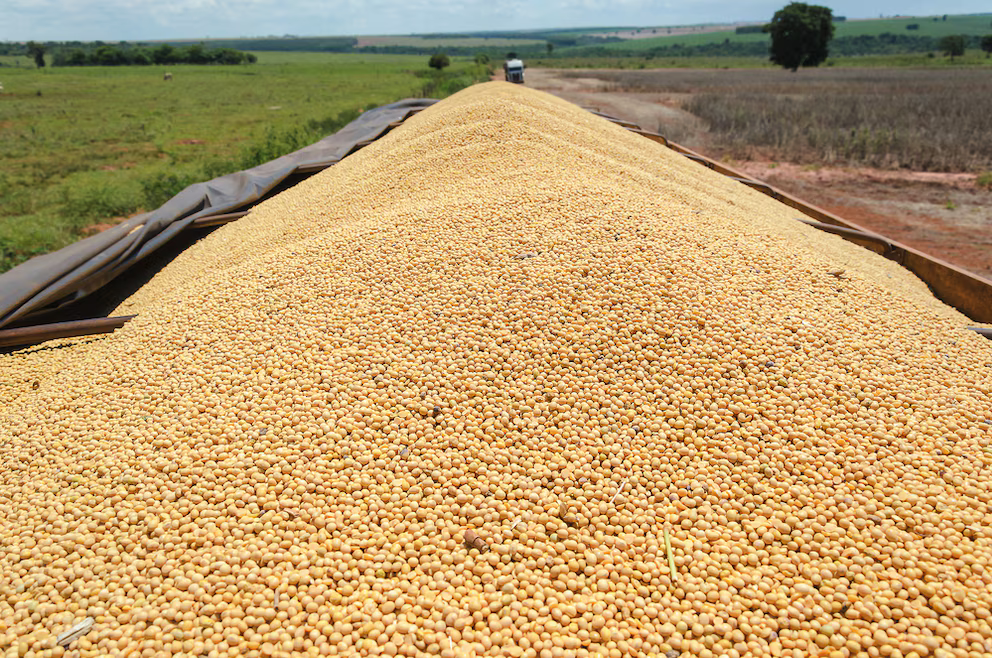
Chinese buyers have sustained purchases under long-term contracts and forward agreements, often coordinated through state-linked trading companies and major importers. These transactions have provided a measure of predictability for U.S. producers and exporters, who have had to navigate shifting tariff regimes, regulatory uncertainty and fluctuating foreign exchange conditions. For China, securing reliable supplies of soybeans helps temper domestic price volatility in feed inputs, which in turn affects broader food price stability and inflationary pressures on agricultural products.
Market analysts observe that this pattern of sustained purchases aligns with China’s broader food security strategy, which prioritises diversified sources of essential commodities. The agricultural sector’s relative insulation from high-level political disputes has enabled specific trade flows to persist in ways that more politically sensitive industries have not. While tariffs and trade barriers remain in place for other categories of goods, soybeans and certain agricultural commodities have continued under exemptions, phased reductions or negotiated allocations that facilitate continued commerce.
Despite these positive flows, the broader economic relationship remains complicated. Trade in high-technology goods, investment screening and strategic supply chain vulnerabilities continue to be points of contention in China–United States economic dialogue. Agricultural trade alone does not resolve these structural disputes, but it does create an avenue of cooperation that can be leveraged to build confidence and maintain channels of communication.
The sustained pace of U.S. soybean deliveries, however, has broader implications beyond bilateral trade statistics. Commodities markets respond to expectations about demand and supply, and the visibility of Chinese purchases has influenced futures pricing, logistical planning and inventory strategies for global agricultural traders. As a significant buyer on the world stage, China’s commitments inform how other importers and exporters adjust their own contracts, storage strategies and hedge positions in response to relative demand.
For U.S. agricultural producers, the stability of Chinese demand provides certainty in revenue forecasting and investment decisions. Farms, co-operatives and port operators in key soybean producing states depend on export volumes for planning crop rotations, equipment purchases and labour allocation. The persistence of Chinese buying patterns, even amid broader dispute, has reinforced the importance of international market diversification for U.S. agriculture.
Nevertheless, the continuation of trade is not immune to broader geopolitical shifts. Policy pronouncements, tariff adjustments or regulatory changes can alter purchasing behaviour, supply chain configurations or currency flows. Both governments have expressed cautious optimism about agricultural trade, but also maintain that unresolved issues in other sectors could spill over or complicate future negotiations.
The maintenance of soybean purchases thus reflects a dual reality: agricultural trade can create islands of stability within a contested economic relationship, yet it does not by itself resolve the deeper structural frictions between major economic powers. As 2026 unfolds, how this pattern evolves will be closely watched by policymakers, market participants and analysts who view agricultural commerce as both an economic indicator and a barometer of broader diplomatic engagement.
Detrás de cada dato, hay una intención. Detrás de cada silencio, una estructura.
Behind every data point, there is an intention. Behind every silence, a structure.