

 Phoenix 24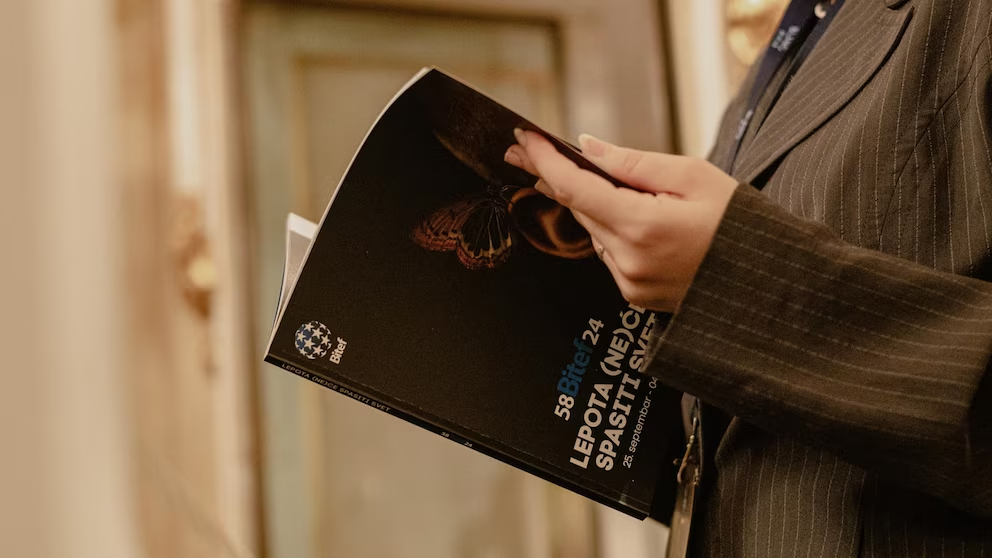
Belgrade’s marquee theatre festival has transformed into a battleground over artistic freedom and institutional control.
Belgrado, octubre 2025.
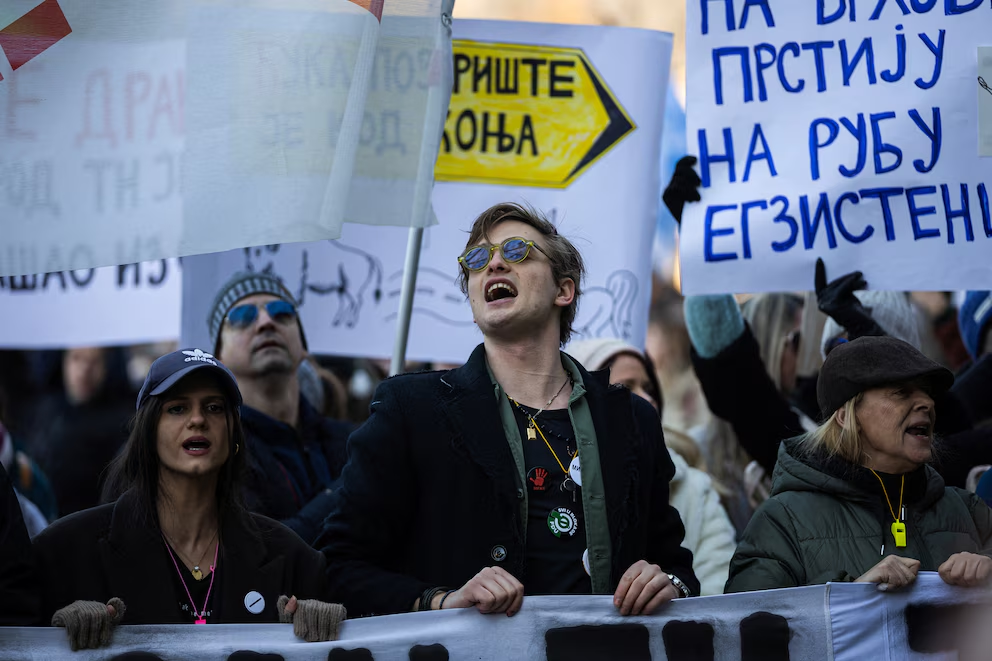
When the organizers of the BITEF announced the removal of a piece by Swiss-Belgian director Milo Rau, the cultural world watched—and then detonated. The withdrawal triggered a cascade: key curators resigned, unions called sit-ins, and hundreds of artists staged a protest outside the National Theatre of Serbia, demanding transparency and a return to uncurbed expression.
According to official statements, the contested performance was deemed “politically improper” by festival governance after alleged external pressure from cultural authorities. What began as a programmatic dispute swiftly morphed into a symbolic conflict between Serbia’s growing institutional tightness and the international arts community’s insistence on autonomy.
In Brussels, the Directorate-General for Education, Youth, Sport and Culture observed that “arts festivals operate at the frontier of social critique and public policy; when they are compromised, the ripple effect extends to national soft power.” In New York, the International Theatre Institute issued a statement expressing concern over what it described as “a regression in a country often portrayed as a cultural bridge between East and West.”
Within Belgrade, the festival’s internal memo reveals there were phone-calls and meeting minutes censored, while two members of the artistic board resigned in protest. They cited “undue intervention in programming” and “a violation of the contract of artistic independence” as their reasons. Meanwhile, theatre collectives affiliated with the University of Arts in Belgrade announced they would boycott this year’s edition pending an independent audit of the board’s decisions.
The controversy is layered: Serbia occupies a fragile space between EU accession ambitions, regional cultural integration and legacy politics of the former Yugoslavia. The festival—once celebrated as one of Europe’s most daring—now becomes a mirror of the tensions tugging at Serbia’s identity. A Belgrade-based cultural commentator noted that “the stage is the last public square where power still trembles”, and the BITEF dispute made that visible.
On the economic front, the fallout may be significant. The BITEF attracts tens of thousands of visitors and nets sponsorship deals from both domestic and international partners. The resignations and protests have already prompted two major sponsors to freeze funding pending assurances of governance reforms. One European funder reportedly demanded “structural guarantees” before unlocking its tranche of €250 000 in support for the 2026 edition.
From the United Kingdom, the arts-policy think-tank Clore noted that the drama at BITEF is not isolated—similar episodes have occurred recently in Poland, Hungary and Russia, where national-culture policy pivots toward control. As Clore’s director put it, “Festivals are the airborne sensors of civic freedom; when they hiss, the larger atmosphere is compromised.”
The Serbian Ministry of Culture maintains that decisions were “administrative and lawful,” adding that the festival remains committed to “high standards and international collaboration”. But independent observers say the ministry’s definition of “lawful” is expanding into “pre-emptive advice” and “soft-interference”. When last year faculty members at state-supported art universities observed rating-systems tied to political affiliation, whispers grew louder this summer—the BITEF row may be the signal that such whispers were warnings.
In practical terms, artists report being asked to submit detailed scripts and background documentation not typical in previous editions. “We were told to ‘adjust’ certain scenes,” one director said anonymously. Another noted that media cover-up followed: the deletion of the programme page online and absence of public explanation triggered alarm bells.
For Serbia’s tourism and cultural diplomacy ambitions, the timing is precarious. With Belgrade aiming to present itself as a hub for creative industries and regional cross-fertilisation, the crisis underscores the risk of eroding artistic credibility just as investments in culture are strategised for growth. According to the Balkan Cultural Forum, every euro invested in festivals multiplies as regional attractor—but only if autonomy remains visible.
The broader pattern extends beyond Serbia’s borders. In a Europe where civic institutions are under pressure, the BITEF crisis signals how culture can be the first marker of shrinking space. A European Union policy brief warned that while art is often the last sector under siege, it is also the first to alert when institutional back-slide begins.
For now, Belgrade’s theatre community remains in motion. Protests continue nightly; petitions circulate globally; international companies are reconsidering invitations; and the festival’s next session hangs in the balance. Whether the BITEF survives as a beacon of performance innovation or becomes a cautionary tale of constrained expression depends on the response from both cultural governance and the artistic community.
Resistencia narrativa global. / Global narrative resilience.