

 Phoenix 24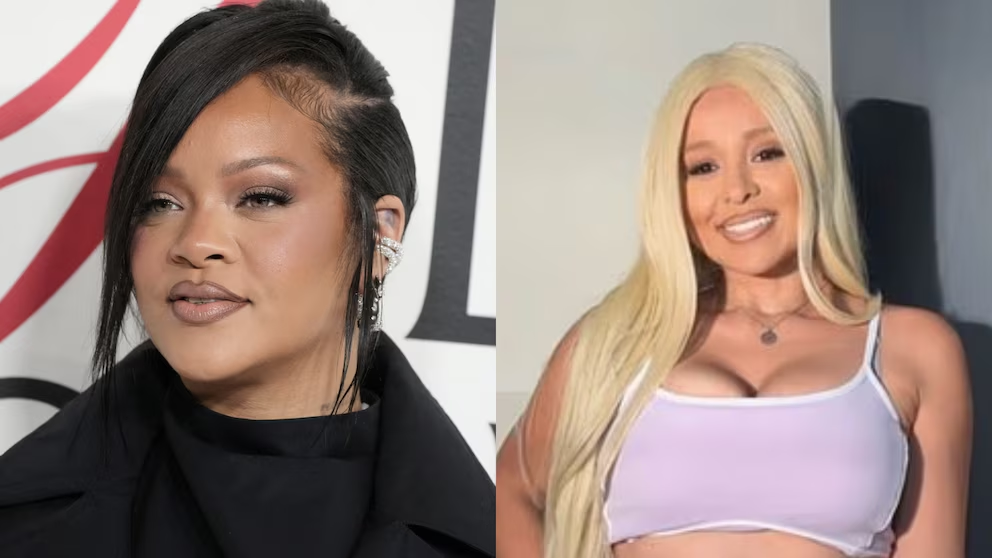
Violence becomes clickbait before motive becomes clear.
Los Angeles, March 2026
The arrest of a woman accused of opening fire on Rihanna’s Los Angeles home has already been absorbed into the machinery of celebrity-era crime, where the event itself is only the first layer of the story. The deeper pattern lies in how quickly public attention shifts away from the act and toward the biography, image, and symbolic packaging of the suspect. In this case, reports moved rapidly to emphasize identity markers around the woman now identified by police as Ivanna Lisette Ortiz, while the basic facts remained stark and relatively simple: authorities say multiple shots were fired toward Rihanna’s Beverly Crest residence, no injuries were reported, and the suspect was later charged with attempted murder. Before motive was fully clarified, narrative framing had already begun.

That speed matters because celebrity-adjacent violence is rarely consumed as ordinary crime. It becomes instant cultural theater. The target’s fame amplifies every detail, while the alleged attacker is almost immediately transformed into a figure of public fascination, not simply because of what happened, but because of how media ecosystems sort people into recognizable archetypes. Once labels such as former beauty queen or devout Christian enter the coverage, the event starts moving through a different circuit. It is no longer just about security, law enforcement, or trauma. It becomes a story about contradiction, spectacle, and the public appetite for shock wrapped in identity.
Police accounts and broadcast reporting indicate that the shooting took place on Sunday afternoon, with several rounds allegedly fired toward the home. Some reports said the exterior gate was struck, while others indicated parts of the house itself may have been hit. What appears consistent across coverage is that there were people inside at the time, that no one was injured, and that the suspect, a woman in her mid-thirties, was taken into custody without a prolonged standoff. By Monday, authorities had publicly identified Ortiz and reported that she was being held on a high bail amount after an attempted murder charge. In legal terms, the case is serious and direct. In media terms, however, seriousness is almost never enough on its own.
That gap between legal reality and narrative consumption reveals something broader about the entertainment-news economy. Incidents involving celebrities no longer remain confined to police blotters or court records. They are immediately translated into emotionally charged storylines designed for maximum circulation. The more improbable the suspect appears in relation to the act, the more aggressively the story spreads. A former pageant figure linked to a shooting at a global superstar’s home is not simply treated as a suspect in a criminal case. She is framed as a contradiction in motion, and contradiction is one of the most efficient fuels in digital publishing. It invites disbelief, moral judgment, and repeat engagement.
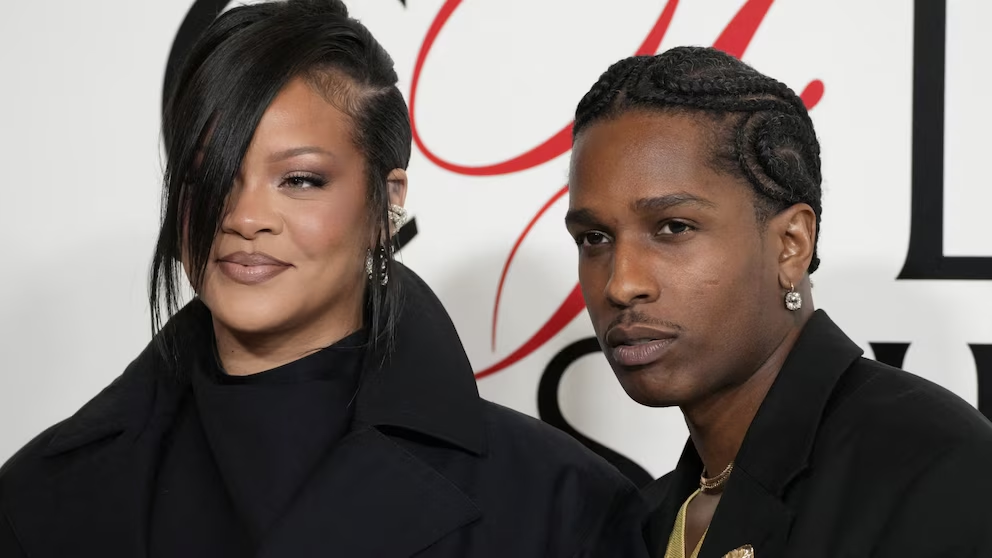
There is also a structural reason these stories take this shape. Celebrity culture depends on the illusion of controlled access. Public figures are visible everywhere, yet their homes, families, and private routines are supposed to remain fortified behind wealth, geography, and security. When violence breaches that perimeter, even without casualties, the effect is symbolically powerful. It punctures the fantasy of distance that celebrity branding tries to preserve. In Rihanna’s case, that breach carries additional weight because she is not merely a singer, but a global commercial figure whose image spans music, beauty, fashion, and elite cultural relevance. An attack on that private space inevitably becomes a public event with a wider symbolic charge.
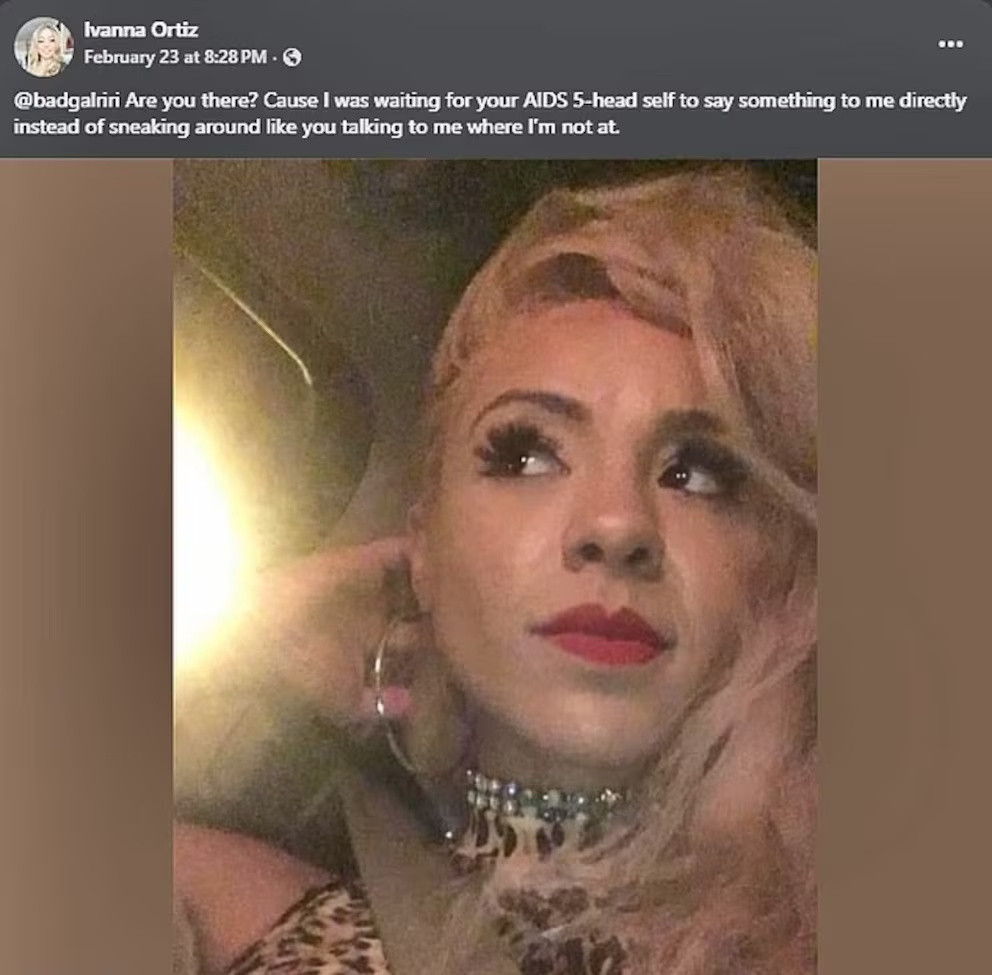
At the same time, the framing of the suspect through moral or religious description carries its own risk. It can imply explanatory depth where none has yet been established. Identity markers may be factual, but facts are not neutral once selected and sequenced for dramatic effect. They can guide the audience toward assumptions about motive, instability, hypocrisy, or extremism before investigators have laid out a coherent case. That is one reason this story deserves more caution than tabloid excitement. The most responsible reading begins not with biography as spectacle, but with the core event itself: a serious act of alleged armed violence directed at an occupied residence.
What this episode ultimately shows is how celebrity reporting now merges crime, entertainment, and moral framing into a single narrative product. The audience is not only invited to ask what happened, but what kind of person could have done it, what hidden contradiction she represents, and what this says about fame, vulnerability, or social breakdown. That interpretive rush may be commercially effective, but it also distorts proportion. The public ends up consuming an archetype before understanding a case. In the process, motive becomes secondary, while symbolic packaging takes the lead.

The result is a familiar distortion of modern media culture. A criminal allegation involving a famous target becomes a story about identity performance almost as quickly as it becomes a story about evidence. That does not make the facts less real. It makes the narrative around them more revealing. The incident at Rihanna’s home is, first of all, a grave legal matter. Yet it is also a reminder that in the attention economy, violence near celebrity does not remain violence for long. It is converted into a spectacle of biography, contradiction, and public consumption before the truth has fully caught up.
Truth is structure, not noise. / La verdad es estructura, no ruido.