

 Phoenix 24
Easter eggs can also function as strategy.
Emeryville, March 2026
Pixar’s Hoppers is being read by many viewers as more than another animated release packed with references for loyal fans. The film has reopened one of the studio’s most durable obsessions: the idea that its stories do not simply echo one another stylistically, but may inhabit a single, interconnected fictional universe. What makes the new conversation different is not the existence of another hidden nod or visual wink. It is the density of the clues concentrated in one late sequence, where a laboratory full of prototypes seems to offer a possible technological origin story for concepts long associated with other Pixar titles. That shift matters because it moves the studio’s use of references from playful ornament to something closer to narrative infrastructure.
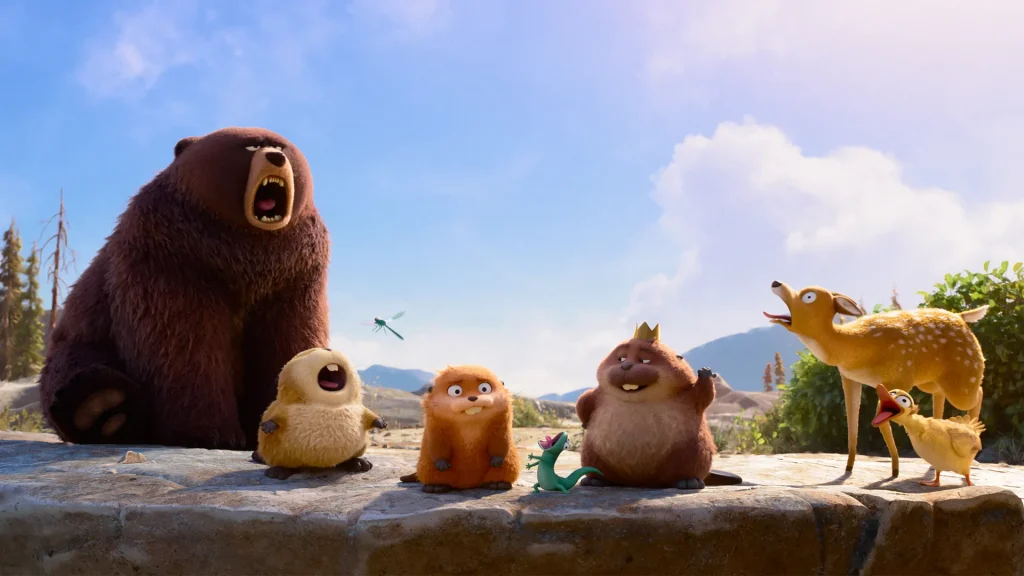
For years, the so called Pixar Theory survived in the space between speculation and ritual. Fans linked films across timelines, species, technologies and settings, building elaborate chronologies that tried to explain how toys, monsters, cars, robots and humans might all belong to a common universe. Pixar, meanwhile, benefited from the theory without fully endorsing it. That ambiguity was useful. It kept the fandom active, encouraged repeat viewing and preserved the charm of discovery without forcing the studio into a rigid canon. Hoppers, however, appears to push the game a step further by placing several of those connective ideas inside a single scientific frame.
The key scene centers on Dr. Sam Fairfax, whose lab reportedly contains inventions and sketches that resemble multiple pillars of Pixar mythology. Among them are prototype dog collars that evoke the talking devices seen in Up, cleaning robots that recall the logic behind WALL E, and concepts linked to energy systems reminiscent of Monsters, Inc. There is even a suggestion, according to fan readings, of the technological bridge that could help explain the anthropomorphic world of Cars. Whether these details amount to hard confirmation is almost secondary. Their real function is to place the theory inside the film’s own imaginative machinery, giving spectators a reason to believe the studio is no longer merely tolerating the shared universe idea, but actively feeding it.
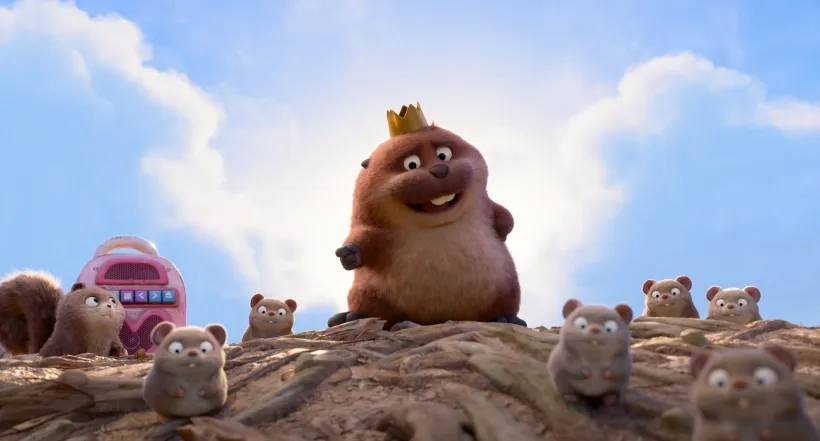
That matters because contemporary franchise culture runs on more than sequels. It runs on connective tissue. Audiences no longer consume individual titles only as self contained stories. They are trained to search for continuity, hidden logic, future payoffs and retroactive explanations. The Easter egg has evolved from bonus detail into industrial language. In that environment, Hoppers does something commercially elegant. It converts fan labor into brand architecture. The studio does not need to issue a formal declaration that every Pixar story belongs to one timeline. It only needs to stage enough evidence inside a plausible framework for the audience to complete the system on its own.
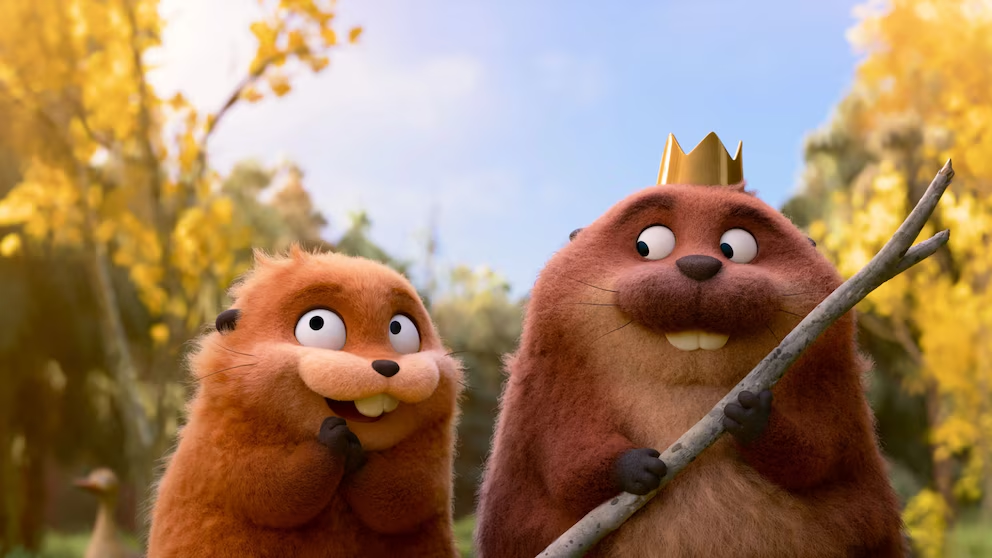
There is also a deeper creative question beneath the excitement. Pixar built its reputation not just on emotional storytelling, but on worlds that felt conceptually complete even when they were wildly imaginative. Linking those worlds too tightly carries risk. Part of the power of films like Up, WALL E or Monsters, Inc. came from their apparent autonomy, from the sense that each premise generated its own emotional rules and symbolic terrain. A heavily codified shared universe can enrich loyalty, but it can also flatten difference. Once every story becomes a node inside a master design, the temptation grows to read films less as works and more as evidence.
That tension defines much of modern entertainment. Studios want cohesion because cohesion increases retention, theory making and long term franchise value. Fans want coherence because it rewards attention and grants interpretive status to those who notice patterns first. Yet the more perfectly everything connects, the more the mystery starts to disappear. Pixar has historically handled that tension better than many live action franchises because it treated intertextuality as texture rather than obligation. Hoppers may mark a point where that balance begins to shift. Not necessarily into excess, but into a more self aware kind of myth management.
Director Daniel Chong’s reported acknowledgment that the references were included as a nod to the fan theory reinforces that reading. This was not accidental spillover from a few animators having fun in the background. It appears to have been intentional placement, designed with the audience’s decoding habits already in mind. That makes Hoppersan interesting case study in how animation studios now build for interpretive communities. The film is not only being watched. It is being mined. And Pixar, rather than resisting that behavior, seems willing to orchestrate it.
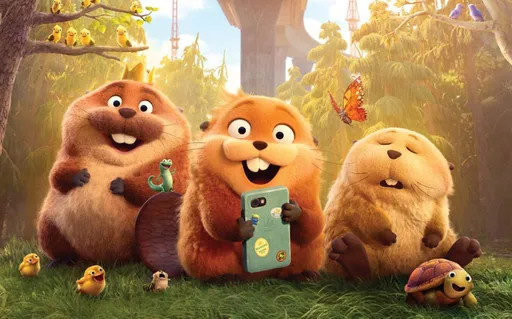
In that sense, the real significance of Hoppers is not whether it definitively proves the Pixar Theory. The larger point is that Pixar now understands the theory as a productive asset. It fuels attention, extends conversation beyond the theater and allows the studio to keep its library alive through retroactive connection. A laboratory scene becomes a vault of narrative possibilities. A background sketch becomes corporate memory. A fan theory becomes a platform strategy.
That is why the debate matters beyond animation trivia. We are watching a major studio refine the art of turning affection into structure. Hoppers does not simply reward longtime viewers with references. It suggests that the hidden link itself has become part of the product. And once that happens, the line between storytelling and franchise engineering becomes much harder to separate.
Narrative is power too. / La narrativa también es poder.