

 Phoenix 24
Sometimes history is not written by intention, but by accident embraced by time.
Borja, December 29, 2025.
Cecilia Giménez passed away at the age of ninety four, closing the life of a woman whose name became inseparable from one of the most improbable cultural symbols of the digital era. She did not seek recognition, nor did she attempt to challenge artistic canons. Yet a single, well-intended gesture transformed her into an enduring reference point in the global conversation about art, authorship, and collective meaning.
Cecilia Giménez lived most of her life quietly in Borja, a small town shaped by routine, devotion, and local memory. Her relationship with the sanctuary that housed the modest Ecce Homo fresco was personal rather than professional. The image mattered to her not as an artwork to be debated, but as a familiar presence, worn by time and humidity, in need of care. What followed in 2012 was neither provocation nor parody, but an act of preservation undertaken with sincerity and confidence born of familiarity.
The result, however, escaped her control almost immediately. The altered face of the fresco circulated far beyond Borja, detached from its physical setting and propelled into a global digital ecosystem that thrives on surprise and exaggeration. Within days, the image ceased to be local. It became viral, replicated, reinterpreted, and absorbed into popular culture as an object of humor, astonishment, and endless commentary. Cecilia Giménez became known worldwide not through intention, but through amplification.
What made the episode exceptional was not the technical outcome of the restoration, but the way it exposed the mechanics of modern cultural creation. A private act became a public artifact. A local gesture became a global reference. Meaning was no longer shaped by authorial intent, but by collective reaction. In that transformation, Cecilia Giménez ceased to be merely a person and became a symbol, often stripped of context, vulnerability, and humanity.
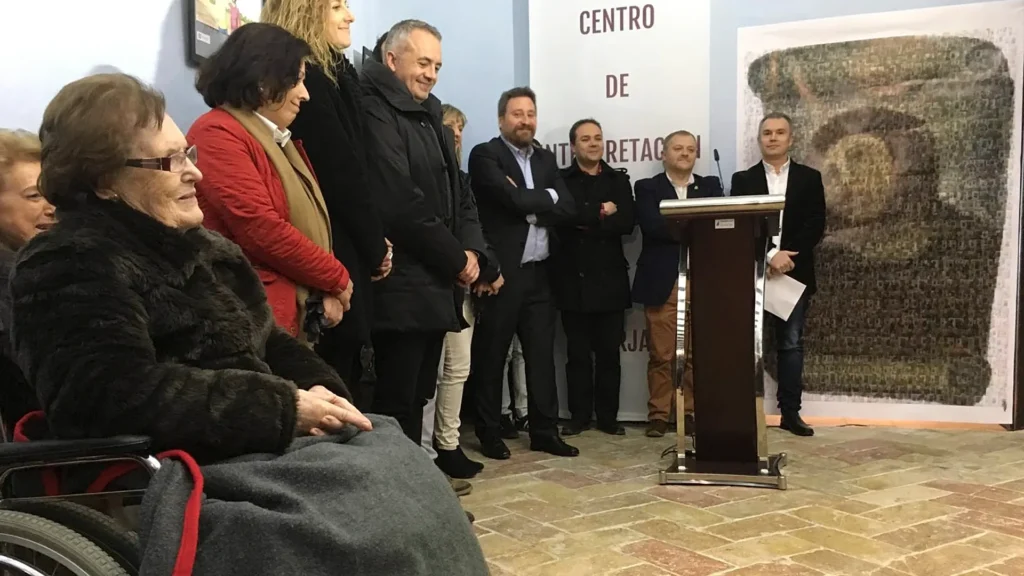
For Borja, the episode unfolded with ambivalence. Initial discomfort gave way to adaptation. The town discovered that what had been perceived as error had generated attention, movement, and renewed interest. Visitors arrived not to mock, but to witness a story that blended innocence, chance, and irony. Over time, the altered fresco was no longer treated as a mistake to be corrected, but as a cultural object in its own right, carrying layers of meaning that extended far beyond paint and plaster.
For Cecilia herself, the attention was not effortless. Public exposure arrived late in life and without preparation. She spoke, in later years, of confusion, sadness, and gradual reconciliation with what had occurred. Her voice remained measured, lacking bitterness or defensiveness. She neither claimed artistic intention nor disowned her action. Instead, she accepted that the outcome had escaped her, and that the world had done with it what the world does best: reinterpret relentlessly.
Her story endures because it resists simplification. It is not merely comedic, nor purely tragic. It reveals how contemporary culture often detaches result from intent, visibility from consent, and legacy from design. Cecilia Giménez did not author a masterpiece, nor did she commit an act of vandalism in the traditional sense. She occupied a liminal space where care, limitation, and circumstance collided, producing something neither planned nor repeatable.
In this sense, her legacy is profoundly modern. It belongs to an era in which images circulate faster than explanation, where local acts are globalized without mediation, and where authorship dissolves into reception. The Ecce Homo of Borja became less a religious image and more a mirror reflecting how societies construct meaning collectively, often without regard for origin.
With her passing, the figure at the center of that story returns to her original scale: that of a woman who acted out of attachment, not ambition. The myth remains, but the person recedes into memory, reclaimed by the town that knew her before the world did. Borja will remember her not as a meme, but as a neighbor. That distinction matters.
Cecilia Giménez leaves behind an accidental legacy that cannot be repeated or engineered. It emerged from sincerity, limitation, and timing, and it survived because it revealed something uncomfortable and honest about how culture now functions. Her gesture escaped her hands, but not her humanity.
In the end, her story reminds us that history is not always shaped by those who seek to leave a mark. Sometimes it is shaped by those who simply try to take care of what they love, and discover, too late, that the world was watching.
Detrás de cada dato, hay una intención. Detrás de cada silencio, una estructura.