

 Phoenix 24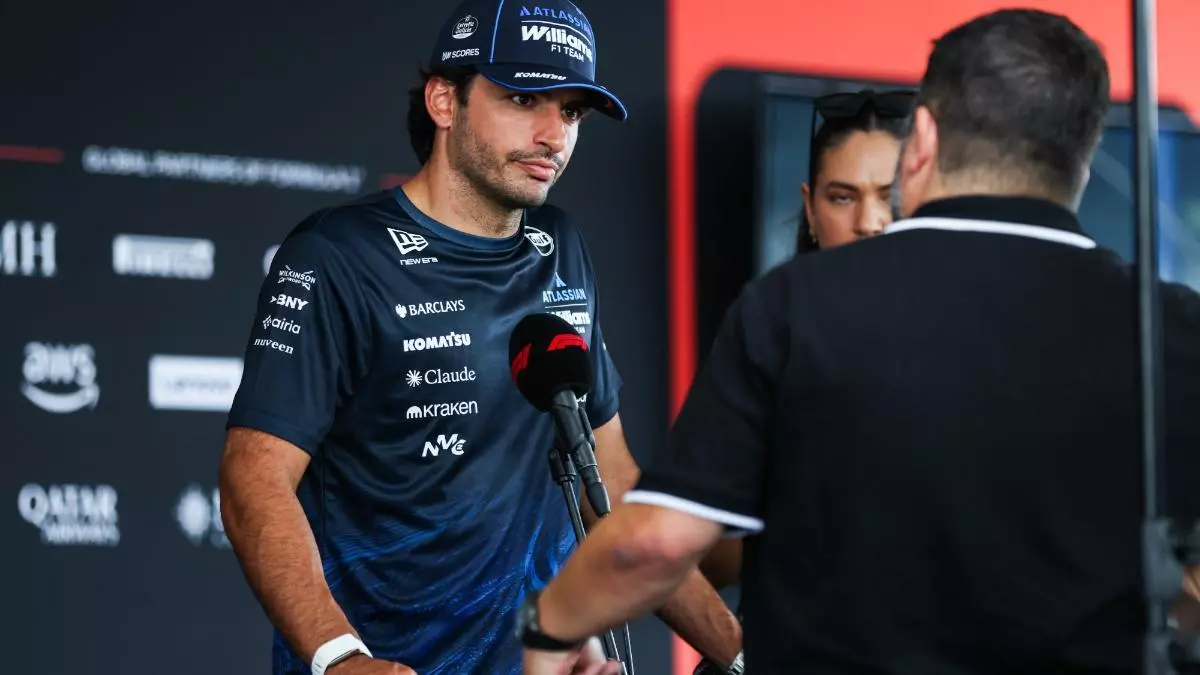
The greatest professional blow became a lesson in resilience, perspective and self belief.
Grove
Carlos Sainz has identified the months following the news that he would leave Ferrari as the most difficult period of his Formula 1 career. The Spanish driver says the decision caught him completely by surprise after four seasons in which he believed both he and the team had built a strong working relationship and delivered significant results.
Ferrari’s decision to replace Sainz with Lewis Hamilton forced him into an unfamiliar position. Despite victories, podiums and consistent performances, he suddenly had to search for another team while continuing to compete for a structure that had already decided to move forward without him. Sainz has described that period as a major professional shock because it challenged the assumption that strong performance would automatically guarantee continuity.
He eventually joined Williams, choosing a long term project rather than pursuing a shorter and potentially less stable alternative. The move initially required adaptation to a different competitive environment, technical philosophy and organizational culture. Williams was rebuilding rather than fighting immediately for victories, making the transition particularly demanding for a driver accustomed to Ferrari’s expectations.
Sainz now says the experience accelerated his maturity. Being forced out of Ferrari changed the way he interprets success, loyalty and professional security inside Formula 1. The episode taught him that even strong results cannot fully control decisions made at the highest level of a team, especially when commercial, strategic or generational considerations enter the equation.
His current season with Williams has brought another layer of difficulty. Results have not always matched expectations, and the car has presented limitations that have prevented him from consistently fighting near the front. Yet Sainz has chosen to remain committed to the project, reinforcing the idea that his relationship with Williams is built around development rather than immediate reward.
That perspective contrasts sharply with the uncertainty he experienced after Ferrari. Instead of defining his career through rejection, Sainz increasingly presents that moment as the event that clarified what he values most in a team: trust, continuity and a sense that his contribution matters.
Formula 1 careers are often measured through victories, contracts and statistics. Sainz’s reflection points to something less visible. Sometimes the defining moment is not winning a race, but discovering how to continue after being told that success was not enough to stay.
Behind every data point, the intention.