

 Phoenix 24
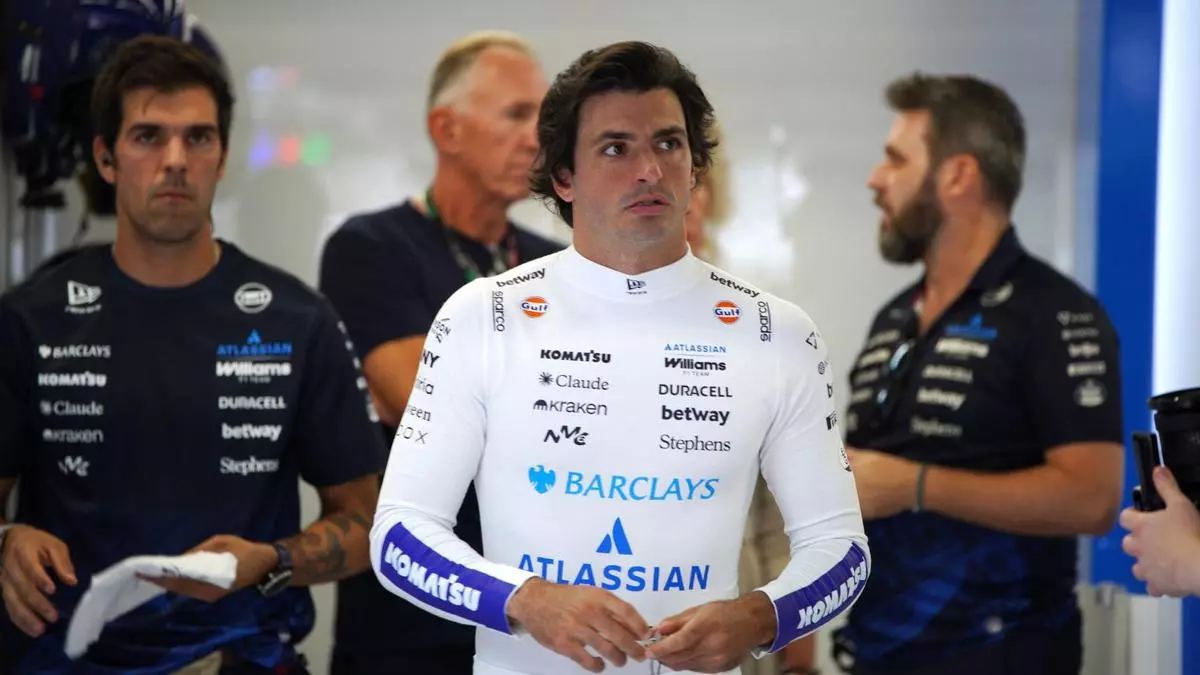
A damaged Williams exposes a bigger question about racing standards.
AUSTIN, Texas
Carlos Sainz has questioned the consistency of Formula 1’s race officiating after a first-lap confrontation with Arvid Lindblad during the United States Grand Prix on October 25. The Williams driver was forced toward the pit wall by the Racing Bulls competitor, making contact and damaging his front wing. Despite the consequences, Lindblad received no penalty, prompting Sainz to publicly challenge how similar incidents are judged.
The collision occurred during the opening acceleration phase at the Circuit of the Americas, when drivers were competing for positions in a tightly packed field. Sainz attempted to advance along the inside but found his available space progressively reduced as Lindblad moved across. His Williams struck the wall, escaping more serious consequences but suffering aerodynamic damage that significantly compromised the opening stint.
The incident changed the trajectory of an already difficult afternoon for the Spanish driver. With reduced front-end downforce, Sainz struggled to maintain competitive performance before Williams replaced the damaged front wing during a pit stop. Although the repair improved the car’s handling, the additional time lost left him with limited opportunities to recover. He eventually finished eighteenth, immediately behind teammate Alexander Albon.
Following the race, Sainz expressed frustration not only with Lindblad’s maneuver but also with the apparent difference between the treatment of his own driving incidents and those involving other competitors. Speaking to reporters, he questioned why a move that pushed another car into a wall could escape punishment when other incidents had resulted in penalties against him earlier in the season.
His criticism raises a familiar issue within Formula 1: the interpretation of racing room, driver responsibility and acceptable aggression. Decisions involving wheel-to-wheel encounters require officials to evaluate positioning, available space, driver control and the circumstances surrounding a potential collision. Yet the application of those principles can become controversial when visually similar incidents produce different outcomes.
The FIA’s official race account acknowledged that Sainz had been squeezed toward the pit wall, but the available public reporting does not establish the detailed reasoning behind the absence of a sanction against Lindblad. That distinction matters because an incident without a penalty does not automatically establish that every aspect of the maneuver was formally judged acceptable.
Beyond the dispute, Williams faces a separate competitive problem. Sainz acknowledged that the team’s current performance deficit makes fighting for points increasingly difficult, particularly against stronger midfield competitors. The damaged front wing intensified those limitations in Austin, but the underlying lack of pace remains a broader concern for the final part of the championship.
The upcoming Mexican Grand Prix offers an opportunity to assess whether a different circuit configuration can improve Williams’ prospects. For Sainz, however, the Austin controversy extends beyond finishing position. It concerns whether drivers can rely on predictable enforcement of racing standards when aggressive maneuvers carry consequences for both performance and safety.
Beyond the Headlines, Accountability Matters.