

 Phoenix 24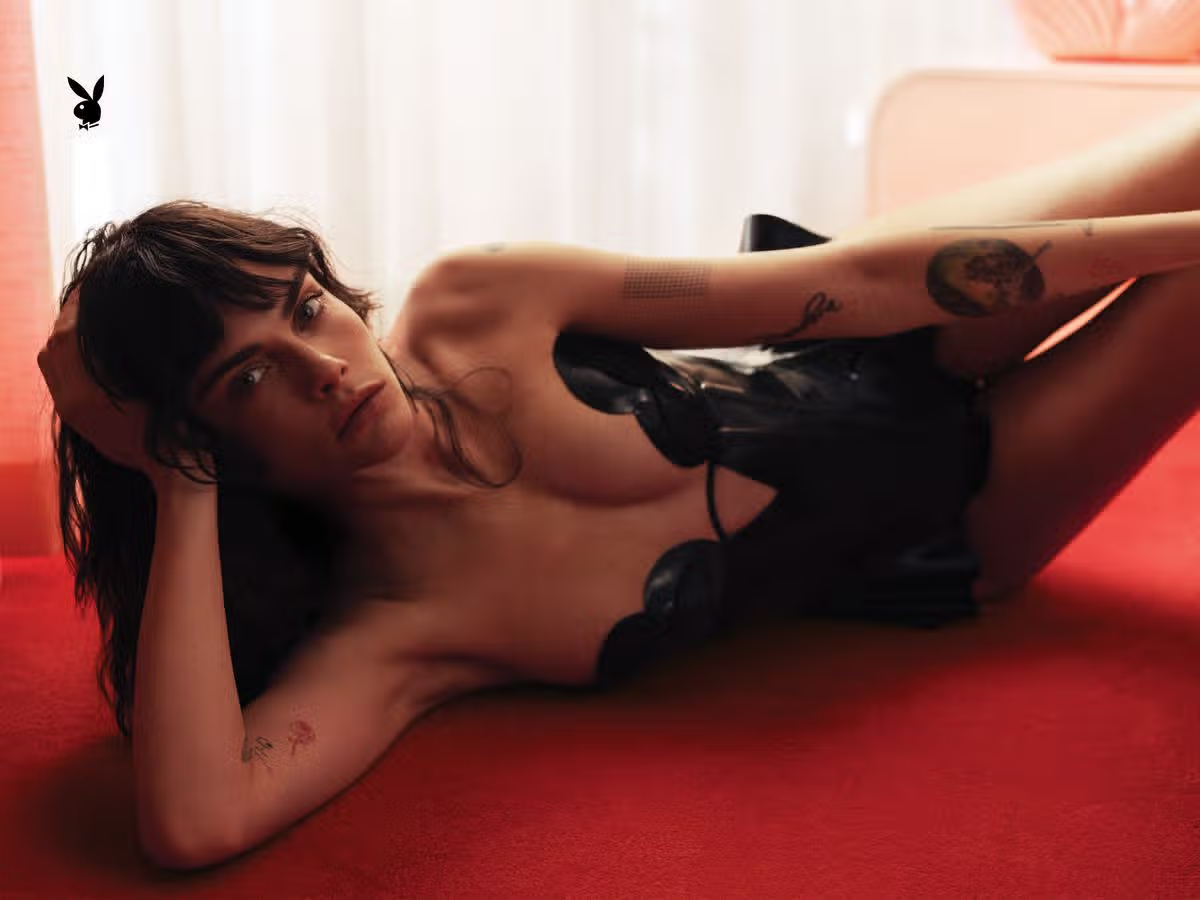
The image matters because she controlled its creation.
London | July 2026
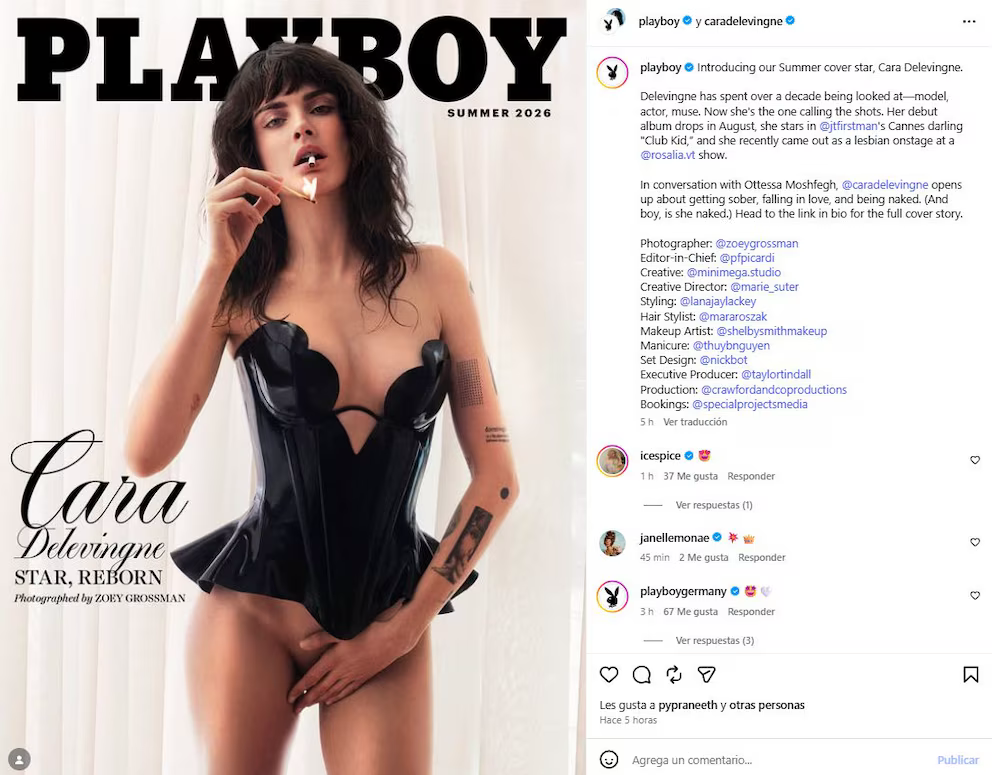
Cara Delevingne has become the first openly lesbian woman to appear on the cover of Playboy’s printed edition, using the historic feature to redefine her relationship with nudity, sexuality and creative control. The 33-year-old British model and actress stars on the magazine’s summer cover in an artistic portrait photographed by Zoey Grossman.
Delevingne posed wearing a black lace corset designed by Atsuko Kudo while holding a lit match near a cigarette. The image combines the visual language traditionally associated with Playboy with a more deliberate statement about autonomy and queer representation. The edition is scheduled to reach the market on July 28.
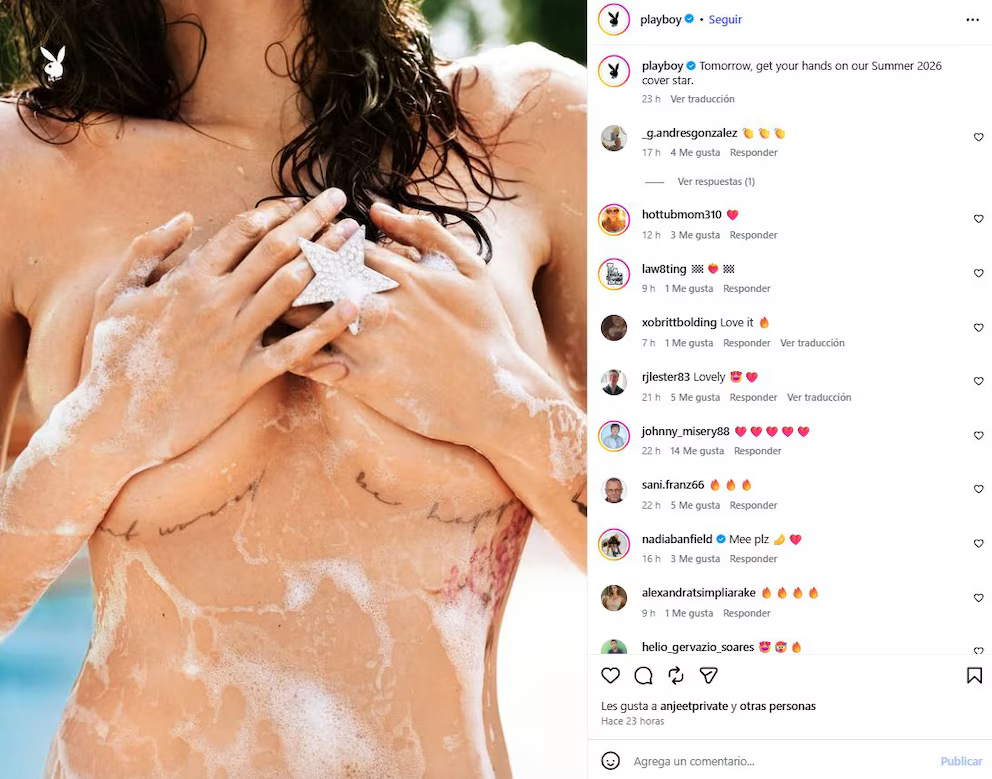
Her participation came with one essential condition: the creative production had to be led primarily by women and include significant representation from the queer community. Delevingne said that working within that environment allowed her to retain authority over how her body and sexuality were presented.
The production team included photographer Zoey Grossman and stylist Lana Jay Lackey. According to Delevingne, the composition of the group transformed the experience from a conventional celebrity nude session into a collaborative project in which she felt understood rather than observed exclusively through a heterosexual male perspective.
She described Playboy as an institution historically associated with heterosexual culture. Participating in the magazine as an openly lesbian woman therefore carried an element of rebellion for her. The cover places a queer identity inside a publication whose visual traditions were largely constructed around male desire.
Delevingne has previously appeared nude in photography and film, but she said those experiences did not always leave her feeling empowered. Even when she had consented professionally, she sometimes felt that her body was being presented primarily for someone else. The new session, she explained, created a different emotional and creative relationship with the camera.
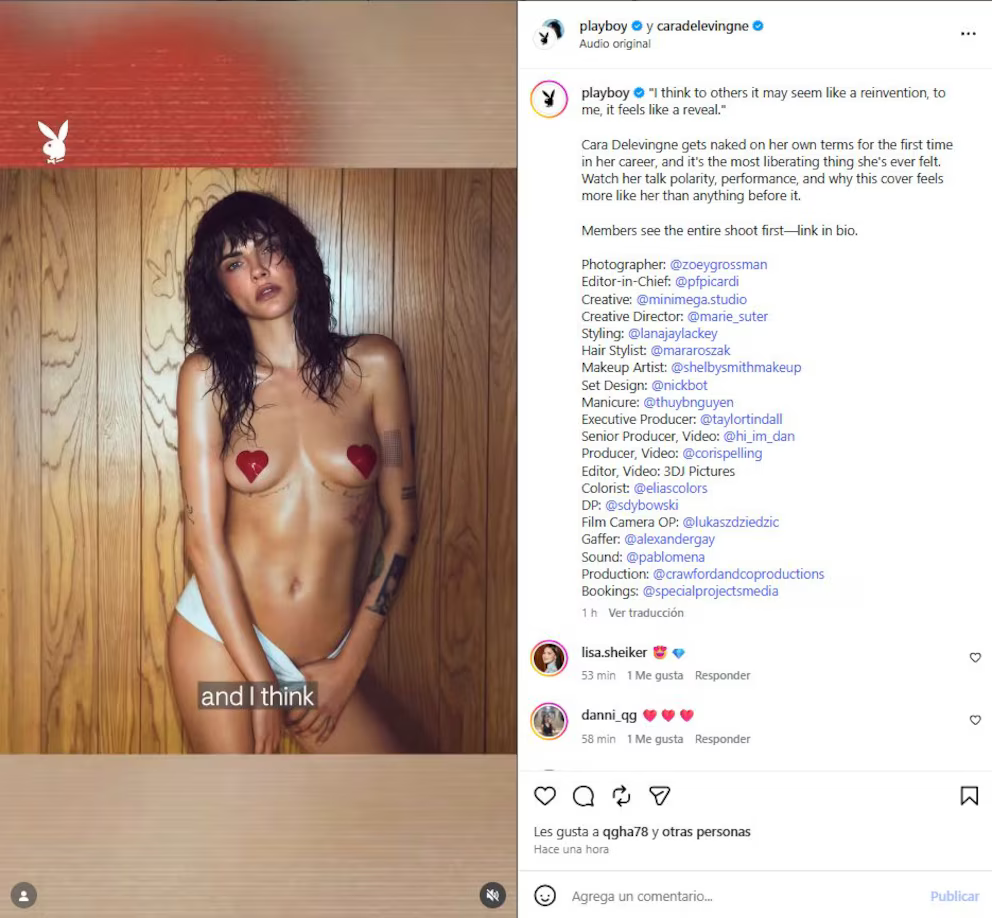
She said she had never felt more comfortable with her body or sexuality. Her statement reflects a transition from performing an image expected by others to participating in the construction of one she considered authentically her own. Control over the production became as important as the final photographs.
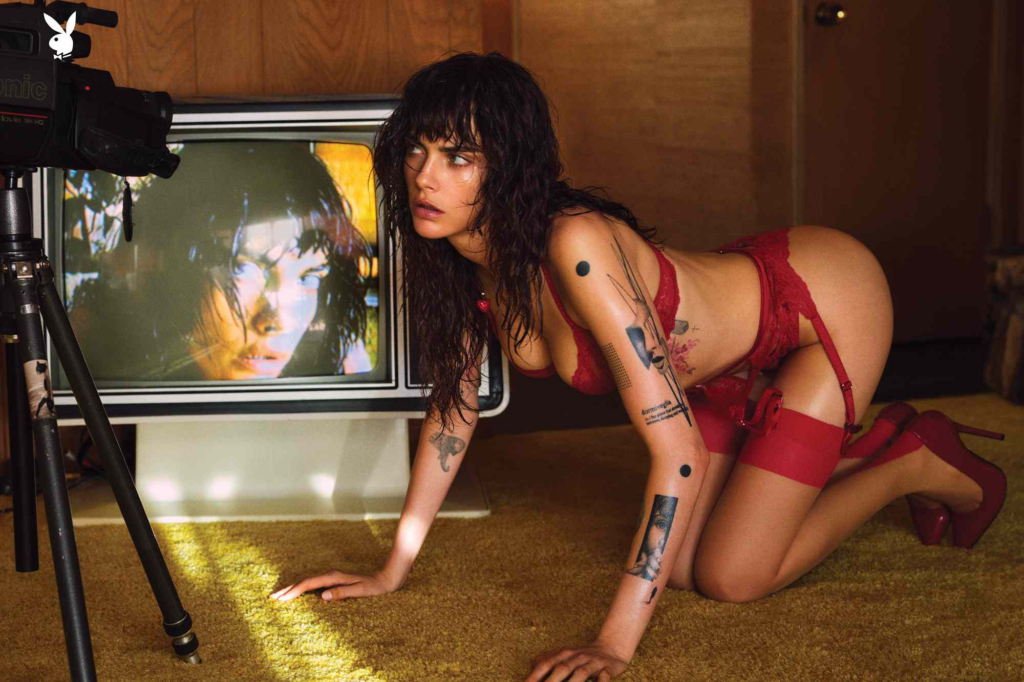
The cover also makes Delevingne the first supermodel since Kate Moss in 2014 to wear Playboy’s recognizable bunny costume for a printed edition. The visual styling includes elements traditionally associated with the publication, including the corset, ears and tail, but reinterprets them through a contemporary queer and female-led production.
The accompanying profile was written by novelist Ottessa Moshfegh, known for “My Year of Rest and Relaxation.” Their conversation examines Delevingne’s professional history, personal identity and changing understanding of the relationship between visibility and empowerment.
The publication arrives shortly after Delevingne publicly described herself as a lesbian. She had previously identified as pansexual and frequently expressed discomfort with restrictive labels. In May, however, she said she had reached a point where openly using the term felt honest and affirming.
Delevingne acknowledged that internalized homophobia had previously influenced her reluctance to identify herself in that way. She credited younger generations of gay women, together with stronger cultural representation and community support, with helping her reconsider what the label could mean.
Her declaration was also connected to her relationship with musician Minke, whose legal name is Leah Mason. The couple have been together since 2022. Delevingne has described Minke as her closest friend, partner and the person with whom she hopes to build a family.
That personal stability appears central to the confidence expressed in the Playboy feature. Delevingne said she had never previously experienced a relationship in which she felt so close to another person or so fully recognized. The cover therefore emerges during a period when her sexuality is not being treated as speculation, but as an identity she has chosen to articulate publicly.
The historical significance of the edition depends on an important distinction. Queer women have appeared within Playboy’s cultural universe before, but Delevingne is being presented as the first openly lesbian woman to front its printed cover. The milestone reflects both her public identification and the magazine’s changing approach to representation.
Playboy itself has undergone a substantial transformation as media consumption, sexual politics and cultural attitudes have changed. The publication once represented a highly specific construction of femininity designed predominantly for heterosexual male readers. Contemporary editions increasingly attempt to engage with conversations about autonomy, identity and diverse expressions of sexuality.
That evolution does not erase the magazine’s history. It instead creates tension between an established commercial symbol and the individuals now seeking to reinterpret it. Delevingne appears to have accepted the project because she could challenge that history from inside the institution rather than simply reproduce its traditional formula.
Her requirement for a female-led and queer-inclusive team demonstrates how representation behind the camera can alter what appears in front of it. Photographers, stylists, editors and creative directors determine poses, lighting, atmosphere and the emotional conditions surrounding a session. Diversity within those roles can change the balance of power experienced by the person being photographed.
The distinction is particularly relevant when nudity is involved. Consent is not limited to agreeing to remove clothing. It also concerns how images will be constructed, who controls the environment, how the subject will be portrayed and whether the final result reflects the person’s own intentions.
Delevingne’s cover does not reject sensuality. It argues that sensuality can be strongest when the subject participates actively in defining it. Her comments suggest that empowerment came not from avoiding exposure, but from controlling its context.
The feature also reflects a broader cultural shift in celebrity photography. Audiences increasingly examine who created an image, whose perspective it represents and whether the subject possessed meaningful agency. A visually striking cover can no longer be separated easily from the production conditions behind it.
Delevingne’s career has often moved between fashion, acting, music and public advocacy. She has also spoken openly about mental health, addiction and personal recovery. Her latest appearance continues that pattern of connecting professional visibility with disclosures about identity and vulnerability.
The Playboy cover will inevitably attract attention because of its nudity and historical branding. Its deeper significance, however, lies in the condition Delevingne established before agreeing to participate. She did not merely accept the magazine’s existing visual system; she required the production to change around her.
By doing so, she transformed the session into a statement about who controls the representation of women’s bodies. The result preserves Playboy’s recognizable iconography while placing a lesbian woman, supported by a predominantly female and queer creative team, at the center of its interpretation.
La libertad comienza cuando la imagen también te pertenece. / Freedom begins when the image belongs to you too.