

 Phoenix 24
Robotic warfare is reshaping the modern battlefield.
KYIV, UKRAINE
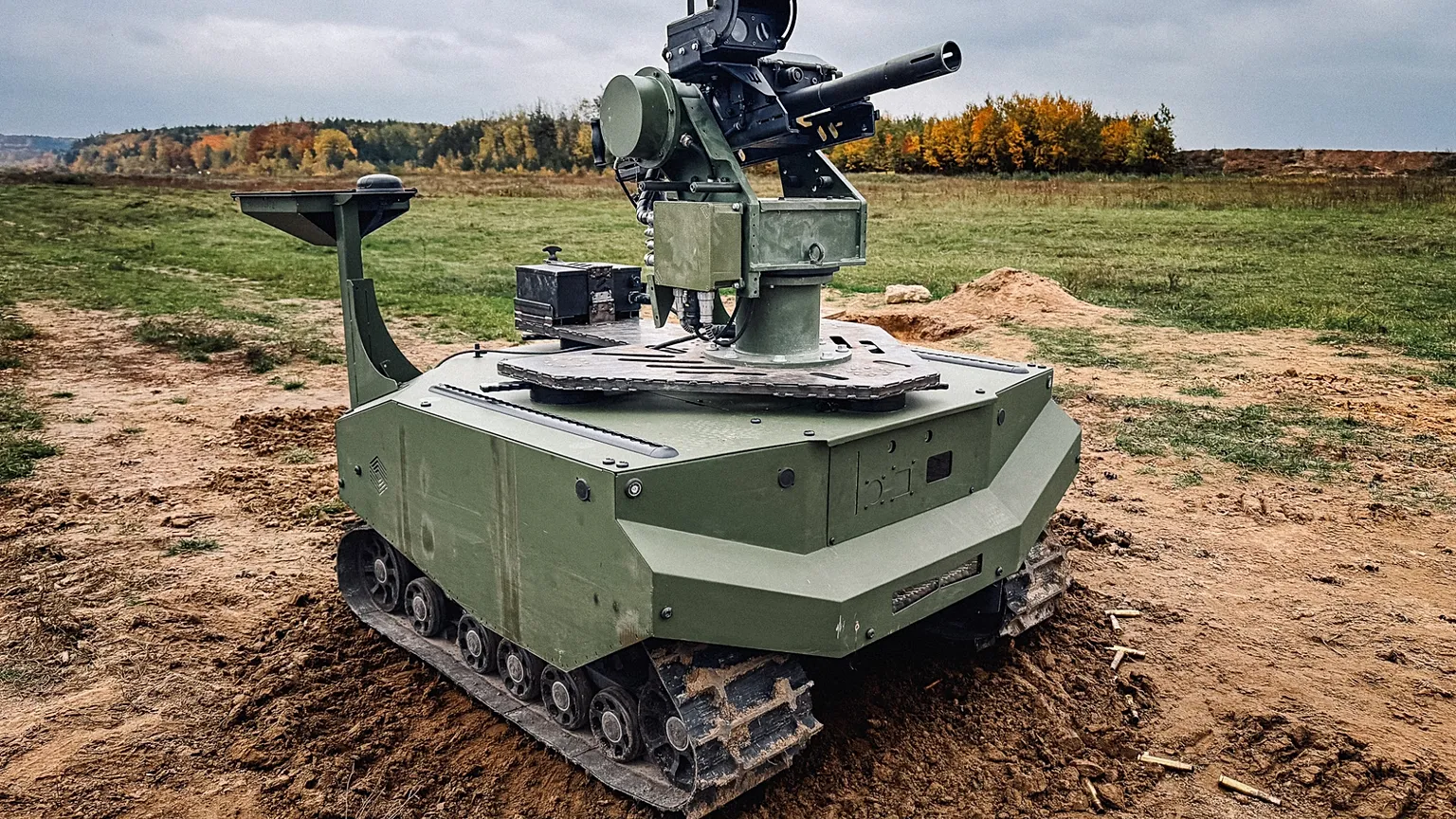
German defense technology company ARX Robotics and Ukrainian manufacturer ROBONEERS have successfully completed initial tests integrating an unmanned ground vehicle with a remotely operated weapons system, marking another development in Ukraine’s growing use of robotic military platforms. The companies expect the first armed vehicles to be delivered to Ukrainian forces before the end of 2026, although operational deployment and performance under battlefield conditions have yet to be independently established.
The new configuration combines ARX Robotics’ GEREON unmanned ground vehicle with the SABER weapons module developed by ROBONEERS. Together, the systems provide a mobile platform capable of conducting reconnaissance and delivering remotely controlled fire support without requiring soldiers to occupy the vehicle itself. The arrangement is intended to reduce personnel exposure in dangerous frontline environments.
Unlike conventional armored vehicles, GEREON operates without an onboard crew. Its tracked chassis provides mobility and electrical power, while integrated cameras and sensors support observation and reconnaissance. The SABER module adds a remotely operated weapons capability that can be configured for different missions, including the use of rifles or grenade launchers.
The principal distinction lies in the system’s adaptability. GEREON platforms are already employed in Ukraine for logistical transportation, casualty evacuation, reconnaissance, electronic warfare support and counter-drone operations. Integrating the Ukrainian weapons module expands the platform’s potential combat applications while preserving its modular design.
The development follows a cooperation agreement signed on October 4 during German Chancellor Friedrich Merz’s visit to Kyiv, in the presence of Ukrainian President Volodymyr Zelenskyy. The partnership brings together German engineering capabilities and Ukrainian experience operating unmanned systems under the demanding conditions of an ongoing war.
For Ukraine, such technologies address a critical operational challenge: performing dangerous missions while limiting the exposure of military personnel. Remotely controlled ground vehicles can support frontline units in areas threatened by artillery, mines and drones. Their effectiveness, however, depends on battlefield communications, terrain conditions, maintenance requirements and the ability to operate under electronic interference.
The distinction between remote control and autonomous operation also remains important. Although advanced military robotics increasingly incorporates artificial intelligence for navigation, perception and mission support, the reported GEREON-SABER configuration is described as a remotely operated weapons system. The companies have not established that it independently selects or engages targets without human control.
Beyond the armed platform, ARX Robotics and ROBONEERS have established a joint venture to expand production of the Rys Pro unmanned transport vehicle in Germany and Ukraine. Their stated objective is to manufacture and deliver more than 1,000 units during the first year, reflecting the growing industrial importance of unmanned ground systems. That figure remains a production target rather than a confirmed delivery result.
The announcement also coincides with broader German investment in military artificial intelligence. Defense technology company Helsing has emerged as an important participant in European efforts to integrate advanced software and intelligent systems into military equipment. German Defense Minister Boris Pistorius has highlighted the strategic relevance of these capabilities as European armed forces adapt to changing security requirements.
Ukraine’s battlefield experience has accelerated experimentation with relatively compact, adaptable robotic platforms, creating opportunities for cooperation between established European manufacturers and Ukrainian technology developers. The resulting systems are increasingly designed around modular architectures that allow equipment to be reconfigured as operational requirements evolve.
Yet technological progress introduces new questions concerning reliability, human oversight and accountability in armed operations. Removing soldiers from vehicles does not eliminate the risks associated with combat, while the integration of remotely controlled weapons requires dependable communications and appropriate safeguards.
The GEREON-SABER project illustrates a wider transformation in military engineering, where mobility, sensors, remote operation and adaptable weapons systems are converging into increasingly integrated platforms. Whether this particular configuration delivers the operational advantages anticipated by its manufacturers will become clearer only through deployment and documented battlefield performance.
Where Innovation Meets Responsibility.