

 Phoenix 24

When childhood promise becomes a strategic asset, football is forced to confront its own limits.
Curitiba, January 2026.
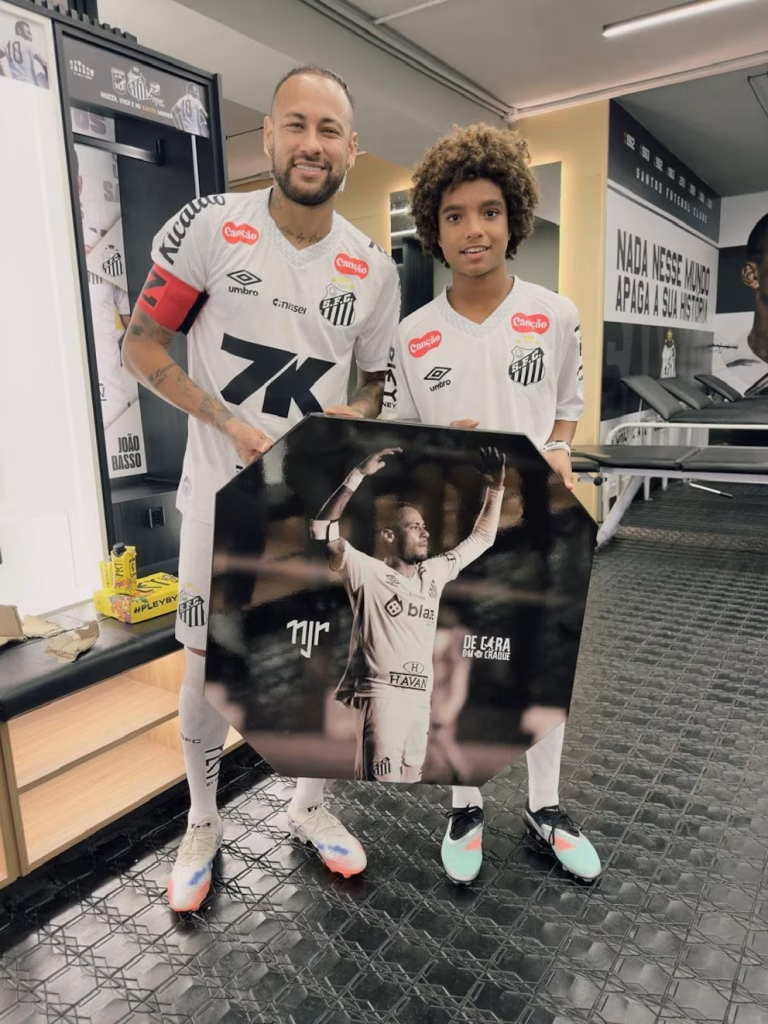
Brazilian football has been shaken by a dispute that goes far beyond a single youth transfer and cuts directly into the ethical and structural foundations of player development. A 13 year old forward, already labeled by fans and media as “Neymar 2.0”, has become the center of a controversy after leaving the academy system that nurtured him to join a rival club with a more aggressive long term development strategy. The episode has reopened an old but unresolved debate in Brazilian football: how early is too early to compete for talent.

The player, considered one of the most gifted prospects of his generation, had been developed since early childhood within the youth structure of Santos, a club historically associated with producing iconic attacking players. His departure, however, exposed the fragility of traditional academy models when confronted with modern recruitment tactics that blend sporting ambition, image management and long horizon planning. While regulations prohibit professional contracts at such an age, the dispute unfolded through alternative legal and commercial mechanisms that remain loosely defined within the current system.
At the heart of the controversy lies the concept of compensation rather than transfer. Youth movement at this level does not operate under the same contractual logic as professional football, yet financial settlements, image rights agreements and development guarantees have become increasingly sophisticated. In this case, negotiations reportedly centered on long term representation, branding arrangements and future sporting pathways, transforming what would once have been a purely developmental decision into a strategic acquisition.
The reaction inside Brazil has been sharply divided. Traditionalists argue that this kind of early recruitment erodes the social and educational mission of youth academies, replacing gradual development with market driven competition. For them, labeling a child as the successor to a global star places a psychological burden that few adults could sustain, let alone an adolescent still forming identity and resilience. They warn that early exposure to expectations and commercial logic risks burnout, distortion of priorities and emotional vulnerability.
Others defend the move as an inevitable adaptation to a globalized football economy. Talent identification now occurs earlier, competition is international from the outset, and clubs unwilling to modernize risk losing prospects long before professional age. From this perspective, structured environments with advanced facilities, education programs and psychological support may offer better long term protection than legacy systems struggling to retain talent without comparable resources.
This dispute has also drawn attention to regulatory gray zones. Brazilian football authorities face growing pressure to clarify how youth mobility, compensation and representation should be handled in an era where social media visibility and sponsorship interest can precede competitive debut. Existing frameworks were designed for a different ecosystem, one in which talent emerged quietly and commercial attention followed performance rather than potential.
Beyond national borders, the case reflects a wider global trend. Football’s youth pipeline is increasingly influenced by branding, digital exposure and long term asset planning. What once unfolded at 16 or 17 now begins several years earlier, compressing developmental timelines and blurring the line between education and professionalization. Sports psychologists note that this acceleration demands stronger safeguards, not weaker ones, if young athletes are to mature without sacrificing mental health or personal development.
The player himself remains years away from professional eligibility. His immediate future will be defined not by contracts or trophies, but by the environment surrounding him. Coaching philosophy, educational balance, family support and psychological care will determine whether early promise evolves into sustained excellence or fades under pressure. In this sense, the real outcome of the dispute will not be measured on scoreboards, but in time.
For Brazilian football, the episode is a mirror. It reflects both the country’s unmatched capacity to generate talent and the systemic tension between tradition and transformation. The romantic narrative of street football and patient academy growth now coexists uneasily with a hyper competitive market that identifies value before adolescence.
As debates continue, one reality is unavoidable. When a child becomes the focal point of institutional rivalry, the responsibility extends beyond clubs and agents. It belongs to the entire ecosystem that shapes the future of the game. Protecting talent is no longer just about winning the next star, but about ensuring that promise survives the journey to adulthood.
Cada silencio habla.
Every silence speaks.