

 Phoenix 24
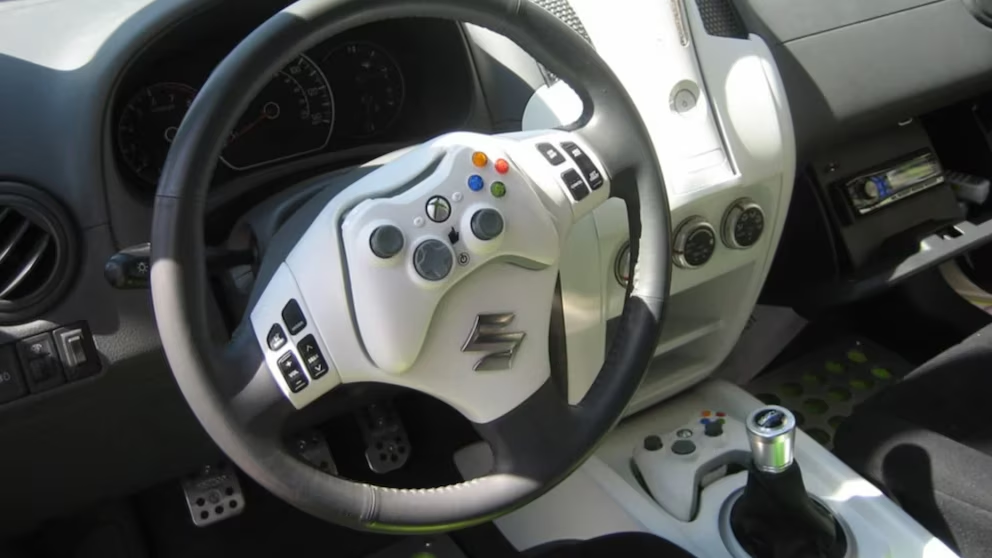
TOKYO, JAPAN — October 31, 2026. Nearly two decades before connected vehicles, artificial intelligence assistants and advanced digital cockpits became central features of the automotive industry, Japanese manufacturer Suzuki developed an experimental car equipped with two Microsoft Xbox 360 consoles. Known as the Suzuki SXbox, the 2006 concept transformed an ordinary compact vehicle into a mobile entertainment center, demonstrating how automotive design and video game technology could converge long before today’s software-driven cars emerged.
Built on the Suzuki SX4 platform, the SXbox was developed by American Sunroof Corporation (ASC) as part of Suzuki’s LIVE promotional initiative. Rather than introducing a production-ready vehicle, the project explored how electronic entertainment could become integrated into the automobile itself, changing the traditional relationship between transportation and the passenger experience.
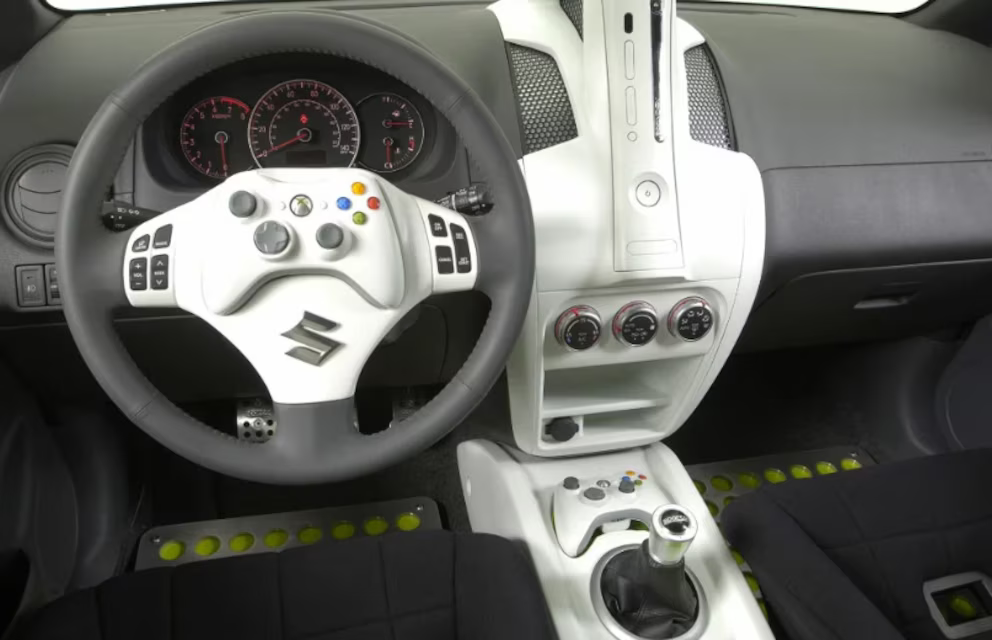
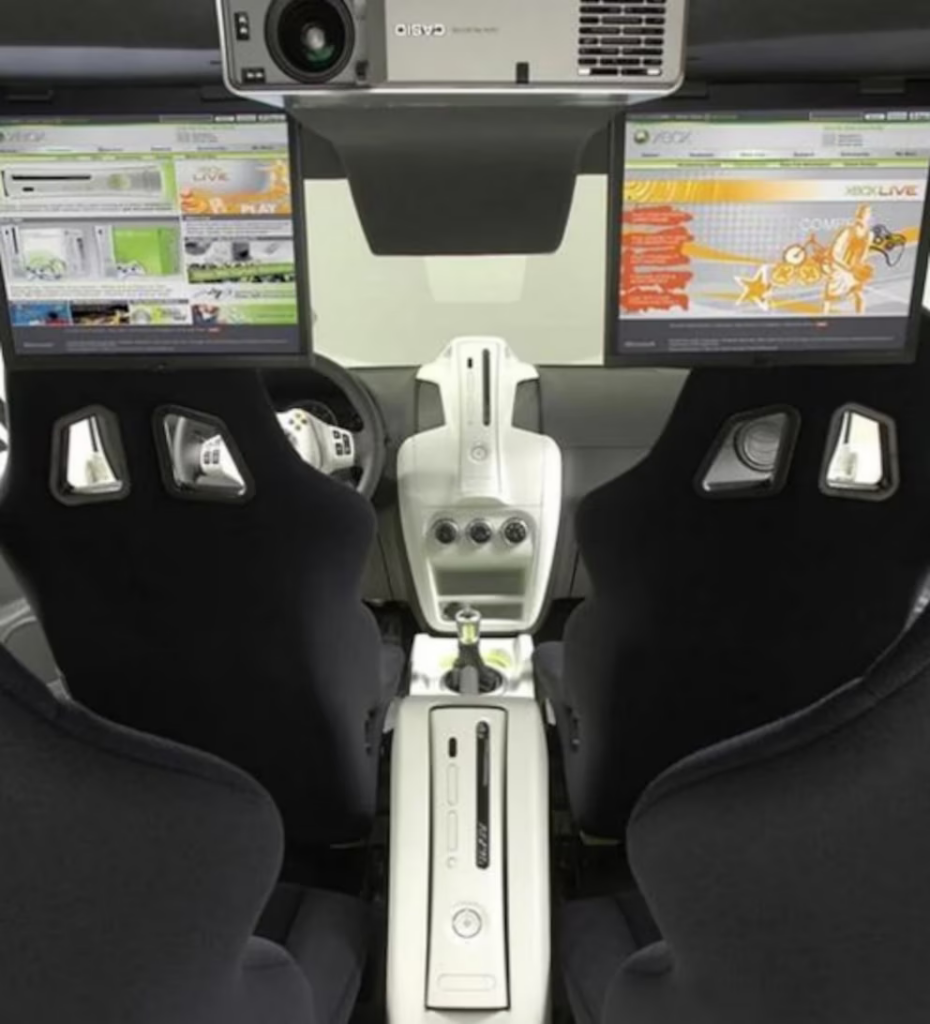
The concept’s most distinctive feature was its dual-console configuration. One Xbox 360 was installed near the dashboard and connected to a projection system capable of displaying video games on the interior surface of the vehicle’s hood. The second console served rear-seat passengers through two independent liquid-crystal display screens, creating separate entertainment areas within the same automobile.
Suzuki extended the experience beyond the passenger cabin. A retractable 30-inch display was installed in the rear cargo compartment, allowing the vehicle to function as an entertainment station when parked. Four wireless controllers, including one incorporated into the steering wheel, provided different ways to interact with the gaming systems.

The installation also featured surround sound and seats equipped with vibration technology. Together, these components sought to reproduce elements of a home gaming environment inside a compact automobile, combining visual, auditory and tactile experiences through a customized interior.
The approach was unusual for its time. Microsoft’s Xbox 360 had reached the market in November 2005, only months before the concept was developed. Integrating two consoles into a vehicle represented an opportunity to demonstrate the flexibility of consumer electronics and attract attention from younger audiences increasingly interested in digital entertainment.
However, the SXbox was not intended to allow drivers to play video games while operating the vehicle. Its gaming functions were conceived primarily for passengers and for use while the car was stationary. That distinction remains essential because interactive entertainment can distract drivers and compromise road safety.
The project also reflected a broader shift in automotive marketing. During the mid-2000s, manufacturers increasingly experimented with vehicles designed around specific lifestyles rather than conventional performance or transportation characteristics. The SXbox connected Suzuki’s compact-car platform with gaming culture, presenting the automobile as a social and recreational environment.
The concept appeared at automotive exhibitions in the United States during 2007, where its unusual interior attracted attention. Despite its technological ambitions, Suzuki never introduced the SXbox into commercial production. The extensive modifications required to accommodate consoles, displays, projection equipment and specialized controls made the vehicle more appropriate as an experimental showcase than as a practical mass-market product.
Its significance nevertheless extends beyond novelty. The SXbox anticipated an important direction in automotive development: the increasing importance of the digital experience within vehicles. Contemporary manufacturers now compete not only through mechanical performance, fuel efficiency and safety but also through display technology, connectivity, software interfaces and passenger entertainment.
This transformation has accelerated with the expansion of electric vehicles and software-defined automotive platforms. Modern infotainment systems can integrate navigation, media applications, voice commands, smartphone connectivity and, in selected vehicles, gaming features available under appropriate operating conditions.
However, it would be inaccurate to suggest that the SXbox directly created these technologies. It represented one experimental contribution to a broader development process involving numerous manufacturers, electronics companies and automotive suppliers.
The concept also illustrates how partnerships between different industries can generate unconventional design solutions. Automotive engineers traditionally focus on vehicle architecture, ergonomics, performance and safety, while video game developers prioritize digital interaction and immersive entertainment. Combining those disciplines encouraged designers to reconsider how interior space and vehicle controls might be used.
The SXbox was not the only vehicle experimenting with this idea. Nissan’s URGE concept, presented in 2006, also incorporated an Xbox 360 and allowed a driver to interact with a racing video game through the vehicle’s steering wheel and pedals while parked. Together, the two projects reflected an emerging interest in connecting physical automotive controls with digital simulation.
The technological context has changed considerably since then. Today’s vehicles operate with increasingly integrated electronic architectures, high-resolution displays, advanced processors and sophisticated software systems. Some manufacturers also support over-the-air updates, allowing compatible features to evolve after a vehicle has been delivered.
These developments have created new commercial opportunities while introducing challenges involving cybersecurity, software reliability, data privacy and driver distraction. As vehicles incorporate more digital services, manufacturers must ensure that entertainment features remain compatible with safety requirements and do not interfere with essential driving functions.
The integration of gaming also raises questions about the future of autonomous mobility. If highly automated vehicles eventually become capable of performing more driving tasks without continuous human supervision under defined conditions, the role of passenger entertainment could expand considerably. Nevertheless, current driver-assistance systems do not justify abandoning attention to the road, and the availability of gaming functions must remain consistent with the vehicle’s actual capabilities.
From an industrial perspective, the SXbox demonstrates how experimental prototypes can help companies explore potential markets without committing to immediate production. Concept vehicles allow manufacturers to test design ideas, communicate technological ambitions and evaluate public interest before determining whether commercial development is justified.
Not every experiment becomes a successful product. Some concepts remain technically impractical, economically unviable or incompatible with safety and regulatory requirements. Their value may instead lie in encouraging new approaches to engineering and consumer experience.
The Suzuki SXbox belongs to that category. Its two Xbox 360 consoles, unusual projection system and entertainment-oriented interior did not establish a new production segment, but they demonstrated that vehicle design could extend beyond conventional transportation functions.
The project also offers a revealing perspective on technological innovation. Many features associated with contemporary smart vehicles emerged through a gradual accumulation of ideas, experiments and improvements rather than appearing suddenly with the introduction of artificial intelligence or electric mobility.
Two decades after its development, the SXbox remains a distinctive example of the creative experimentation that preceded today’s connected automotive environment. What once appeared to be an extravagant promotional concept now resembles an early exploration of the increasingly digital relationship between vehicles and their occupants.
Its legacy is not measured by sales, production volumes or commercial influence, but by the question it raised in 2006: what could an automobile become if designers treated it not only as transportation but also as a platform for digital experiences?
As the automotive industry continues integrating software, connectivity and interactive technologies, the Suzuki SXbox serves as a reminder that some of today’s technological possibilities were being imagined long before the infrastructure required to make them practical became widely available.
Phoenix24: Beyond the technology, the transformation. / Más allá de la tecnología, la transformación.