

 Phoenix 24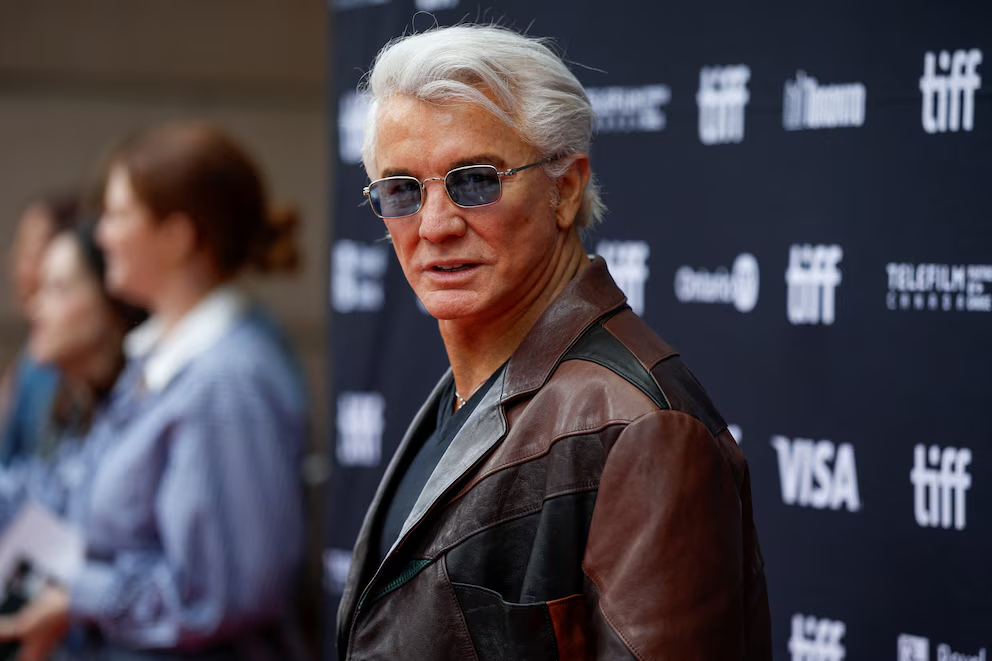
Art loses something when error disappears.
London, February 2026.
Baz Luhrmann’s line that artificial intelligence creates “perfect” things while humanity is imperfect sounds like a familiar artist’s caution, but in this case it lands as a more precise cultural argument. He is not rejecting technology as such. He is challenging the assumption that technical perfection is the same as artistic truth. That distinction matters because the current AI debate in film and media is increasingly shaped by output quality, speed, and realism, while artists like Luhrmann are pointing to something harder to quantify: the value of human irregularity.
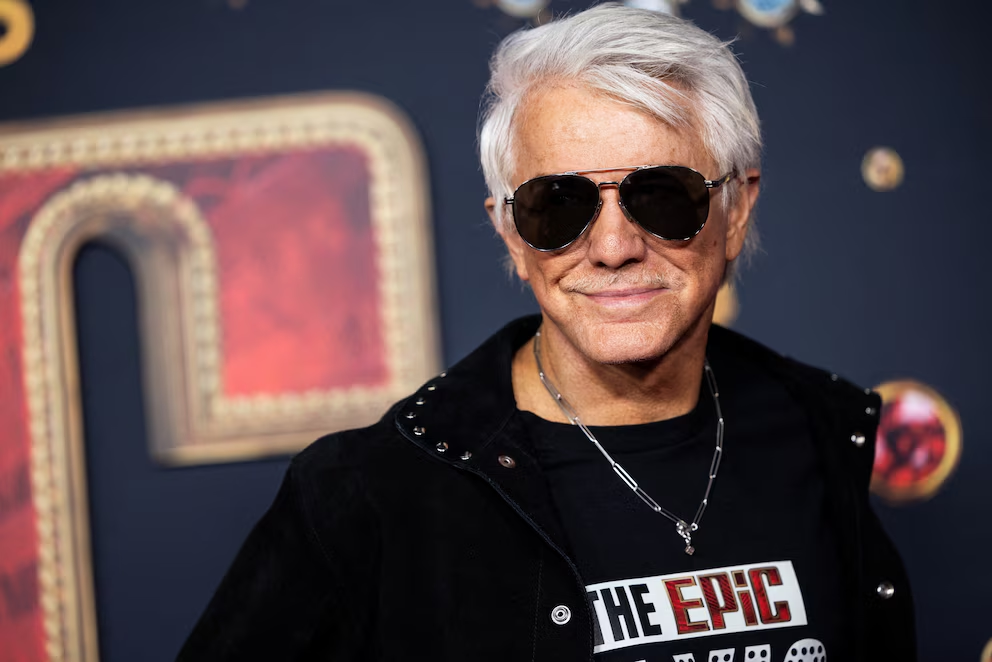
The context of his statement is central. Luhrmann is speaking while presenting EPiC: Elvis Presley in Concert, a project built from archival material and framed explicitly around the refusal to use AI to recreate or “improve” Elvis Presley’s presence. His emphasis on working from recovered footage and sound without AI-generated reconstruction is not only an aesthetic choice. It is a position on authorship, memory, and restoration ethics. When dealing with a figure like Elvis, the question is not simply what can be done with technology. It is what should be done without distorting the human texture that made the original performance meaningful.
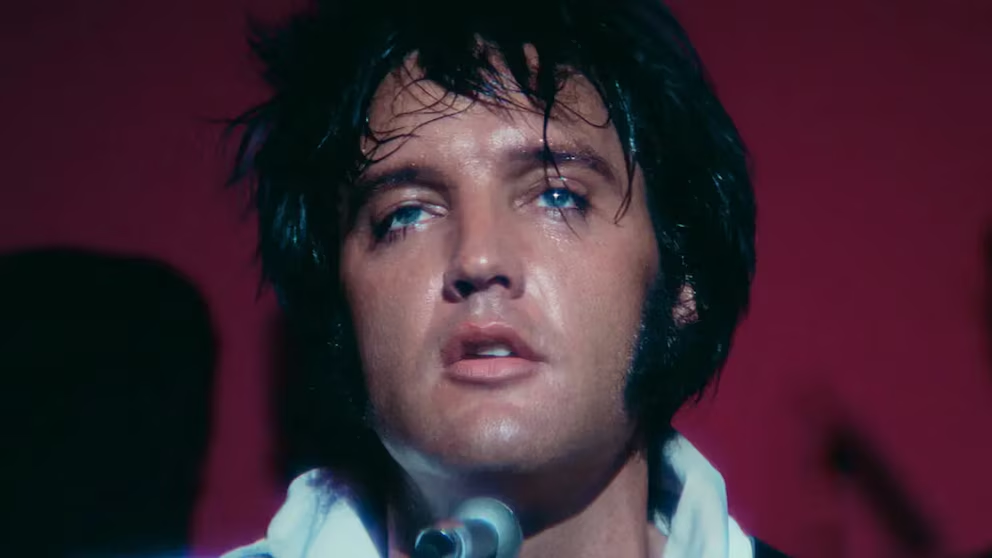
This is where Luhrmann’s point becomes culturally significant. AI can now simulate polish, continuity, and technical coherence at a level that is increasingly persuasive. But performance, especially iconic performance, is rarely built from perfection alone. It is built from timing, vulnerability, unpredictability, and flaws that become inseparable from charisma. By defending imperfection, Luhrmann is defending the idea that art is not merely an arrangement of optimized elements. It is a record of embodied contradiction.
The statement also reflects a growing divide in creative industries between two uses of AI. One approach treats AI as an assistive tool for workflow, cleanup, organization, and efficiency. The other treats AI as a generative substitute capable of filling gaps, recreating missing pieces, and producing synthetic versions of what no longer exists. Luhrmann appears willing to accept the first logic while resisting the second when it risks replacing historical authenticity with technical plausibility. That line is becoming one of the most important fault lines in contemporary audiovisual production.
There is a broader economic pressure behind this debate. Studios, platforms, and production pipelines are under constant pressure to reduce cost, accelerate output, and extend the usable life of intellectual property. AI offers all three. It can restore, upscale, interpolate, and potentially simulate in ways that are commercially attractive. In that environment, an artist arguing for imperfection is also arguing against a production culture that may prefer frictionless results over truthful ones. The warning is not only artistic. It is institutional.
Luhrmann’s Elvis comments also reveal something about the politics of preservation. Archival work has traditionally depended on restoration ethics that balance technical repair with historical fidelity. AI complicates that balance because it can generate material that appears authentic while exceeding what the archive actually contains. The danger is not merely fake imagery. It is the gradual normalization of “improved history,” where audiences lose the ability to distinguish between recovered evidence and synthetic completion.
This is why his phrasing matters. “Perfect” is not praise in his framing. It is a warning label. Perfect outputs can erase the asymmetries that make human work emotionally legible. In cinema, those asymmetries include breath, hesitation, rough transitions, unexpected phrasing, and presence that cannot be reduced to image fidelity. AI may imitate many of these qualities, but imitation is not the same thing as historical trace.
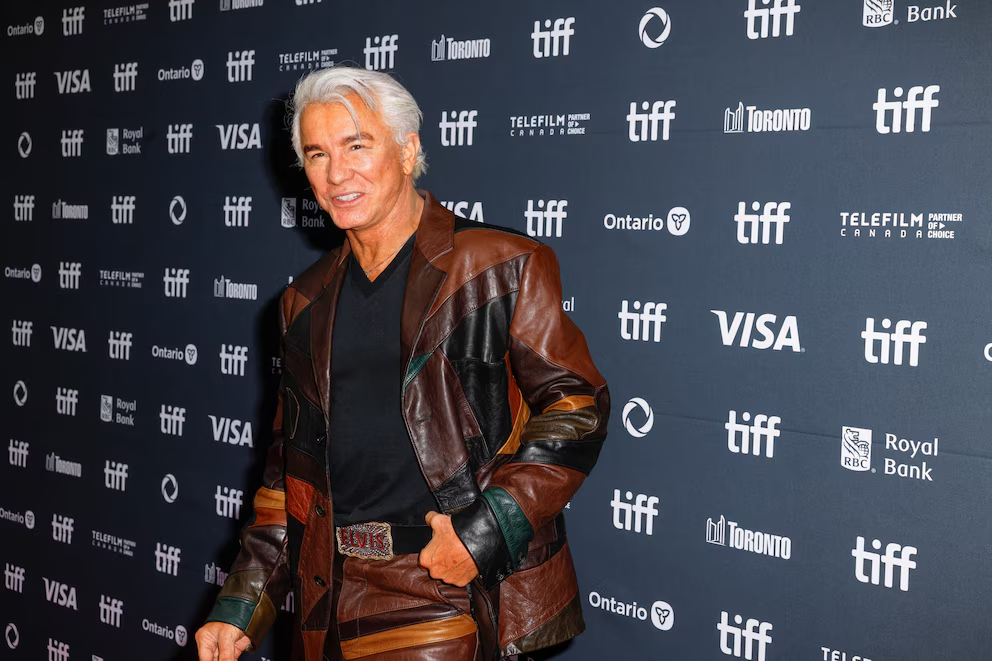
The deeper pattern is clear. As AI improves, the central debate in art will shift from whether machines can generate convincing work to whether cultural institutions still value imperfection as evidence of human origin. Luhrmann is placing himself firmly on one side of that divide. He is not saying technology should disappear. He is saying art should not become indistinguishable from its tools.
That is why his statement resonates beyond one Elvis project. It captures a broader anxiety in contemporary culture: if AI gives us increasingly polished outputs, will we still defend the flawed textures that make art feel lived rather than manufactured.
La narrativa también es poder. / Narrative is power too.