

 Phoenix 24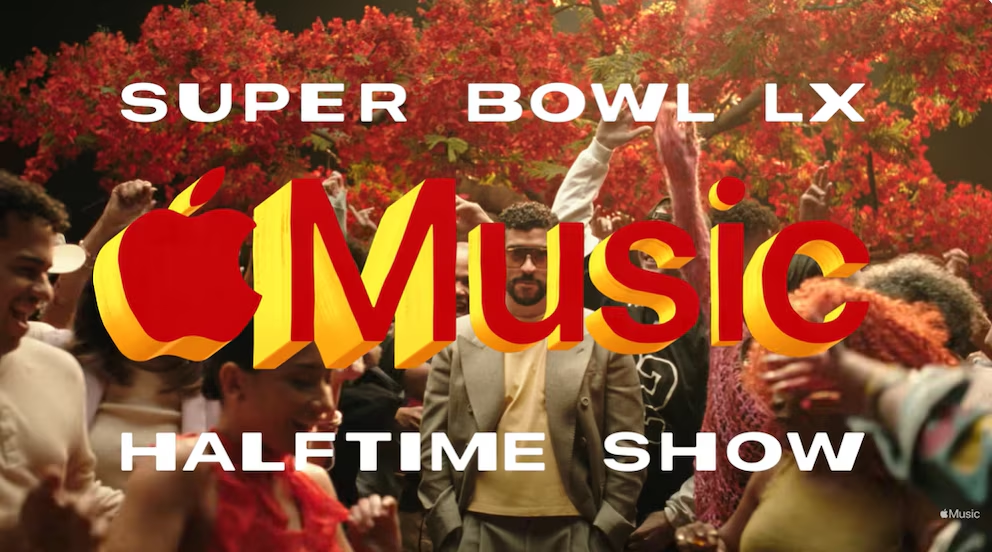
Music becomes language when power listens.
Santa Clara, January 2026.
The official trailer for the Super Bowl LX halftime show has transformed anticipation into conversation. Featuring Bad Bunny and released through Apple Music, the preview does more than announce a performance. It frames the halftime stage as a cultural space where identity, rhythm and collective memory meet. In a few minutes of imagery, movement and sound, the trailer signals that this show will not be only about entertainment, but about presence.
The visual narrative places Bad Bunny in environments that evoke Caribbean roots and shared community rather than isolated celebrity. He appears among ordinary people, moving with them rather than above them. The camera does not chase glamour alone, but connection. This choice reflects a broader shift in how global performances are framed, moving away from spectacle for its own sake and toward meaning that travels across borders. The halftime show becomes a stage where culture speaks before marketing does.
Bad Bunny’s role carries historic weight. He becomes the first solo Latin artist to headline this stage, which has long been dominated by English language pop and rock figures. That change is not accidental. It mirrors the demographic and cultural evolution of global audiences who already live in multilingual, hybrid worlds. By placing Spanish language music at the center of one of the most watched broadcasts on Earth, the organizers acknowledge a reality that audiences have lived for years.
From Latin America, cultural analysts describe this moment as symbolic recognition rather than novelty. They argue that Latin music has already shaped global sound for decades, but often without central visibility. Now the stage reflects that influence openly. In Europe, music scholars point out that cultural power today flows through rhythm and image as much as through politics. When a Puerto Rican artist leads a global event, it becomes a form of soft cultural authority.
In North America, the trailer has also reopened debates about national identity and inclusion. Some voices question whether Spanish language performance belongs at the heart of a traditionally English speaking broadcast. Others answer that the audience itself has changed. The modern public already speaks in many tongues, listens across cultures and lives inside global media. The halftime show is no longer just an American moment. It is a planetary one.
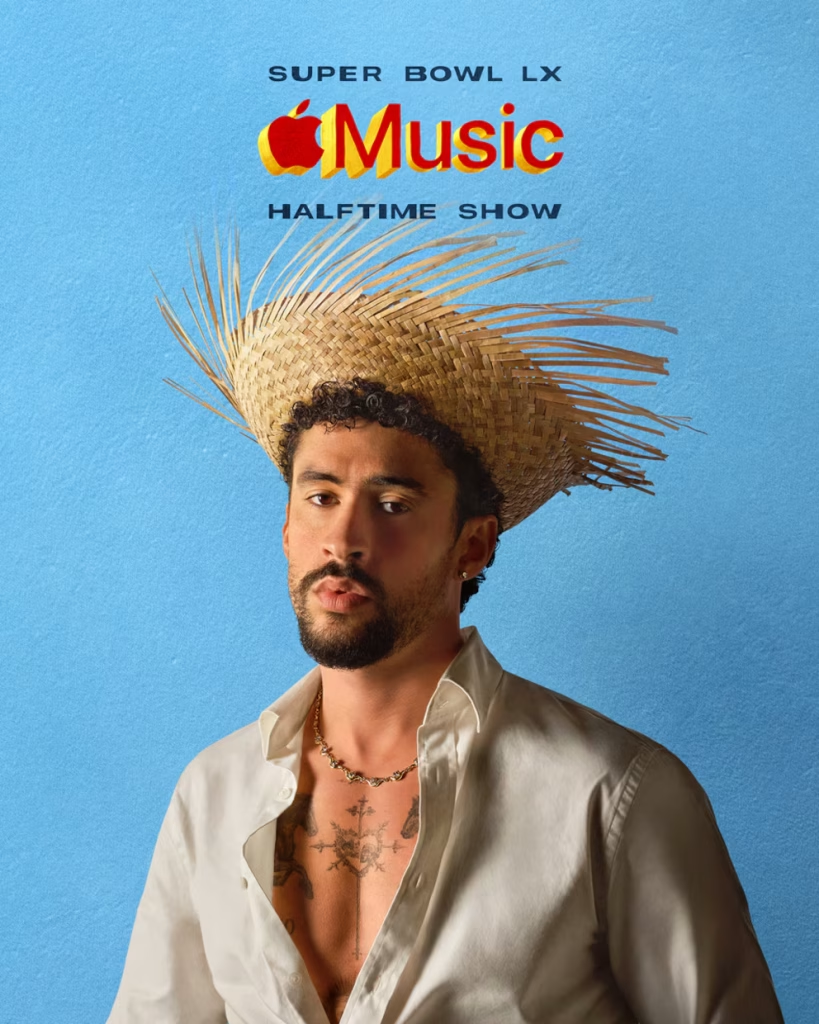
The partnership behind the show reflects this logic. Apple Music and the league have reshaped the halftime concept into a global cultural product, not just a commercial break. The goal is no longer only to sell albums or sponsors. It is to create moments that travel through social networks, classrooms, homes and streets around the world. The trailer’s design, focused on community rather than luxury, reinforces that ambition.
Bad Bunny’s artistic identity strengthens this direction. His work blends Caribbean rhythm, urban sound and social commentary. He is not only a performer, but a narrator of cultural experience. His presence on this stage suggests that authenticity now has commercial value, and that representation itself has become a form of attraction. Audiences are not only watching talent. They are watching themselves reflected in it.
From Asia, cultural industry observers note that young audiences respond strongly to artists who carry visible identity. They see in them permission to be multiple at once. Bad Bunny’s image as Latin, global, urban and traditional at the same time fits that desire. The halftime show becomes a mirror where mixed identities feel normal rather than marginal.
The trailer also reveals a shift in visual language. Instead of focusing on stadium scale alone, it emphasizes human closeness. Faces, bodies and shared movement dominate the frame. The message is subtle but clear. This is not about watching from a distance. It is about belonging inside the moment. The invitation is not to admire, but to join.
That choice carries political meaning even if it avoids political language. When culture places everyday people beside global stars, it suggests equality of presence. It tells viewers that celebration is not owned by elites. In a world divided by power, wealth and access, such imagery quietly challenges hierarchy without shouting.
There will be critics. There always are when tradition shifts. Some will say the halftime show should remain neutral, familiar or safe. But neutrality often hides old exclusions. Every tradition was once an innovation that frightened someone. The trailer suggests that the organizers understand this. They choose movement over comfort.
The significance of this show will not be measured only in ratings. It will be measured in memory. Children who see this performance will grow up knowing that their language, rhythm and face belong on the largest stages. Adults will recognize how far culture has traveled from the margins to the center.
When the lights turn on and the music begins, millions will watch. Some will see only spectacle. Others will see themselves. That difference defines the power of this moment.
The halftime stage is no longer just a break in a game. It is a map of who matters.
La narrativa también es poder. / Narrative is power too.