

 Phoenix 24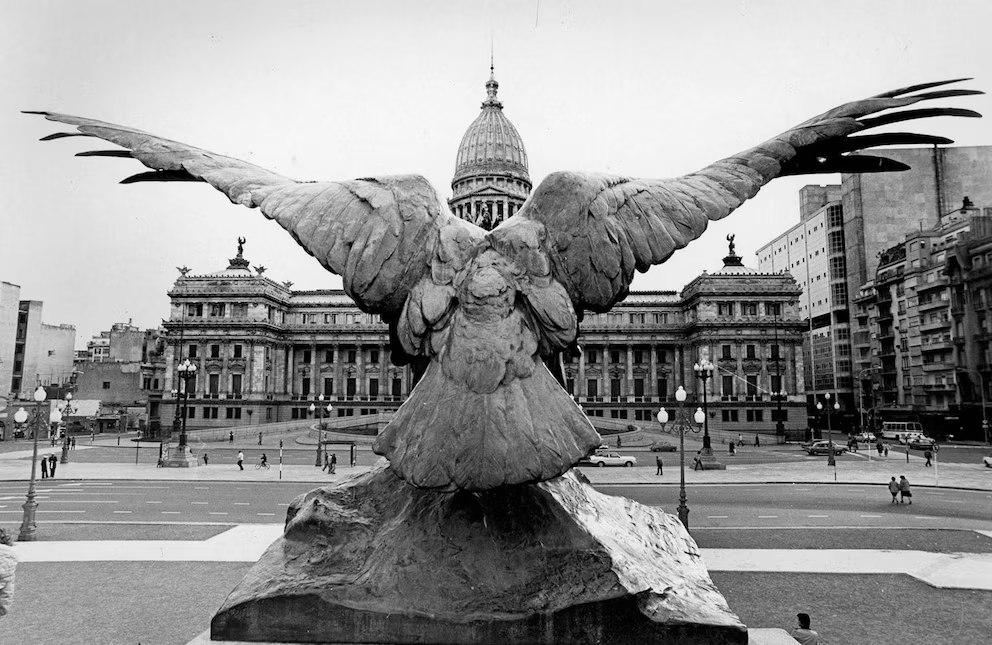
Photography returns where official language tries to erase.
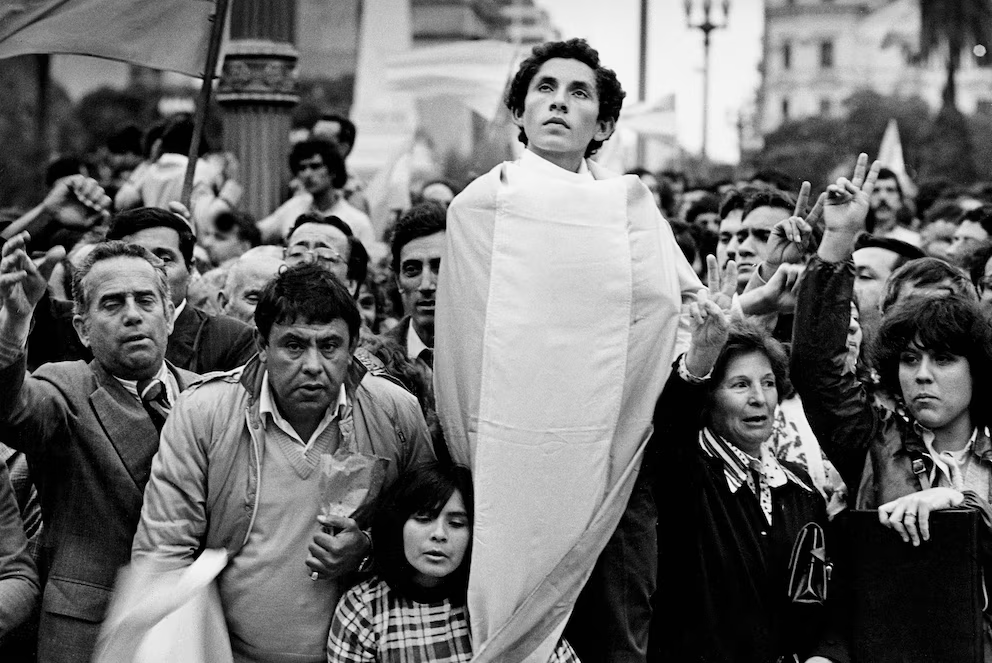
Buenos Aires | June 2026. Archivo 50 will open on June 19 at the Biblioteca Popular Cornelio Saavedra, bringing together photojournalistic work that links Argentina’s memory of dictatorship with the country’s current climate of street protest and repression. The exhibition includes images by Daniel Merle, Cristina Sille, Tadeo Bourbon and Kaloian Santos Cabrera, creating a visual dialogue between historical trauma and contemporary political tension.
The project expands Merle’s earlier work 40 Years in 24 Photos, originally created around the anniversary of Argentina’s civil-military dictatorship. This new version does not treat memory as a sealed archive. It intervenes in that archive, placing past and present images in confrontation so the viewer can recognize continuities, ruptures and warnings.
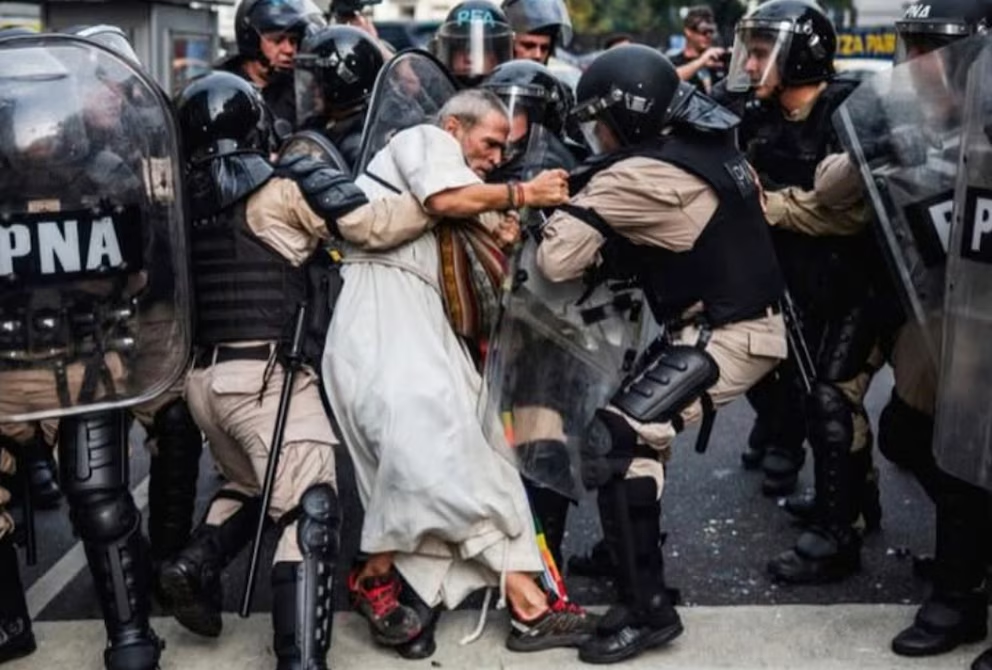
The exhibition focuses especially on protest, police action and public space. One of its reference images captures the detention of priest Jorge “Chueco” Romero during a demonstration by retirees in May 2025, a day marked by more than 100 reported injuries. The photograph operates not only as documentation, but as accusation: it freezes the moment when civic expression meets state force.
Its opening will include the conversation Photojournalism in Times of Repression, with the participation of the exhibitors and researcher Cora Gamarnik. That dialogue matters because photojournalism does not merely record what happens. It disputes what power later tries to rename, minimize or erase.
The venue also carries symbolic weight. A neighborhood library is not a neutral container; it is a civic space where memory can circulate outside official ceremony. By placing these images in a public cultural institution, Archivo 50turns spectators into witnesses and asks them to read the present through the unresolved grammar of the past.
The importance of the exhibition lies in its refusal to separate art from evidence. These photographs are not decorative images of conflict. They are fragments of public memory, produced under pressure, often in dangerous conditions, and later returned to society as documents of accountability.
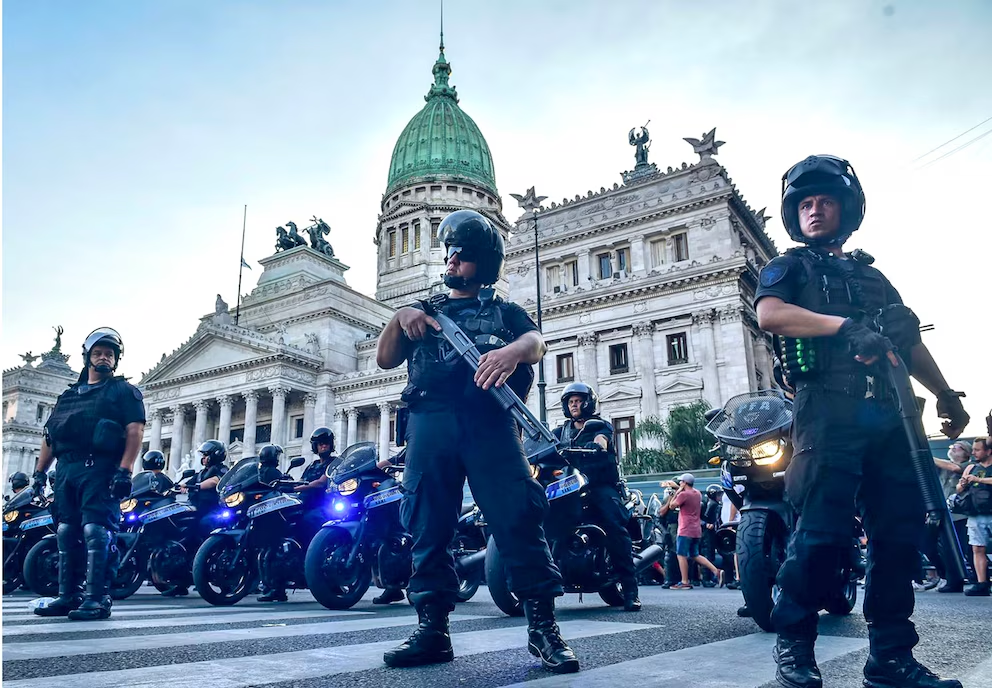
In Argentina, where memory has long been a battlefield, Archivo 50 reminds viewers that repression is never only an event. It is also a method, a language and a repetition. Photography interrupts that repetition by forcing the eye to stay where power would prefer silence.
Against propaganda, memory. / Contra la propaganda, memoria.