

 Phoenix 24
A hidden painting reopens the wound behind the myth.
Santander | June 2026. A long-hidden painting by Leonora Carrington has resurfaced in Spain, reviving one of the most painful and formative chapters in the life of the British-Mexican surrealist. The work, titled Villa Pilar, was created in 1940 during Carrington’s confinement in a psychiatric clinic in Santander, after she fled Nazi-occupied France and endured a severe psychological crisis.
The painting had remained for decades in the possession of the family of Dr. Luis Morales, the psychiatrist who treated Carrington during her hospitalization. According to the reported history of the work, Carrington dedicated and gave the canvas to the doctor after leaving the clinic. Its public reappearance now places a private, traumatic object back inside the cultural record.
Villa Pilar is not merely a rediscovered artwork. It belongs to the same dark period that produced Down Below, Carrington’s autobiographical account of breakdown, confinement and psychic survival. The painting’s imagery, populated by symbolic creatures linked to her surrealist universe, reflects the artist’s struggle to transform suffering into visual language.
The work is expected to be exhibited as part of Leonora Carrington: The Symptomatic Surreal, a project connected to Faro Santander and the Freud Museum in London. Its inclusion will allow audiences to reconsider Carrington’s Santander period not as a biographical footnote, but as a crucial laboratory of her later artistic vision.
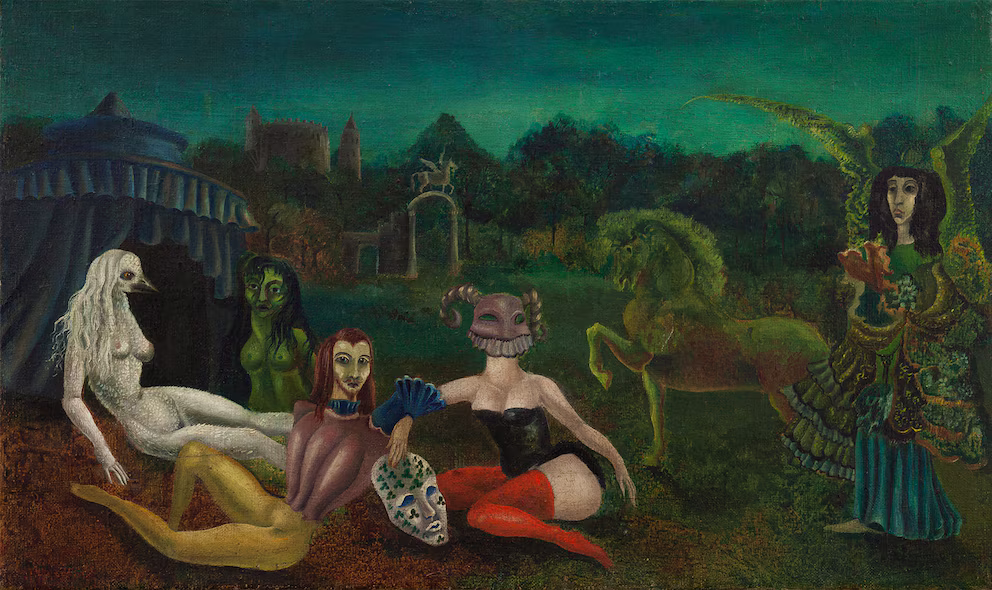
The reappearance also raises difficult questions about art, medicine and power. Carrington’s confinement was marked by treatments now viewed through a far more critical ethical lens, including shock therapy. That context forces the painting to be read not only as aesthetic production, but as testimony from a young woman navigating trauma under institutional control.
Carrington’s later life in Mexico would transform her into one of the most influential surrealist voices of the twentieth century. Yet this recovered canvas reminds us that her mythology was not built from fantasy alone. It emerged from exile, fear, rupture, resistance and the urgent need to give form to what ordinary language could not contain.
The importance of Villa Pilar lies in what it restores. It returns a missing image to Carrington’s archive, but it also returns attention to the conditions under which the work was made. In doing so, it asks the art world to look beyond the enchantment of surrealism and confront the human wound beneath the symbol.
Every silence speaks. / Cada silencio habla.