

 Phoenix 24
The professional Mac may be approaching its biggest redesign in years.
Cupertino, United States
Apple is reportedly preparing a major redesign of the MacBook Pro that could introduce three changes once considered unlikely for the company’s professional laptop: an OLED display, touchscreen controls and a significantly lighter chassis. The new models are said to be undergoing internal testing and could arrive as early as October or November. Apple has not officially confirmed the redesign, so the specifications remain based on reporting and supply-chain information rather than a formal product announcement. If the project reaches the market as described, it would represent one of the most substantial changes to the MacBook Pro since Apple moved the lineup to its own silicon.
The touchscreen would mark a particularly important shift. Apple has traditionally kept direct touch interaction focused on the iPad while maintaining the Mac as a keyboard and trackpad environment. A touch-enabled MacBook Pro would begin to blur that long-standing distinction, especially if macOS is being adapted to support more direct interaction with interface elements. The change would not necessarily transform the Mac into an iPad replacement, but it could expand how professional users navigate applications, timelines and creative workflows.
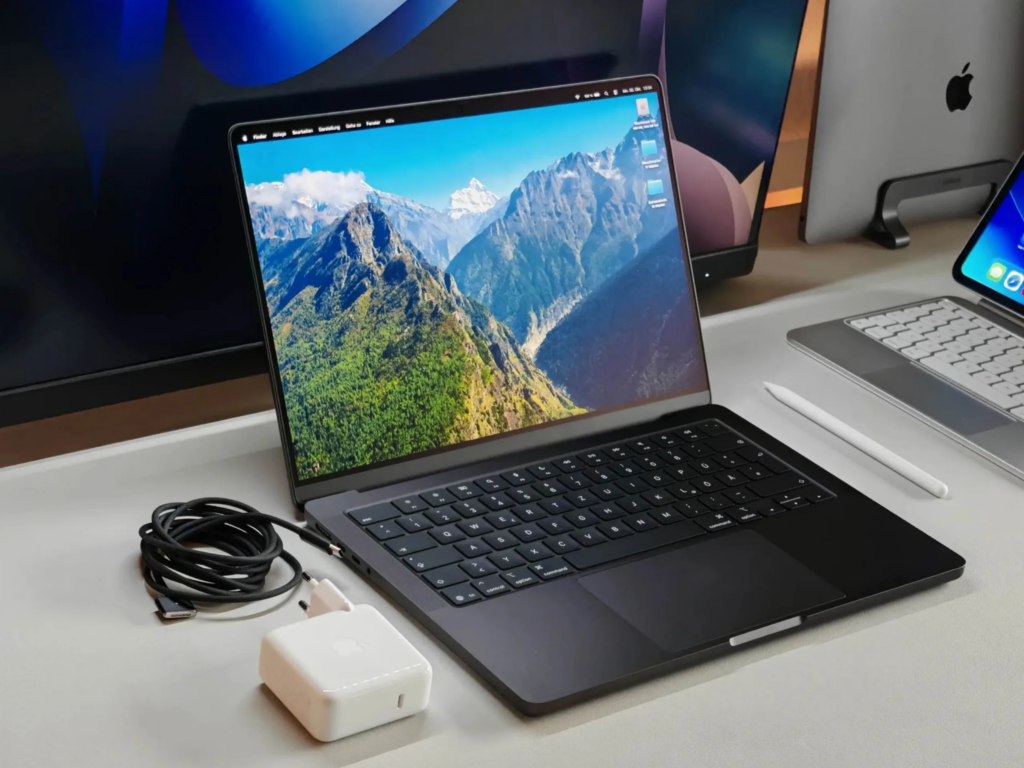
OLED technology would provide another visible leap. Compared with conventional LCD systems, OLED panels can deliver deeper blacks, stronger contrast and more precise control over individual pixels. Reports also indicate that Apple could replace the traditional display notch with a Dynamic Island-style interface, further altering the appearance of the MacBook Pro. Combined with a thinner chassis, those changes would make the redesign immediately distinguishable from the current generation.
Weight reduction may prove just as important as the display. Apple is reportedly miniaturizing and rearranging internal components to make the computer substantially easier to carry without sacrificing the performance expected from the Pro line. That would address one of the clearest differences between the MacBook Pro and MacBook Air, particularly for professionals who regularly travel with their computers. The challenge will be maintaining battery endurance, thermal performance and structural rigidity while reducing both thickness and mass.
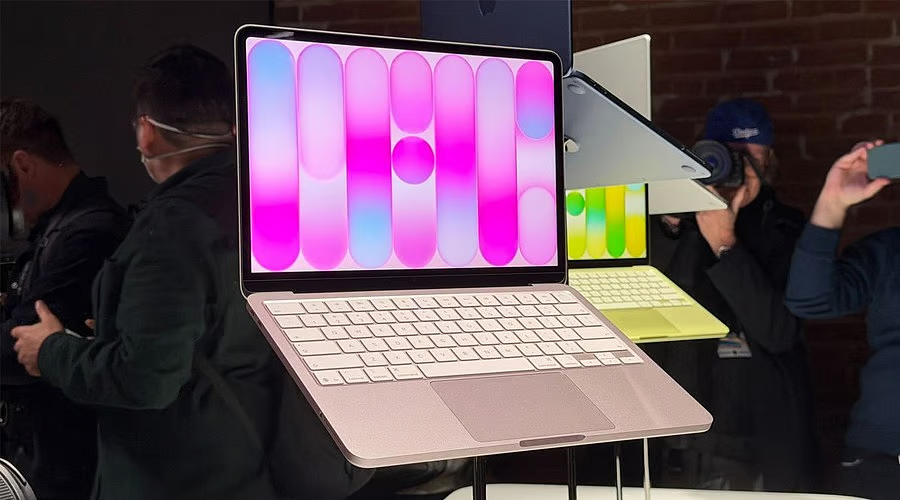
The larger shift is strategic. For years, Apple has differentiated its portable computers through a relatively clear trade-off: the Air prioritizes mobility, while the Pro prioritizes sustained performance. A lighter touchscreen OLED MacBook Pro could narrow that separation while creating a new premium tier built around both professional power and greater portability. If Apple succeeds, the next MacBook Pro may not simply be faster. It could redefine what the company believes a professional Mac should feel like.
Phoenix24: clarity in the grey zone. / Phoenix24: claridad en la zona gris.