

 Phoenix 24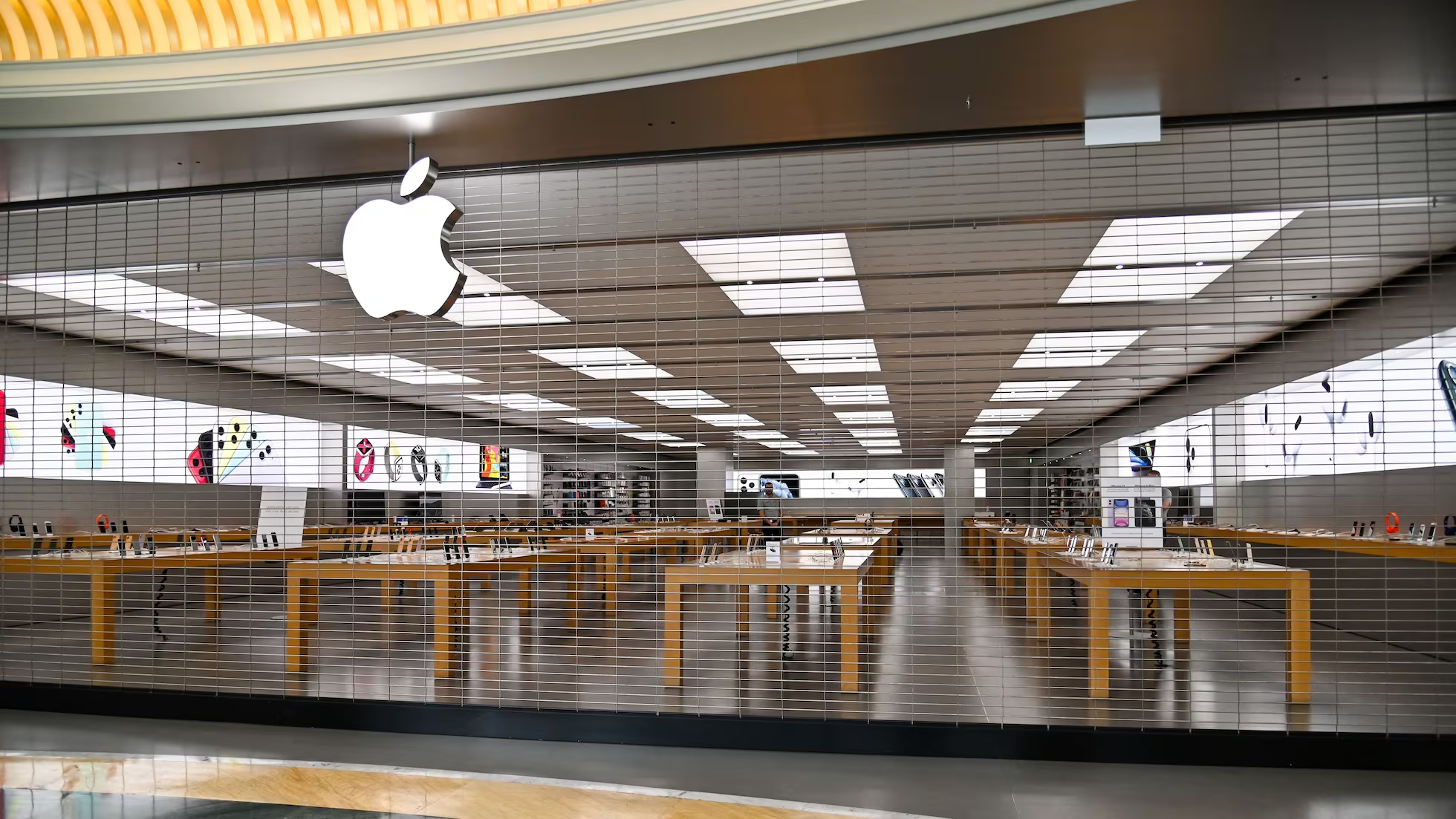
War risk closes stores faster than markets.
Dubai, March 2026
Apple’s decision to temporarily close all of its retail stores in the United Arab Emirates looks, at first glance, like a short-term operational adjustment. In reality, it is a signal that the region’s security volatility has crossed the threshold where even the most disciplined global brands treat physical retail as an unacceptable exposure. Infobae reports that Apple suspended service across its five UAE locations amid fears of additional strikes linked to the widening conflict with Iran, following attacks that began on February 28, 2026. The company did not present the move as politics. It presented it as safety. That distinction is exactly what makes the event structurally important: corporate risk management is now being forced to behave like civil defense, and retail becomes one of the first visible casualties.
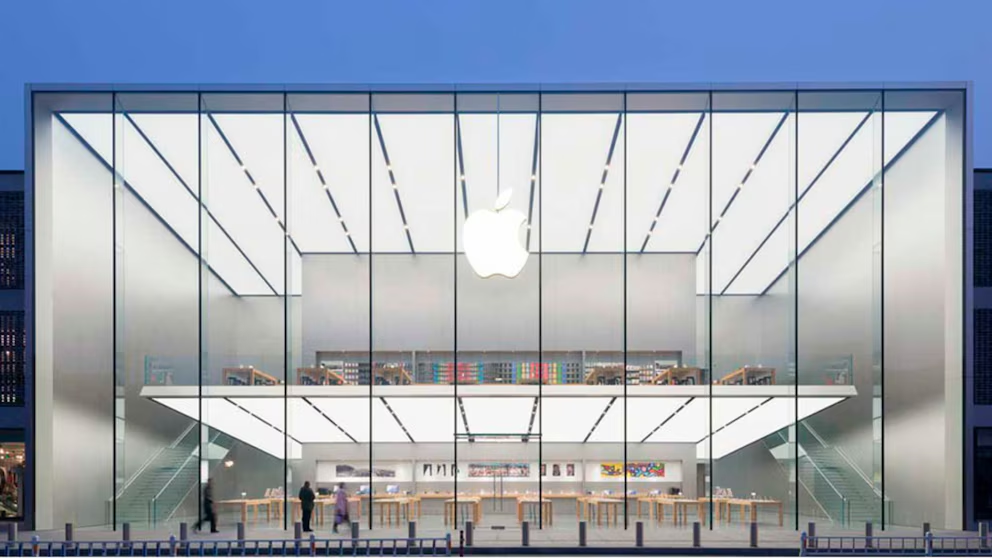
The closure is total within the country’s Apple footprint. The five stores sit in high-profile malls and premium commercial nodes, with three locations in Abu Dhabi and two in Dubai. Infobae lists key sites such as Dubai Mall and Mall of the Emirates, alongside Yas Mall, Al Maryah Island, and Al Jimi Mall. The choice of venues matters because it highlights the tension in the Gulf’s economic model. These are not marginal storefronts. They are symbolic centers of global retail and tourism, designed to communicate normality, luxury, and continuity. When a brand like Apple shuts down inside these spaces, the message travels faster than any government communiqué: the risk is not theoretical, and the premium shopping ecosystem is not insulated from the war envelope.
The timeline underscores how quickly conditions shifted. According to Infobae, Apple’s store locator showed the branches would remain closed; reopening was initially expected around March 4, but the date was later changed. The company had not issued a detailed public statement explaining the closure beyond what could be inferred from the safety environment. That lack of detail is itself a standard crisis posture. Multinationals often limit their public language in fast-moving security situations to avoid misinformation, liability, or the appearance of contradicting local authorities. Yet silence also increases interpretive space, and in the Gulf that space fills rapidly with anxiety, especially when drone and missile incidents become part of the daily news rhythm.
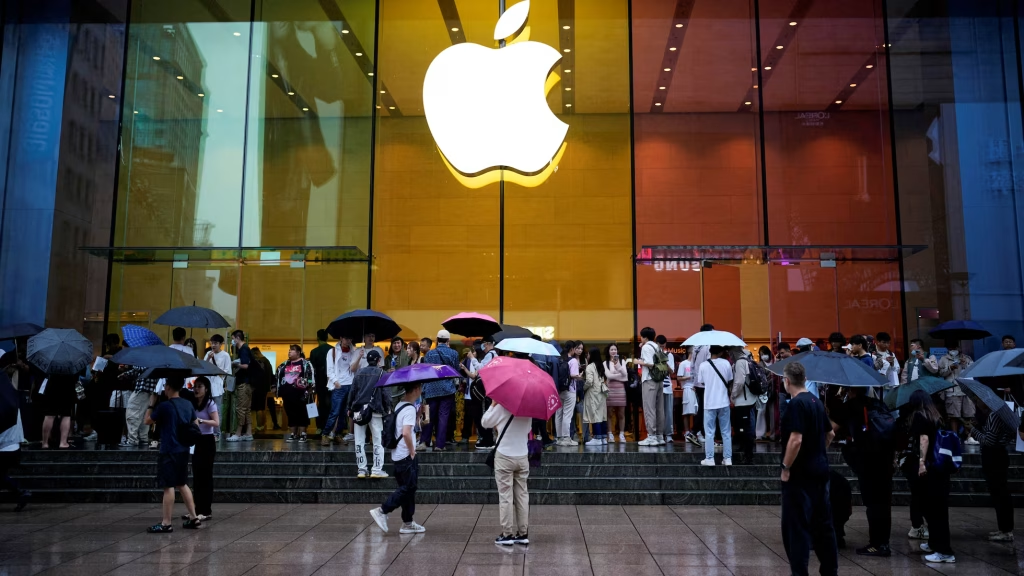
Apple’s move sits inside a broader pattern of governmental and corporate precautions across the UAE. Infobae notes that the Ministry of Human Resources recommended remote work where possible to reduce public exposure, excluding only essential roles that require physical presence. The education system also adjusted, with authorities extending distance learning for students, teachers, and administrative staff in schools and universities through March 6. These measures should be read as a layered risk posture: reduce crowds, reduce transit, and reduce predictable routines that could be disrupted by alerts or incidents. When the state shifts toward remote modalities, companies face a binary choice: operate under voluntary staffing and higher uncertainty, or close and preserve safety and brand trust.
The strategic irony is that the UAE has been one of Apple’s most carefully cultivated regional footholds. Infobae emphasizes that while the Emirates are a small slice of Apple’s global store network, the Middle East has been a focus area for expansion, investment, and developer ecosystem messaging. Apple has publicly framed the UAE as a regional innovation hub, and the company has previously highlighted major local investment over recent years. This is why the closure reads as more than a temporary pause. It interrupts a narrative of stability that the Gulf sells to global capital: that it is a safe platform for commerce even when surrounding regions are unstable. The war’s spillover pressure is now testing that narrative in the most visible way possible, through consumer-facing storefronts.
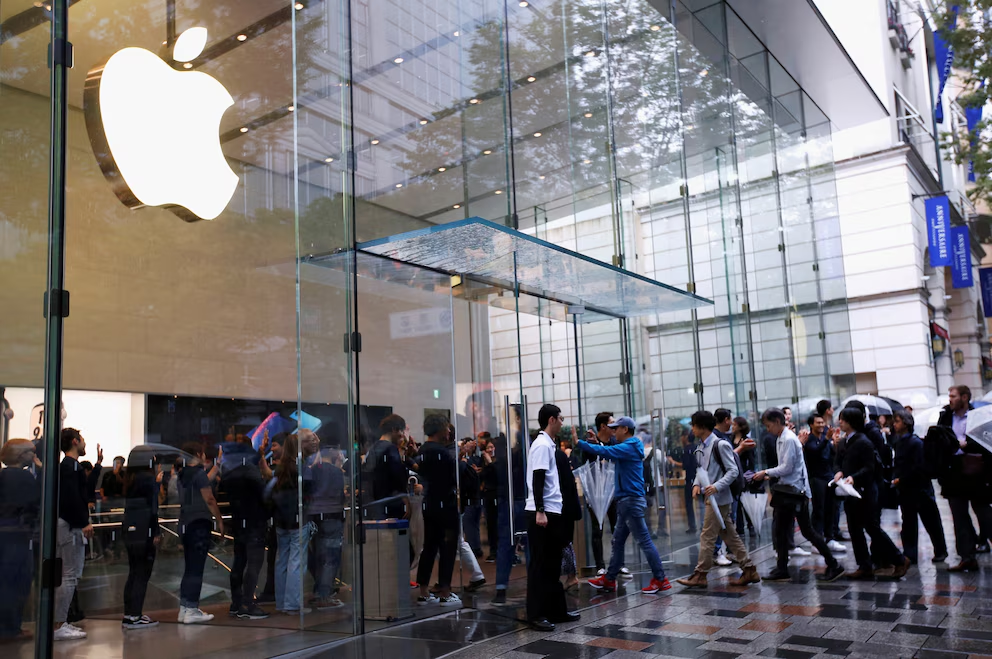
Financial context adds another layer. Infobae cites Apple’s most recent results, noting strong net income in the first fiscal quarter of 2026 and positioning Europe as Apple’s second-largest geographic segment by net sales. The UAE does not appear as a separate line item, because it is folded into broader regional reporting, but that is precisely the point. Markets like the UAE can be strategically significant without being financially dominant. They function as brand beacons, regional hubs, and high-visibility confidence signals. Closing them is not primarily about losing a few days of foot traffic. It is about removing a brand beacon from a high-importance geography because the cost of staying open has become too unpredictable.
This episode also reveals the new hierarchy of vulnerabilities in global business. Digital-first companies still depend on physical nodes: stores, warehouses, staff, malls, and logistics corridors. When conflict expands into airspace risk and urban anxiety, those nodes become liabilities. The Gulf’s commercial model is built on predictability: tourism flows, premium malls, luxury retail, and “open for business” optics. War risk attacks predictability first. That is why global brands close early, not only to protect employees and customers, but to avoid the reputational damage of appearing reckless if an incident occurs near a public-facing location.
There is a parallel story unfolding in investor psychology. Infobae points to recent declines in Apple’s share price in the days around March 3, tied to volatility and risk caution driven by Middle East escalation. Equity markets do not need a direct revenue hit to reprice risk. They respond to the probability that risk spreads: disruptions to travel, consumer confidence, supply chains, and the broader macro mood. A temporary store closure in one country will not break Apple’s global model, but it contributes to a wider sense that war-driven volatility is now touching civilian commerce in high-visibility spaces. Markets price that kind of uncertainty aggressively because uncertainty is hard to hedge.
The deeper pattern is that “retail closure” is becoming an early indicator of geopolitical escalation. Governments issue statements; companies change operations. When companies start changing operations in premium hubs, it means risk has moved from abstract geopolitics into daily-life planning. Apple’s UAE closures fit a regional cascade in which other brands also adjust store operations, staffing, and travel policies. The corporate sector is effectively translating military volatility into a commercial map of avoidable exposure. That map, once drawn, is hard to erase quickly because confidence returns slower than it collapses.
Apple’s decision is therefore not a story about iPhones or mall traffic. It is a story about how global commerce responds when war enters the logistics and psychological perimeter of a market that sells stability as its core product. The UAE remains a growth market and a strategic platform, but growth does not override safety. When the threat environment becomes ambiguous enough, even the most polished retail theater goes dark. That is the real message behind the closed doors.
Every silence speaks. / Cada silencio habla.