

 Phoenix 24
The iPhone Duo represents a calculated experiment in premium technology.
Cupertino, California.
Apple has entered the foldable smartphone market with the iPhone Duo, a $1,999 device introduced on September 9 despite limited global adoption of folding phones. The category accounts for less than 2% of worldwide smartphone sales, raising questions about why Apple chose to enter a segment that has struggled to attract mainstream consumers. The answer lies in the intersection of product differentiation, premium pricing and the search for new reasons to upgrade.
The iPhone Duo features a 5.4-inch external display that functions like a conventional smartphone. When unfolded, it reveals a 7.6-inch screen designed for multitasking, entertainment and applications that benefit from additional space. Apple has also adapted iOS 27 to support transitions between the two displays and introduced a hinge engineered for durability. The device will become available on October 23, following the opening of preorders on October 16.
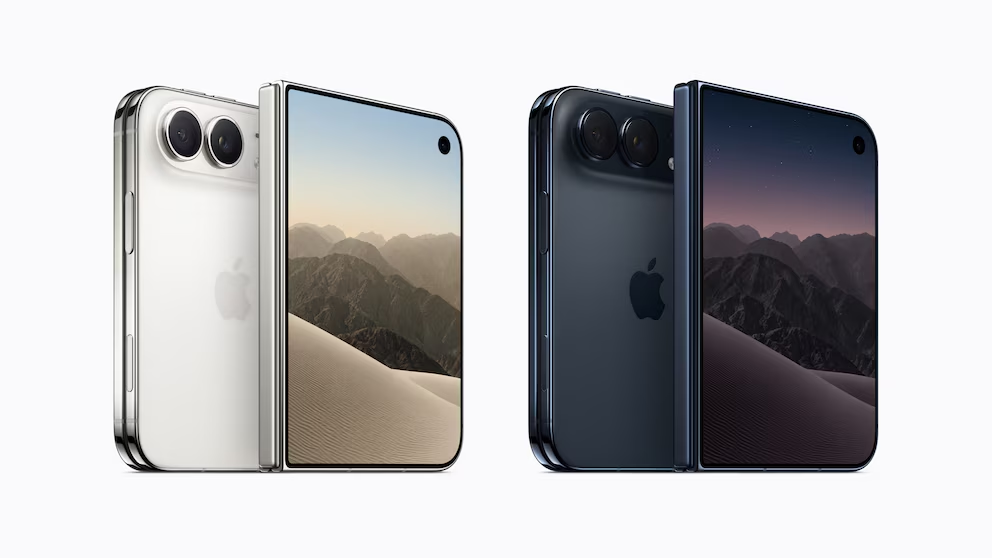
Its launch comes after years of experimentation by competitors, particularly Samsung and Huawei. Foldable smartphones have remained expensive, while concerns about durability, thickness and practical utility have limited their appeal. Apple is entering a market that already exists rather than introducing an entirely new product category.
Yet the commercial opportunity remains significant. Research firm IDC projects that foldable smartphone shipments could increase by 12% in 2026, reaching 22.9 million units. This would represent growth within a relatively small segment, even as the broader smartphone market faces pressure from rising component costs and weaker demand.
Nabila Popal, an IDC research director, has identified exclusivity and luxury positioning as important factors behind consumer interest in foldable devices. In a mature smartphone market, unusual designs can distinguish premium products whose conventional counterparts increasingly resemble one another. Apple’s entry could therefore help the company defend its position among consumers willing to pay substantially more for a different experience.
The strategy involves compromises. To achieve its folding design, the iPhone Duo omits the advanced camera configuration available on the iPhone 18 Pro and replaces Face ID with a side-mounted fingerprint sensor. Its value proposition consequently depends less on offering every available feature than on whether consumers find the larger display useful.
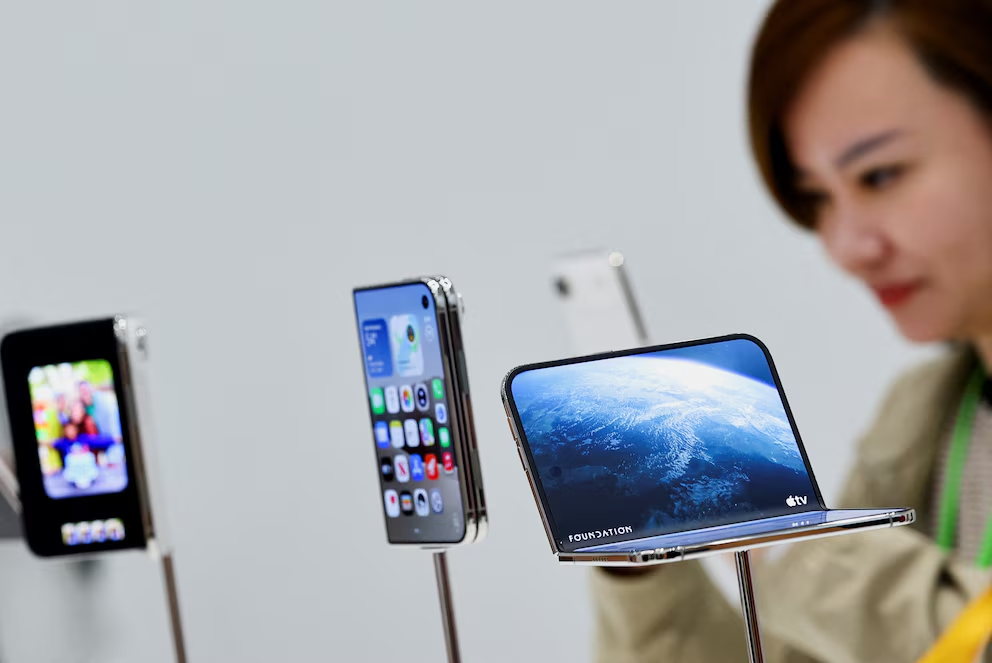
The timing introduces another complication. A global shortage of memory chips, intensified by demand from artificial intelligence infrastructure, has increased manufacturing costs across the electronics industry. Higher smartphone prices could encourage consumers to retain existing devices longer, making the introduction of an expensive new format particularly challenging.
Apple has not demonstrated that foldable phones will replace conventional smartphones. Instead, the iPhone Duo tests whether an established ecosystem, specialized software and distinctive industrial design can expand demand beyond the category’s existing audience.
The central question is not simply whether consumers want a phone that folds. It is whether the additional screen fundamentally changes what they can accomplish with a device they already carry every day.
Más allá de la noticia, el patrón. / Beyond the news, the pattern.