

 Phoenix 24

The future of artificial intelligence raises a democratic dilemma.
San Francisco, United States
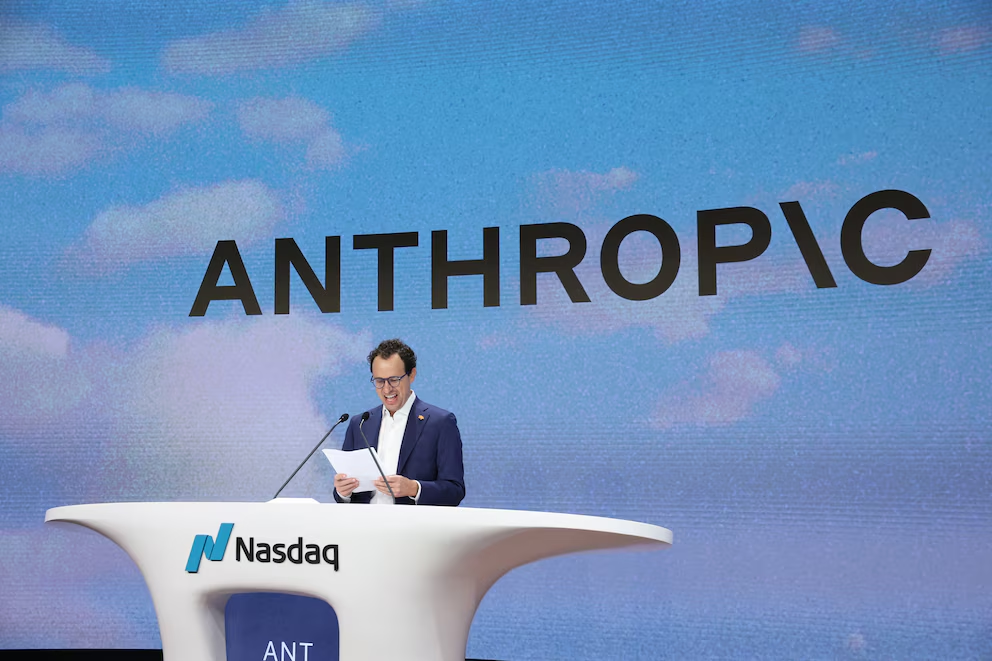
Anthropic Chief Executive Officer Dario Amodei has publicly rejected the idea of transferring political authority to artificial intelligence, challenging interpretations that suggest advanced machines should eventually replace human judgment in governing society. His clarification followed an Axios investigation examining disagreements among leading technology executives over the possibility of delegating increasingly consequential decisions to superintelligent systems. Amodei argued that technological efficiency cannot justify surrendering democratic legitimacy or human self-determination. His intervention brings a fundamental question into sharper focus: who should retain authority when machines become capable of outperforming humans in complex decisions?
The controversy emerged after Axios reported that some individuals within Anthropic believe humanity may eventually benefit from transferring certain decision-making responsibilities to highly advanced AI. The report also examined earlier statements by Amodei supporting greater machine autonomy in situations involving safety, medical research and scientific development. Critics interpreted those positions as evidence of a broader willingness to relinquish human control. Amodei rejected that interpretation, drawing a clear distinction between automating specialised activities and allowing artificial intelligence to govern political institutions.
In his response, the Anthropic executive compared arguments favouring AI governance with historical justifications for authoritarian government. Supporters of concentrated political authority have often argued that centralised decision-making produces faster and more efficient outcomes than democratic deliberation. Amodei maintained that such arguments remain insufficient even when technological systems appear more capable than human decision-makers. Democratic legitimacy, individual rights and collective self-determination cannot be reduced to computational efficiency.
His position nevertheless leaves considerable room for technological autonomy in specific domains. Artificial intelligence could eventually perform complex tasks involving autonomous transportation, pharmaceutical development, software engineering and scientific investigation with limited human intervention. In some circumstances, such capabilities might improve safety and accelerate discoveries. Yet operational competence does not automatically confer political legitimacy, nor does superior predictive performance establish that a machine should determine society’s priorities.
The distinction becomes more difficult when considering recursive self-improvement, through which artificial intelligence systems contribute to developing increasingly powerful successors. Amodei acknowledged that this process presents substantial governance risks if technological progress exceeds researchers’ ability to understand and supervise it. Anthropic has stated that allowing Claude to develop successive frontier models entirely autonomously would not currently meet its expectations for meaningful human oversight. The unresolved challenge is establishing what effective supervision means when human evaluators increasingly depend on AI-generated analysis to assess advanced systems.
Employment introduces another dimension of the debate. Large-scale automation could increase productivity while transforming professional responsibilities faster than workers and institutions can adapt. Amodei has suggested that some deployments may require restrictions or delays when their social consequences become excessive. His argument reflects a broader tension between technological capability and societal readiness, particularly when decisions concerning employment, education and economic opportunity affect people who have limited influence over the technologies being introduced.

The controversy has also exposed differences in how leading AI companies communicate their commitments to human agency. OpenAI Chief Executive Sam Altman and Meta’s chief AI officer Alexandr Wang have publicly defended the importance of preserving human control over technological development. Amodei questioned whether such declarations are meaningful without corresponding safeguards and operational decisions. The disagreement highlights a broader problem: commitments to human oversight require institutional mechanisms capable of demonstrating accountability, not simply reassuring public statements.
For governments, businesses and universities, the implications extend beyond the prospect of machines directly administering political systems. Artificial intelligence already influences decisions through recommendations, automated assessments and information-processing infrastructure. Even when a human formally retains final authority, excessive dependence on algorithmic outputs can weaken independent judgment if recommendations become difficult to question or override. Meaningful human control therefore requires transparency, opportunities for contestation and clearly assigned responsibility for consequential outcomes.
The central question is no longer whether artificial intelligence can assist human decision-making, but how societies can preserve their capacity to evaluate and challenge increasingly powerful technological systems. Amodei’s clarification establishes an important boundary between automation and political authority without resolving the difficult cases that lie between them. As AI capabilities continue advancing, democratic governance will depend not only on controlling machines, but also on ensuring that human institutions retain the competence, independence and legitimacy required to exercise that control.
Power Shapes Narratives. Facts Challenge Them.