

 Phoenix 24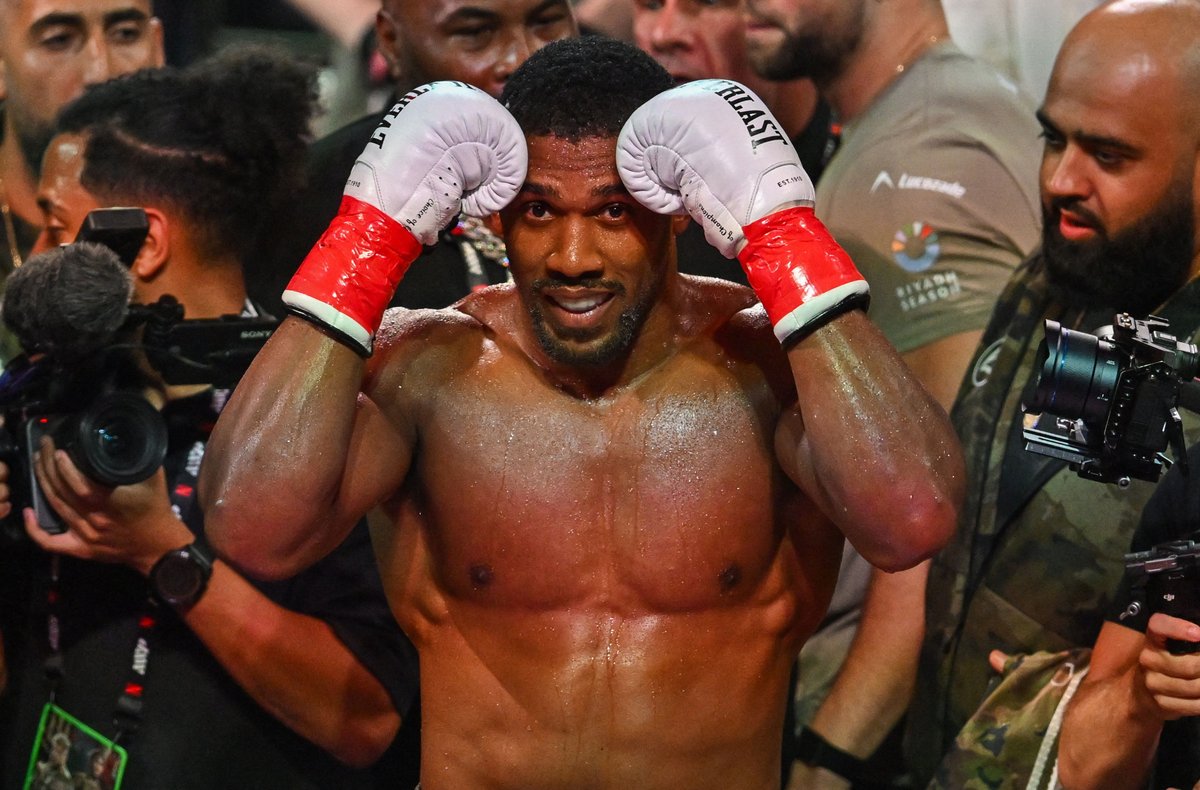
Grief rewires training before it rewires life.
London, March 2026
Anthony Joshua’s return to Finchley is being framed as a training choice, but it reads more like a decision about identity under pressure. After the fatal crash in Nigeria that killed two men at the center of his daily life, Joshua has gone back to the gym where his relationship with boxing began, not to perform nostalgia, but to recover the one environment that still feels structurally reliable. Infobae reports that he has intensified his work at Finchley Amateur Boxing Club, reuniting with his first coach, Sean Murphy, while continuing rehabilitation focused on rib injuries. The gesture is symbolic, yes, but it is also operational: when an athlete’s body and certainty are both shaken, the safest place is often the oldest system that once taught him how to hold himself together.
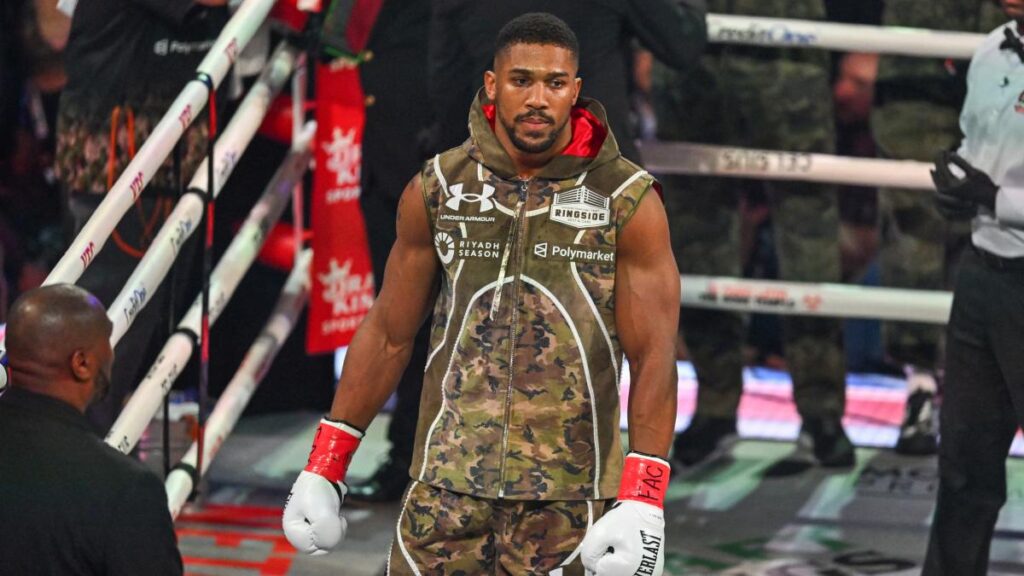
The timeline is what makes the move feel heavier than a routine training update. Reporting across multiple outlets places the crash on December 29, days after a high-profile win that had restored a sense of momentum. The collision, described as involving an SUV hitting a stationary truck on the Lagos–Ibadan route, killed Kevin “Latz” Ayodele, identified as Joshua’s personal trainer, and Sina Ghami, described as a long-time therapist and recovery specialist in his team. Reuters and Sky reporting emphasized that Joshua survived with minor injuries, but the loss was intimate and immediate: not distant acquaintances, but the people who occupy the quiet hours around an elite fighter, the ones who manage the unseen work of recovery, confidence, and routine. In that context, “back in the gym” is not a motivational cliché. It is a decision about whether his life remains organized around boxing or whether boxing becomes something he has outgrown through trauma.
Finchley is not just a location. It is the origin story Joshua has repeatedly used to explain himself. Infobae notes that he started boxing at 18 as a way out of trouble and found structure under Murphy’s guidance before later moving into the national system that carried him to Olympic gold in 2012 and then to heavyweight titles. Returning to that early setting now functions as a reset button. Not because it rewinds the story, but because it strips the story down to fundamentals: a ring, a coach who knows his baseline, and training that can be made real again without the noise of championship politics. In a sport where public narrative often colonizes personal experience, this is a rare move toward something private and legible.
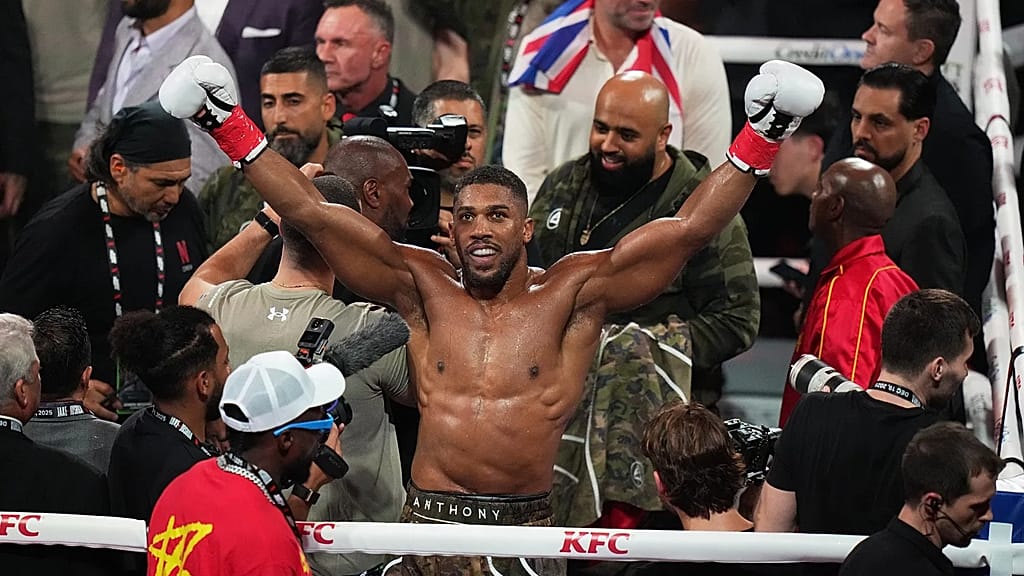
It also signals a shift in how Joshua is managing the post-crash phase. Early reports after the incident suggested uncertainty, including family remarks in Nigerian media that implied he might retire. Promoter commentary in Britain was more cautious, describing the need for physical, mental, and emotional time before any decision. The reality is that both voices can be true at once. Athletes often flirt with retirement after trauma not because they lack will, but because trauma rewrites the cost-benefit ledger in ways performance metrics cannot capture. A heavyweight can accept pain as part of the job. He cannot accept the feeling that his personal world is collapsing around the job. Finchley, in this sense, is a compromise between disappearance and return: he is not staging a comeback date, but he is refusing to let the crash define his relationship with the sport.
The technical layer matters, because this is not only grief, it is physiology. Infobae highlights rib rehabilitation as a central focus, and other coverage has shown painful treatment and slow recovery. Rib injuries are deceptive in combat sports because they can heal enough to train lightly while still failing under the rotational stress of punching, clinching, and absorbing impact. A heavyweight’s torso is a weapon platform. If the platform is unstable, even a fully fit mind cannot safely compete. Returning to training in this context is therefore not evidence that he is ready to fight. It is evidence that he is trying to restore capacity without gambling on recurrence. The gym is where he can test what the ribs will tolerate, what breathing feels like under load, and whether confidence returns without forcing a public deadline.
The coaching angle reinforces that logic. Joshua’s recent career has been marked by changes, from long-term stability under Rob McCracken to experiments with other coaches, each attempt carrying its own promise of evolution. Infobae lists those transitions, including periods with Robert Garcia, Derrick James, and most recently Ben Davison. Under normal circumstances, shifting coaches can look like tactical searching. Under post-trauma conditions, returning to a first coach looks different. It is not searching for novelty. It is searching for grounding. A first coach is not always the best coach for championship-level refinement, but he can be the best coach for reestablishing rhythm, trust, and the feeling of being understood without explanation. After a crash that killed the people who supported his daily functioning, that kind of trust becomes a training variable as real as strength and speed.
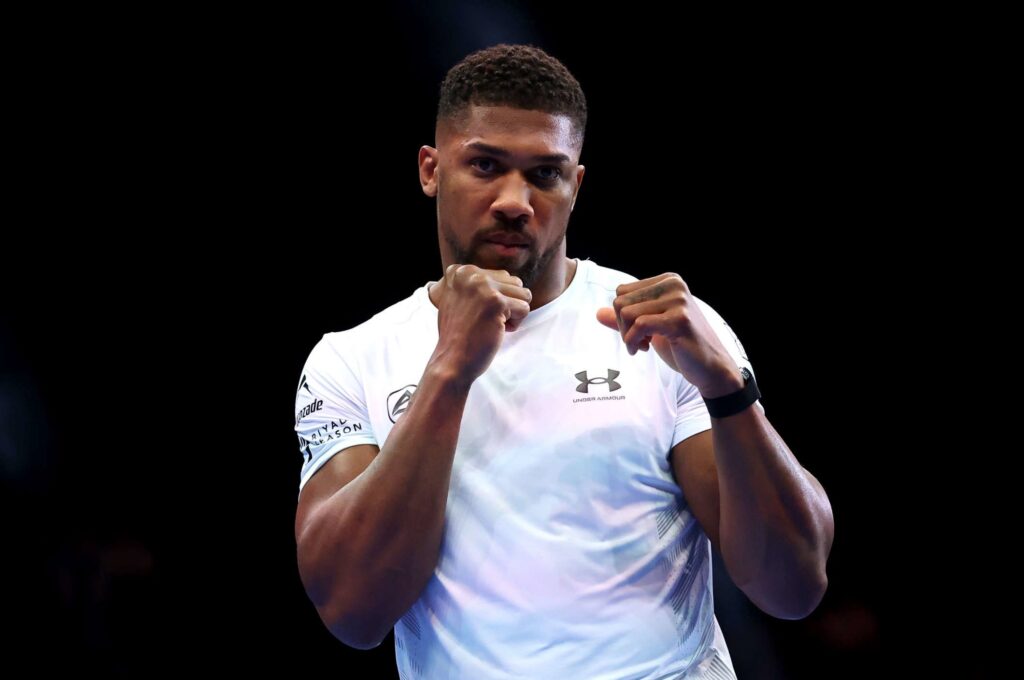
There is also a public-perception layer Joshua has to manage carefully. Boxing markets love redemption arcs, and the temptation to frame this as a heroic comeback is strong. But hero narratives can be harmful if they force an athlete to rush recovery to satisfy an external timeline. Joshua’s return to Finchley looks like an attempt to avoid that trap by controlling the scene. He is showing work, not announcing war. He is choosing a place that implies process, not spectacle. The phrase Infobae attributes to his own social framing, “quality time” in this new cycle, fits that approach: it makes the training about internal reconstruction rather than about public reassurance.
The deeper significance is what this reveals about elite sport after sudden loss. A fighter’s team is not just an entourage. It is a stability machine. When two key members die, the athlete loses part of his operating system: physical support, emotional containment, and the practical continuity that allows a body to perform at the edge. Returning to the first gym is a way to rebuild that operating system with older components that still function. It does not erase the grief. It gives the grief a structure that can be lived with.
If Joshua returns to the ring later in 2026, the Finchley chapter will be remembered as the beginning of the rebuild. If he does not, it may still stand as his refusal to let tragedy reduce him to silence. Either way, the move is clearer than the headlines suggest. He is not just training again. He is deciding what kind of life he wants after a moment that could have ended it, and he is making that decision in the one place that first taught him how to choose discipline over chaos.
Hechos que no se doblan. / Facts that do not bend.