

 Phoenix 24
A musical performance exposes unresolved tensions over Kosovo’s sovereignty.
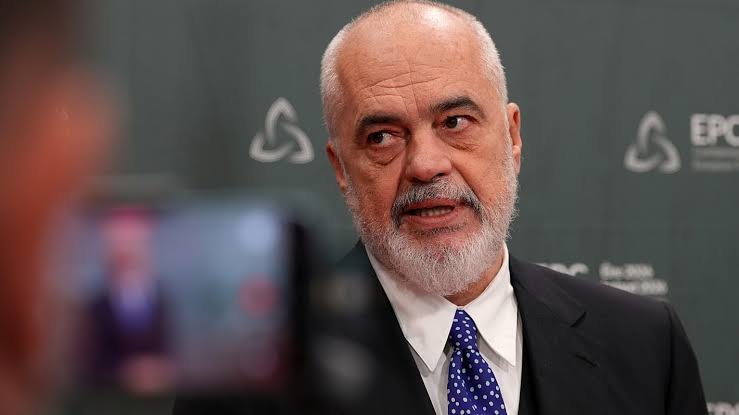
BRUSSELS, Belgium — November 2026. Albanian Prime Minister Edi Rama has criticized the performance of a Serbian nationalist song at a European Union enlargement event in Brussels, arguing that its political message contradicted the gathering’s purpose of promoting regional cooperation and European integration. The controversy, which emerged on November 15 and intensified the following day, prompted an official expression of regret from European Commissioner for Enlargement Marta Kos.
The incident occurred during the opening concert of the European Commission’s second Enlargement Forum, an event organized under the theme of building a stronger and more united Europe. Slovenian musical group Marko Hatlak & Kapobanda performed Oj Kosovo, Kosovo, a song associated with Serbian nationalist claims over Kosovo, as part of a programme intended to represent the cultural traditions of countries participating in the enlargement process.
Rama questioned how a composition carrying such a politically sensitive message could have been selected for an event dedicated to European unity. Addressing participants on November 16, he acknowledged that the decision might have resulted from ignorance rather than deliberate provocation, but argued that its implications could not simply be ignored. He emphasized the importance of leaving behind historical narratives that continue to generate division in the Western Balkans.
Kosovo’s ambassador to Belgium, Agron Bajrami, also condemned the performance, describing the song as an expression of explicit territorial claims rather than an ordinary example of cultural exchange. His criticism focused particularly on the decision to present a Serbian-language nationalist composition as part of the programme representing Kosovo, whose independence remains contested by Serbia.
Commissioner Marta Kos responded by expressing regret over the musicians’ selection. She emphasized that the performance did not reflect either her personal position or that of the European Commission regarding Kosovo and its history. Her intervention sought to distinguish the institution’s political commitments from the artistic decisions made during the concert.
The historical context makes the controversy particularly sensitive. Kosovo declared independence from Serbia in 2008, but Belgrade continues to reject its sovereignty. Five European Union member states also do not recognize Kosovo as an independent country, complicating its relationship with European institutions and limiting progress toward formal EU candidate status.
The song itself emerged in the political environment surrounding Slobodan Milošević’s 1989 Gazimestan speech, an event closely associated with the resurgence of Serbian nationalism before the Yugoslav wars. Its performance at an enlargement conference therefore carried historical associations that extended beyond its musical characteristics.
Despite his criticism, Rama reiterated the importance of keeping Serbia engaged in Europe’s political future. His response highlighted the difficult balance facing EU enlargement policy: encouraging regional cooperation while acknowledging unresolved disputes over sovereignty, historical memory and national identity.
The incident illustrates how cultural expression can acquire diplomatic significance when historical conflicts remain unsettled. For the European Union, promoting enlargement requires not only institutional negotiations but also sensitivity toward the experiences and political identities of communities seeking a shared European future.
Behind Every Decision, a Larger Consequence.