

 Phoenix 24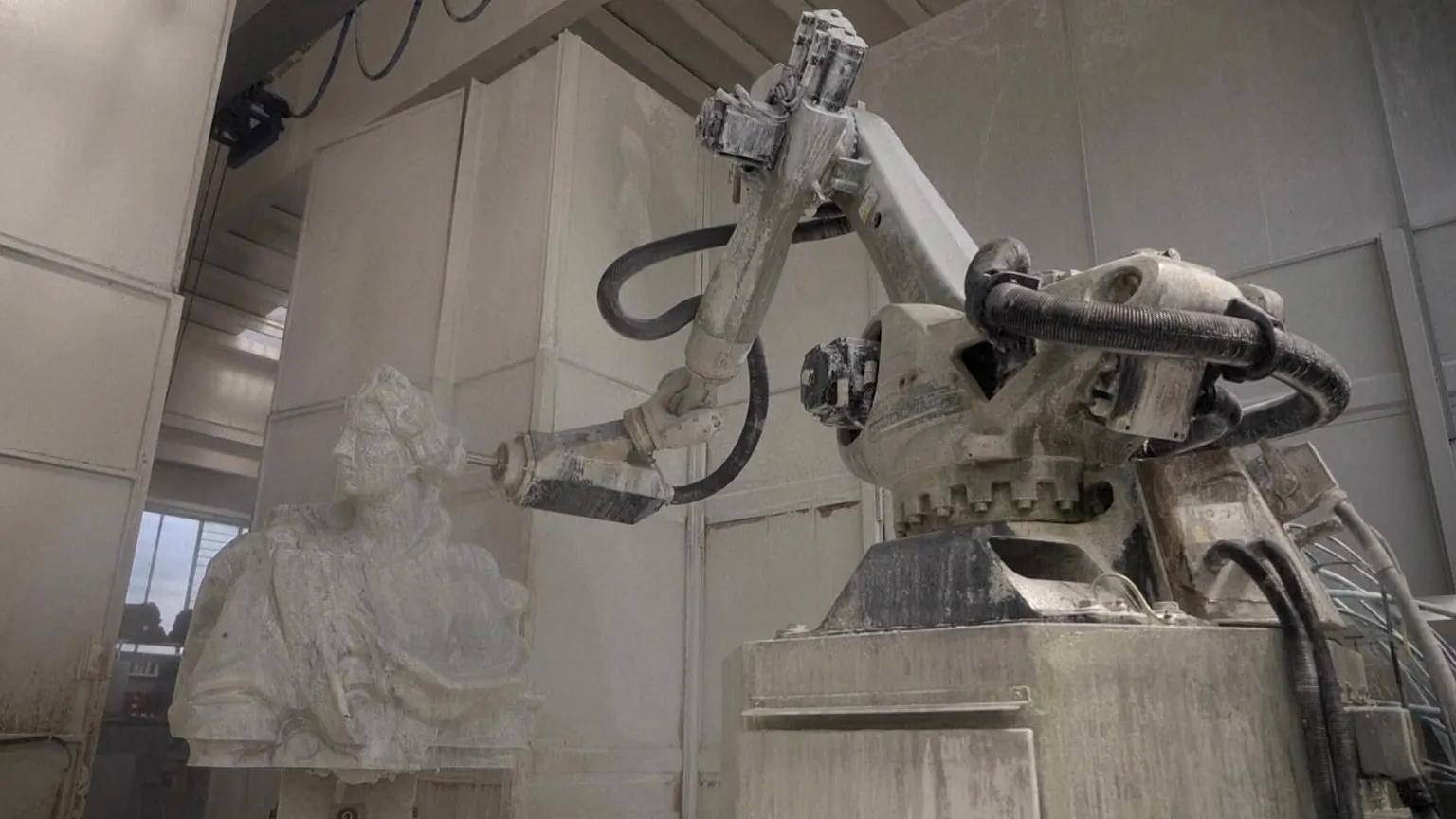
The machine can carve the marble, but authorship remains human.
Carrara
In the marble quarries of Carrara, one of the oldest traditions in European sculpture is being transformed by artificial intelligence and robotics. Italian companies LITIX and ROBOTOR are using robotic arms to carve complex works directly from blocks of marble, guided by software that converts digital designs into precise machine instructions. The technology can perform almost the entire physical carving process before specialists complete the final details. What once demanded years of manual training can now begin with a digital model.
The system works by converting an image or design into a three dimensional file and then generating the tool paths that direct the robotic arm. According to the companies behind the technology, the objective is not to eliminate artists but to allow ideas to become physical objects even when the creator does not possess traditional sculpting skills. The robots can reportedly complete up to 99 percent of the carving. Human specialists then intervene during the finishing stage.
That efficiency is creating tension among traditional sculptors. Carrara has been associated for centuries with artisanal knowledge, physical strength and intimate familiarity with marble, making the arrival of machines especially symbolic. Supporters argue that robots can make the process safer, faster and less physically demanding. Critics, however, question what happens to craftsmanship when the most difficult stages of material transformation are delegated to automated systems.
Italian artist Davide Quayola offers a different interpretation. He describes his practice as algorithmic sculpture and considers the robot an extension of his artistic gesture rather than an independent creator. His studio determines how the machine moves, what instructions it follows and what final form it is intended to produce. Under that model, authorship does not disappear. It shifts from direct physical execution toward design, programming and control of the creative process.
The debate reaches beyond marble. Generative systems, robotics and digital fabrication are increasingly separating artistic intention from manual execution, forcing artists and audiences to reconsider where creativity actually resides. A machine may remove the stone, but it does not independently decide why a form should exist, what it means or how it should be interpreted.
Carrara therefore represents more than technological modernization inside an ancient craft. It has become a laboratory for a larger cultural question. As machines become capable of performing almost all the physical work, art may increasingly be defined not by who holds the tool, but by who gives the tool its purpose.
Lo visible y lo oculto, en contexto. / The visible and the hidden, in context.