

 Phoenix 24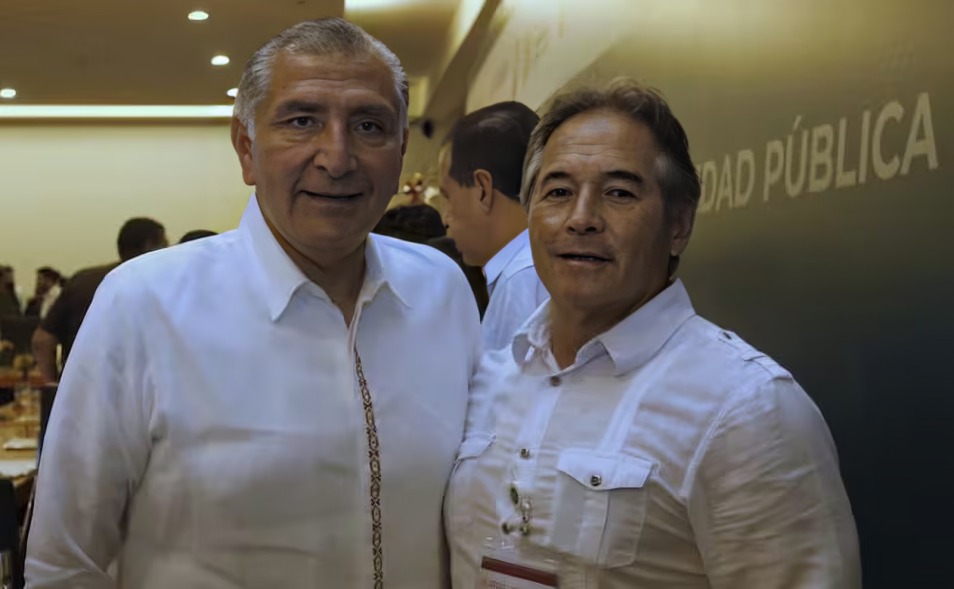
A growing political controversy intertwines allegations of criminal links, institutional opacity, and media narratives in one of Mexico’s most sensitive security cases.
Mexico City, September 2025
Adán Augusto López Hernández, president of the Senate’s Political Coordination Board and one of the most influential figures within the current government coalition, publicly denied any involvement with Hernán Bermúdez Requena, the former Tabasco security chief arrested abroad for alleged ties to organized crime. López also stressed that he has not been summoned by any authority to testify and described the accusations against him as “media fabrications” designed to damage his reputation and destabilize the legislative agenda.
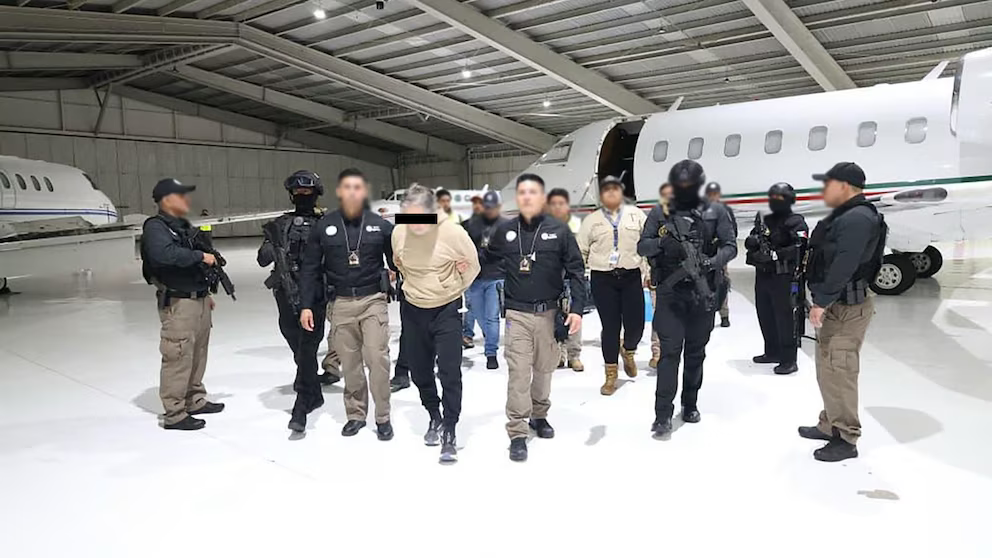
The controversy erupted after Paraguayan authorities detained Bermúdez Requena earlier this month as part of an operation coordinated with Interpol. He was subsequently extradited to Mexico, where he faces charges of leading a criminal group known as La Barredora, believed to be an operational arm of the Jalisco New Generation Cartel (CJNG) in southeastern Mexico. His capture triggered immediate speculation about possible political protection networks that may have enabled his actions during his tenure as Tabasco’s security secretary.
During a press conference in the Senate, López flatly denied having met with Bermúdez in Paraguay, as suggested by several media reports. “I have never had any contact with that individual, neither inside nor outside the country,” he said. “I have not received any subpoena from the Attorney General’s Office, nor from state prosecutors, nor from any judicial authority.” He added that if summoned, he would appear voluntarily to cooperate fully with the investigation.
The senator also addressed claims that Bermúdez had traveled to Chiapas after leaving Paraguay, calling them “pure fantasy” and dismissing suggestions of political interference to obstruct investigations. “There is no political pact, no agreement, no attempt to derail justice,” López said. “The idea that there is a protection network is simply false.”
Federal authorities have so far avoided linking López to the investigation. President Claudia Sheinbaum stated that no official leaks had emerged from intelligence agencies or the Ministry of Finance’s Financial Intelligence Unit, and the Tax Administration Service confirmed that no active investigations target the senator. However, Sheinbaum acknowledged that the case is “delicate” and that all individuals mentioned in connection with Bermúdez could be called to testify “if the evidence warrants it.”
Despite López’s categorical denials, the political implications are significant. As a former interior minister and a close ally of President Sheinbaum, López has long been seen as a key power broker within the ruling party. Any perception of proximity to organized crime, even if unsubstantiated, could weaken Morena’s legislative cohesion and provide ammunition for opposition parties ahead of next year’s midterm elections. Lawmakers from the National Action Party and the Institutional Revolutionary Party have already called for a congressional ethics inquiry into the case, arguing that “transparency is non-negotiable when it comes to matters of national security.”
The episode also highlights broader concerns about Mexico’s institutional response to organized crime infiltration. Analysts at the Washington Office on Latin America (WOLA) warn that systemic weaknesses in vetting public officials, combined with limited judicial capacity, have allowed criminal networks to penetrate state institutions at multiple levels. “The Bermúdez case illustrates a persistent challenge: organized crime adapts by embedding itself in political and administrative structures,” said one senior analyst. “This creates an environment where accountability becomes increasingly difficult.”
Internationally, the case has caught the attention of regional security partners. In the United States, congressional committees monitoring bilateral cooperation on organized crime have requested briefings on the potential political dimensions of the investigation. Meanwhile, intelligence agencies in Paraguay and Brazil — where La Barredora is suspected of laundering money — are coordinating with Mexican authorities to trace cross-border financial flows. The European Union’s delegation in Mexico also issued a statement calling for “full transparency and due process” given the potential implications for bilateral security cooperation.
For López, the political stakes are high. His influence within the Senate, his role in advancing key legislative priorities, and his future ambitions within the party all depend on his ability to weather the current storm. Even if he is never formally charged, the mere association with a case involving one of the country’s most violent cartels could leave lasting damage.
The controversy underscores a central tension in Mexican politics: the thin line between governance and criminality in a context where organized crime wields significant territorial, economic, and even political power. Whether López emerges from this scandal unscathed may depend less on legal outcomes than on how effectively he can control the narrative in the weeks ahead.
Every silence speaks. / Cada silencio habla.