

 Phoenix 24
Fragmented parties are searching for a common political center.
Madrid, Spain
Ada Colau is emerging as a potential candidate to lead Spain’s newly configured Broad Front as the alternative left accelerates negotiations ahead of the November 29 general election. Más Madrid has signaled support for the former Barcelona mayor while seeking control of the leading positions on the Madrid electoral list. The move could remove Health Minister Mónica García from the race for the national leadership while preserving her party’s influence in the capital. What remains unresolved is whether the different forces of the Spanish left can transform tactical concessions into a coherent electoral project.
The negotiation reflects a deeper problem inside Spain’s progressive space. Sumar, Más Madrid, the Comuns and Izquierda Unida are attempting to construct a common platform after years of fragmentation, while Podemos continues to defend its own organizational identity and has promoted Irene Montero as a possible candidate. Colau has not formally declared herself the leader of the coalition, but her name has gained strength because she can connect several political currents without belonging entirely to any single one of them. That positioning may become especially valuable in a campaign where internal division could carry a significant electoral cost.
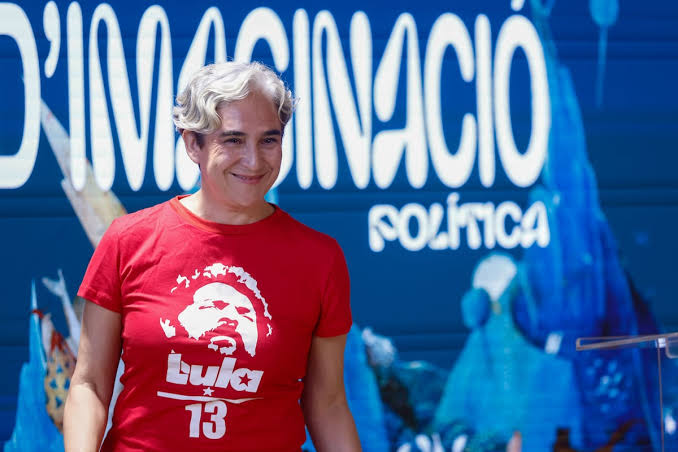
Housing has also returned Colau to the center of national politics. Long before becoming mayor of Barcelona, she built her public profile through activism against evictions and mortgage-related displacement. Spain’s housing crisis has now become one of the dominant issues of the election, intensified by rising rents, shortages in major cities and highly visible protests. In that environment, Colau possesses something many candidates struggle to manufacture during a campaign: a political biography already associated with the issue dominating public debate.
Yet leadership of the Broad Front would not eliminate the coalition’s structural tensions. Madrid, Barcelona and the different regional organizations have distinct interests, while candidate selection remains closely connected to the distribution of parliamentary seats. Podemos must also decide how far it is willing to compromise without losing political autonomy. A coalition created primarily to avoid electoral fragmentation could still face difficulties defining a common program once the campaign moves beyond personalities.
The significance of Colau’s possible candidacy therefore extends beyond one political figure. Spain’s alternative left is attempting to determine whether it can rebuild itself around a recognizable national leadership while preserving regional diversity and competing party identities. The coming negotiations will reveal whether the Broad Front becomes a genuine political architecture or simply an electoral arrangement assembled under pressure.
In modern politics, unity is not declared. It has to survive negotiation.
Political power begins where fragmentation ends.