

 Phoenix 24
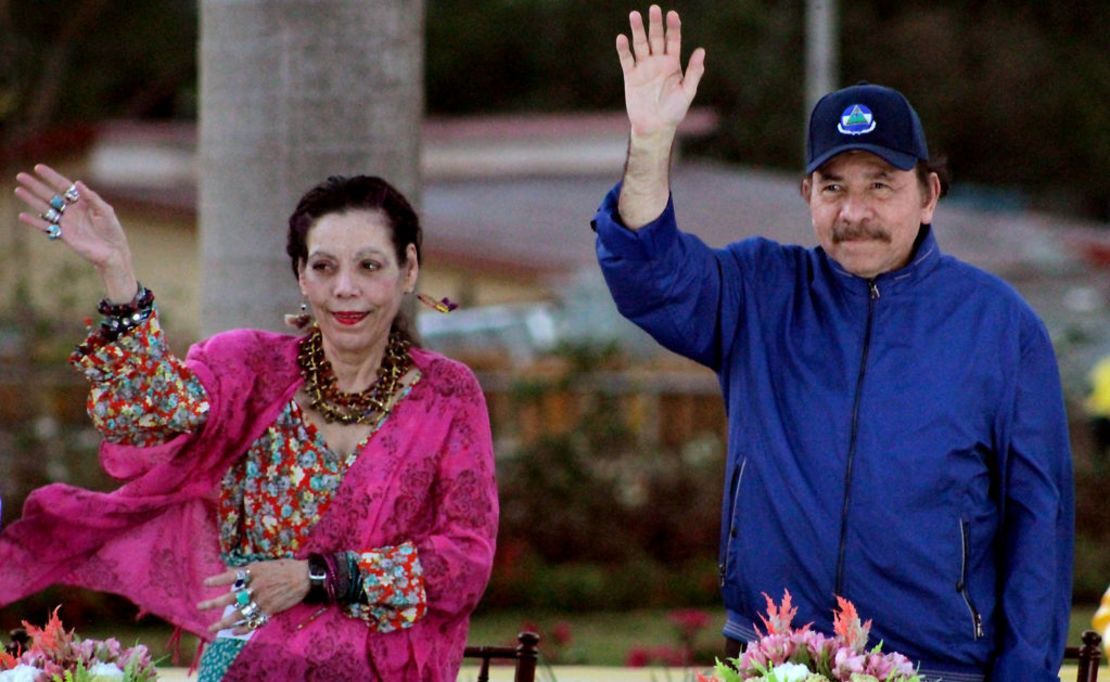
What began as a shared mandate has turned into a singular rule of fear.
Managua, September 2025
Political and military control in Nicaragua has entered a new phase. Rosario Murillo, once seen as the symbolic counterpart to Daniel Ortega, now commands the full apparatus of power, steering the country into a cycle of purges and repression that touches even those once considered loyal allies.
Her ascent accelerated earlier this year, when a constitutional reform enshrined her role as co-president with authority equal to Ortega. The amendment gave her direct command over the armed forces and legitimized the creation of more than seventy-six thousand so-called “voluntary police.” This auxiliary militia operates with loyalty to her, extending surveillance and coercion far beyond traditional state structures.
International organizations have raised alarms about this consolidation. The United Nations has warned that Nicaragua is experiencing systematic violations of human rights, pointing to patterns of arbitrary detention, torture, and confiscation that may qualify as crimes against humanity. In Europe, independent analysts highlight how military and judicial officials have been imprisoned or dismissed, leaving state institutions stripped of autonomy. These moves reveal a state designed to serve the family nucleus rather than the public good.
Symbolic measures reinforce this concentration of power. The National Assembly, dominated by the ruling party, recently approved legislation that declares a fifteen-kilometer strip along all borders as state property. Under the justification of national security, the law opens the door to confiscations without due process, further militarizing the country’s peripheries and tightening control over cross-border communities.
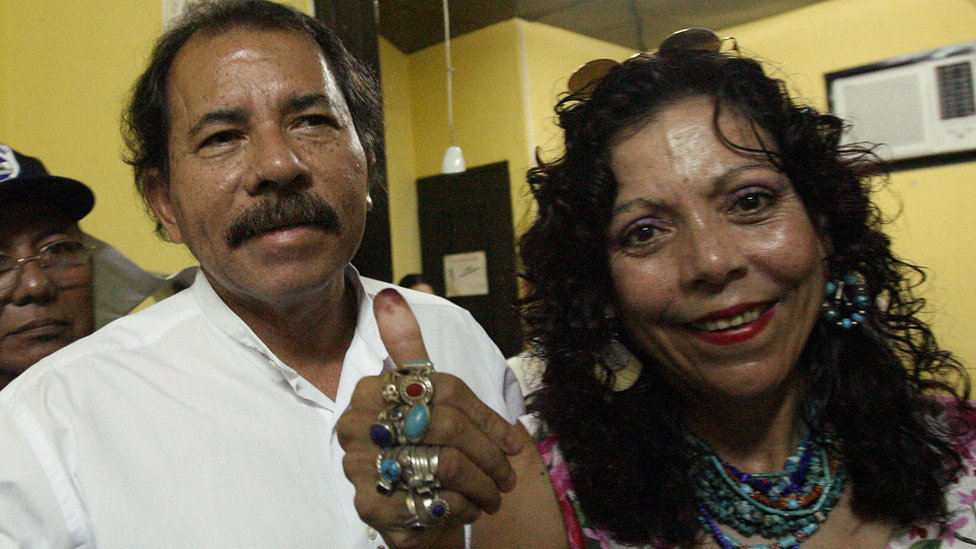
Yet the repression does not stop at opposition figures or activists. Reports from regional journalists suggest that Rosario Murillo has turned her focus inward, targeting historical Sandinista veterans. These purges reflect both political calculation and personal mistrust: former allies who might have claimed moral authority are now treated as potential threats. The internal logic of the regime appears less about ideology and more about eliminating alternative poles of loyalty.
The evolution of Nicaragua’s political system is increasingly described as a form of dynastic authoritarianism. It is no longer a hybrid regime balancing party structures with authoritarian practices, but rather a framework where the distinction between state, party, and family has dissolved. Murillo embodies this convergence, exercising operational command, shaping ideological discourse, and deciding the scope of permissible loyalty.
From a global perspective, three vantage points converge. The United Nations emphasizes the systematic nature of the repression and frames it within international criminal law. European observers focus on the dismantling of formal institutions, noting how the judiciary and armed forces function as extensions of executive command. Independent Central American outlets document the psychological atmosphere of fear produced by purges within the Sandinista base itself. These perspectives, spanning three regions, converge on the same conclusion: Nicaragua has moved from an authoritarian drift to the reality of consolidated family rule.
The implications are significant. On the domestic level, repression has become the regime’s principal mode of governance, replacing consent with coercion. The establishment of paramilitary forces and the expansion of confiscatory laws illustrate how legality itself has been weaponized. At the regional level, neighboring governments balance cautious condemnation with pragmatic restraint, wary of the consequences of deeper instability. Globally, international organizations issue calls for action, but effective measures remain elusive, constrained by competing geopolitical priorities.
Observers describe three dynamics unfolding simultaneously. First, the regime now possesses both legal and extralegal tools to enforce obedience, from constitutional reforms to paramilitary structures. Second, the international community faces shrinking opportunities to engage diplomatically, as Murillo’s personal authority grows more entrenched. Third, Nicaraguan society remains trapped in an environment of silence, where dissent is punished and survival depends on discretion.
While Daniel Ortega remains formally in power, the trajectory suggests that Rosario Murillo has assumed operational supremacy. Her ability to command security forces and define the ideological boundaries of loyalty places her at the center of Nicaragua’s political landscape. The unanswered question is whether this consolidation will stabilize the regime or accelerate its isolation.
For now, fear functions as both a political instrument and a governing policy. Confiscations, arrests, and the deployment of auxiliary militias illustrate a strategy built not on legitimacy but on the normalization of repression. Within this framework, family becomes not only the metaphor of authority but also its architecture.
Nicaragua thus faces a turning point. The revolution that once projected plurality and collective struggle now belongs to one voice and one command. The transformation is not merely political but structural, embedding a dynastic model that fuses state power with personal control. In this configuration, the future of the country is increasingly defined by the decisions of one figure who governs through coercion, loyalty, and silence.
Phoenix24: analysis that transcends power.
Phoenix24: análisis que trasciende al poder.