

 Phoenix 24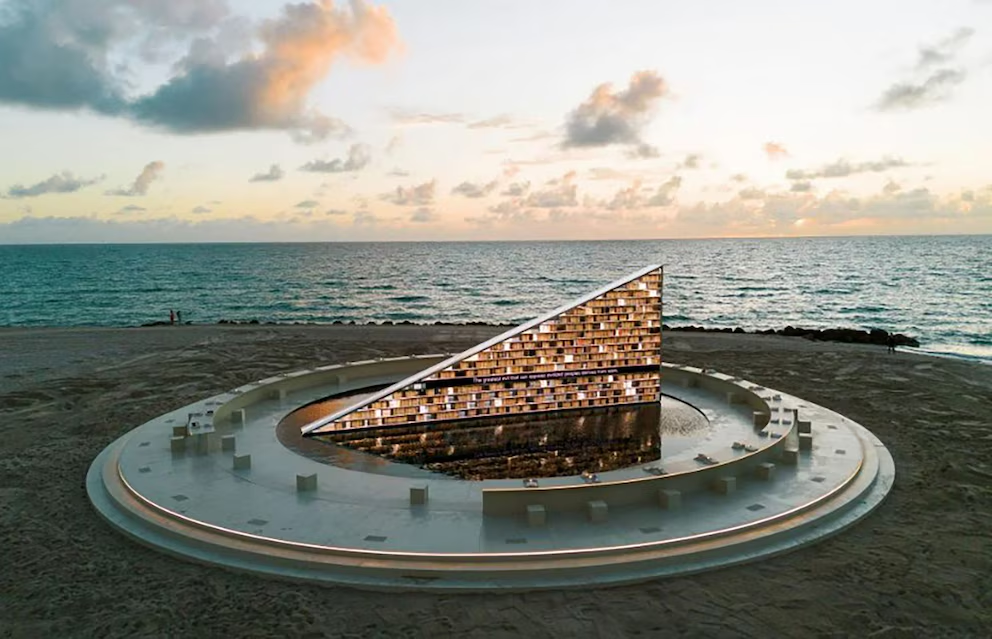
Some structures turn slowly, yet change the way an entire city breathes.
Miami, December 2025
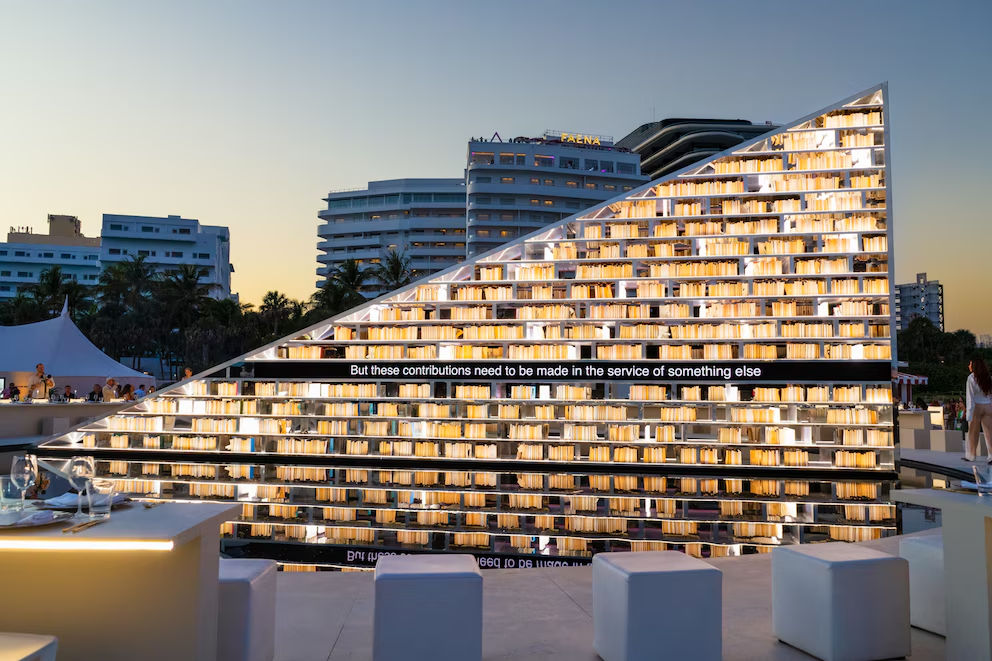
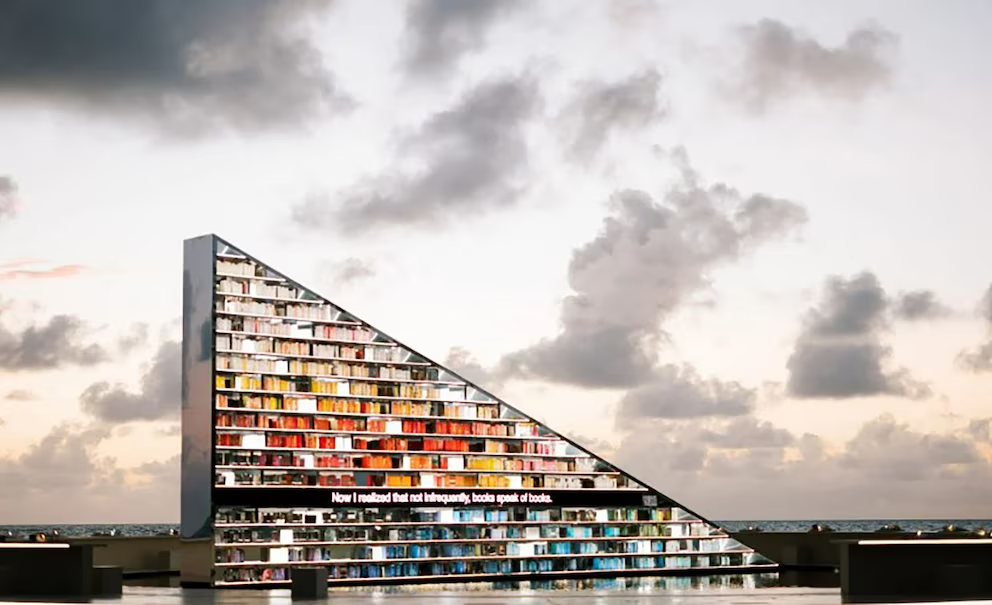
A rotating library has emerged along the shoreline of Miami, capturing the attention of visitors and residents with a structure that merges monumental scale, intimate human experience and a quiet insistence on reflection. Installed as part of Faena Art’s annual program, the work invites audiences into a space where reading becomes a shared gesture rather than a solitary ritual. Its triangular form, filled with thousands of books and set within a circular pool, turns continuously throughout the day, shifting light, perspective and the relationship between viewers and the texts that surround them.
In North America, cultural observers describe the installation as a countercurrent to the high velocity atmosphere of Miami Art Week. While much of the event revolves around auctions, collectors and the commercial pulse of contemporary art, the rotating library introduces stillness within movement. Visitors step onto a platform that revolves slowly, carrying them through shelves arranged with works selected for their emotional and intellectual resonance. Analysts note that its appeal lies in its simplicity. The installation reframes reading as a collective act shaped by proximity and motion rather than isolation.
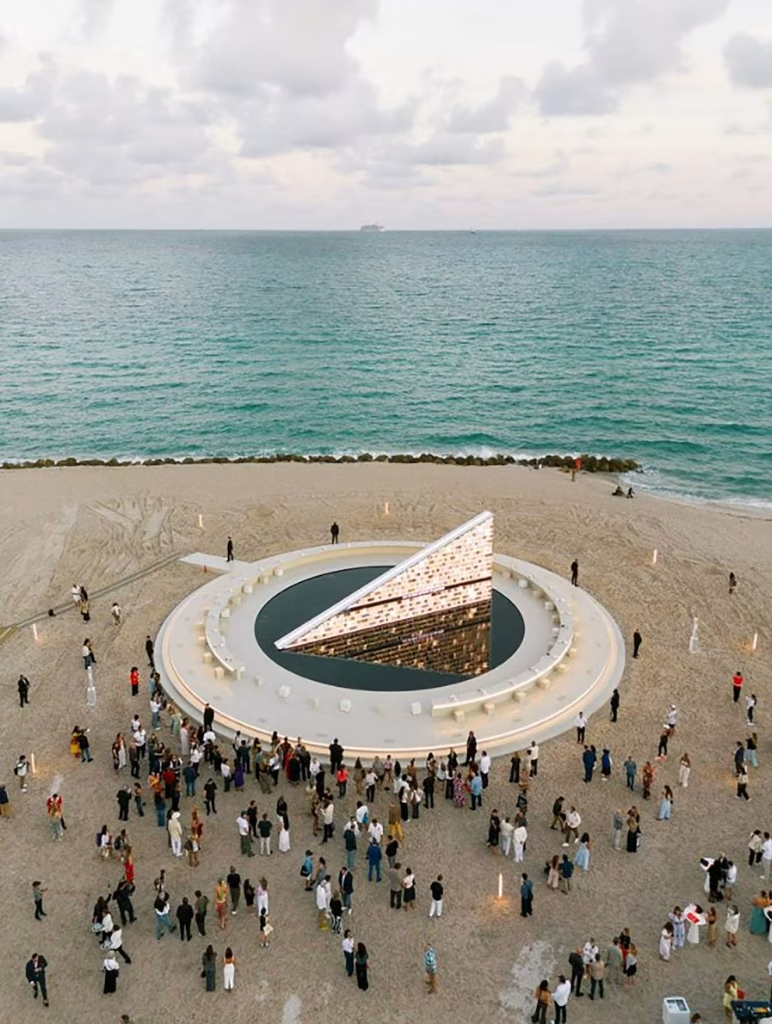
European commentators situate the work within a lineage of participatory art that encourages public engagement without imposing a fixed narrative. They highlight how the library’s mirrored surface interacts with natural light, creating transient patterns that shift as the structure rotates. The dynamic interplay between reflection and movement, they argue, symbolizes the fluidity of memory and the role of literature in shaping cultural identity. By placing books at the center of an immersive spatial experience, the installation challenges conventional distinctions between sculpture, architecture and archive.
In Asia, critics focusing on urban art environments interpret the installation as an experiment in social choreography. The seating arrangement, which combines stationary and rotating benches, creates opportunities for spontaneous encounters. Strangers read beside one another, rotate into new conversations or simply share the quiet presence of others. This design resonates with public art initiatives across major Asian cities that seek to cultivate communal participation through spatial design rather than digital interaction. The Miami installation, they observe, embodies a global shift toward artworks that foster relational spaces.
The library’s physical presence along the coastline introduces additional layers of meaning. Positioned near the ocean, the structure sits within an environment marked by vulnerability to rising seas and shifting weather patterns. Environmental researchers point out that the installation’s reflective pool and its dependence on open air settings highlight the fragility of cultural spaces in the face of climate instability. The books, selected for their thematic diversity, become symbols of memory threatened by forces that transcend human control. The rotating mechanism reinforces a sense of impermanence, suggesting that knowledge must be continually revisited to endure.
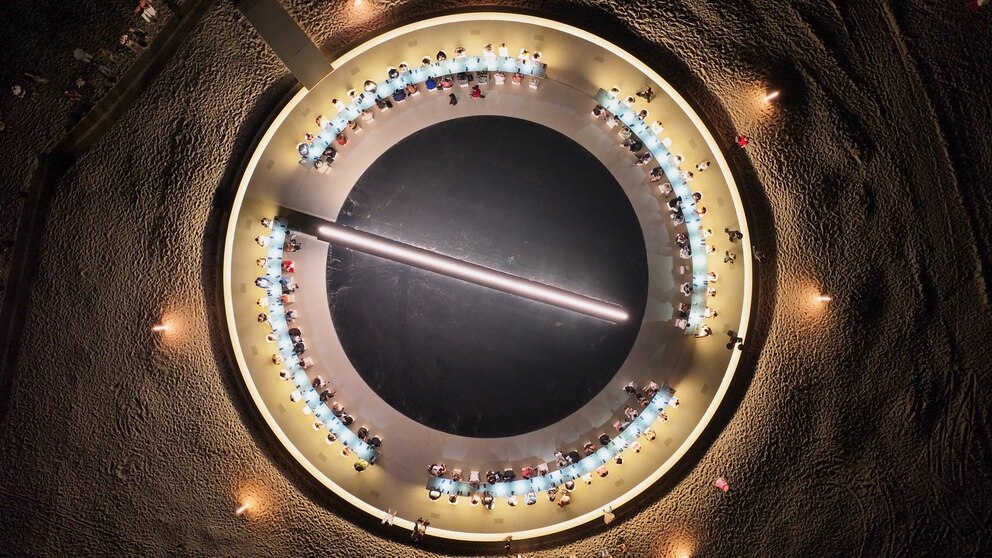
At a community level, the installation has generated engagement beyond the typical art fair audience. Local residents have approached the structure as a public reading room, returning at different hours to experience the shifting tones of daylight. Families, students and tourists gather to browse the shelves, take photographs and observe the quiet rotation that shapes the space. Organizers emphasize that accessibility was a core objective. The absence of admission fees reflects Faena Art’s ongoing effort to integrate contemporary art into the daily fabric of Miami rather than confining it to institutional settings.
The dynamic nature of the installation is supported by a parallel program of public readings and discussions held along the beach. Writers and scholars from the Americas, Europe and Asia have participated in sessions exploring the role of literature in an overstimulated world. These conversations examine how books survive within digital cultures dominated by instantaneous consumption. Participants describe the rotating library as a physical antidote to distraction, a place where the turning of pages competes with the spectacle of the surrounding environment and the intensity of the art week.
Technically, the structure represents a feat of interdisciplinary collaboration. Engineers, designers and artists combined their expertise to ensure that the rotation remains stable despite exposure to humidity, shifting winds and the demands of continuous public use. The reflective pool, constructed to withstand coastal conditions, anchors the installation both visually and structurally. While the mechanism remains concealed, its effect is unmistakable. The rotation creates a subtle sense of choreography, guiding visitors through a continuum of texts that underscore the diversity of global literary traditions.
As the installation attracts international attention, its legacy extends beyond its temporary presence. Organizers have announced that the books will later be donated to public institutions, transforming the artwork into a long term contribution to community resources. Cultural institutions across the Americas have expressed interest in hosting future iterations, though no decisions have been made. The project’s impact lies not only in its architectural innovation but in its ability to redefine public engagement with reading at a moment when attention is fragmented across digital channels.
Ultimately, the rotating library offers a quiet assertion of value. It reminds visitors that reading is an act of continuity, a gesture that binds individuals across time and space. Within the rapid pace of Miami Art Week, the installation stands as a counterpoint, demonstrating that stillness can command as much power as spectacle. It invites reflection without prescribing meaning, leaving each visitor to interpret the interplay of movement, light and text through their own lens.
The installation’s success affirms that public art retains the capacity to shape collective experience. As global audiences confront uncertainty and information overload, the library’s slow rotation offers an alternative rhythm, one that suggests that insight often emerges not from acceleration but from the willingness to dwell within a moment.
Truth is structure, not noise.
La verdad es estructura, no ruido.