

 Phoenix 24
Prevention begins before the crime becomes silence.
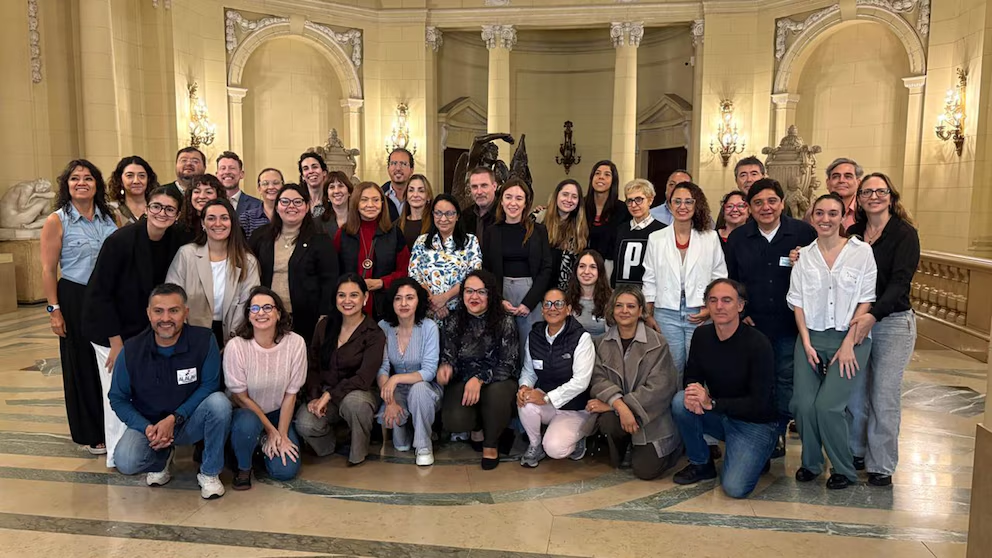
Buenos Aires, May 2026. Experts from 12 countries gathered at a regional summit to advance a shared prevention agenda against child sexual violence, placing one of the most urgent public health and human rights crises at the center of institutional coordination. The initiative seeks to move beyond isolated responses and build common frameworks for detection, protection, reporting and long-term support.

The significance of the summit lies in its regional scope. Child sexual violence does not respect borders, legal systems or institutional calendars, and its prevention requires cooperation between health professionals, schools, justice systems, digital platforms and community organizations. When countries coordinate protocols, data and prevention strategies, they increase the chances of identifying patterns before harm becomes irreversible.
The challenge is not only legal, but cultural. Many cases remain hidden by fear, shame, family pressure, institutional negligence or lack of trust in authorities. That silence protects aggressors and isolates victims, making prevention inseparable from education, early warning systems and trauma-informed public policy.

Digital environments add another layer of risk. Children now face exposure not only in physical spaces, but also through online grooming, image-based abuse and platforms where predators can operate across jurisdictions. Any serious regional agenda must therefore integrate cybersecurity, digital literacy and cross-border investigation mechanisms.
The summit’s deeper message is that prevention cannot remain symbolic. It must become a measurable system with trained personnel, clear reporting channels, victim-centered care and institutional accountability. Protecting children requires more than outrage after each case; it requires structures capable of acting before violence becomes memory.
Facts that do not bend. / Hechos que no se doblan.