

 Phoenix 24
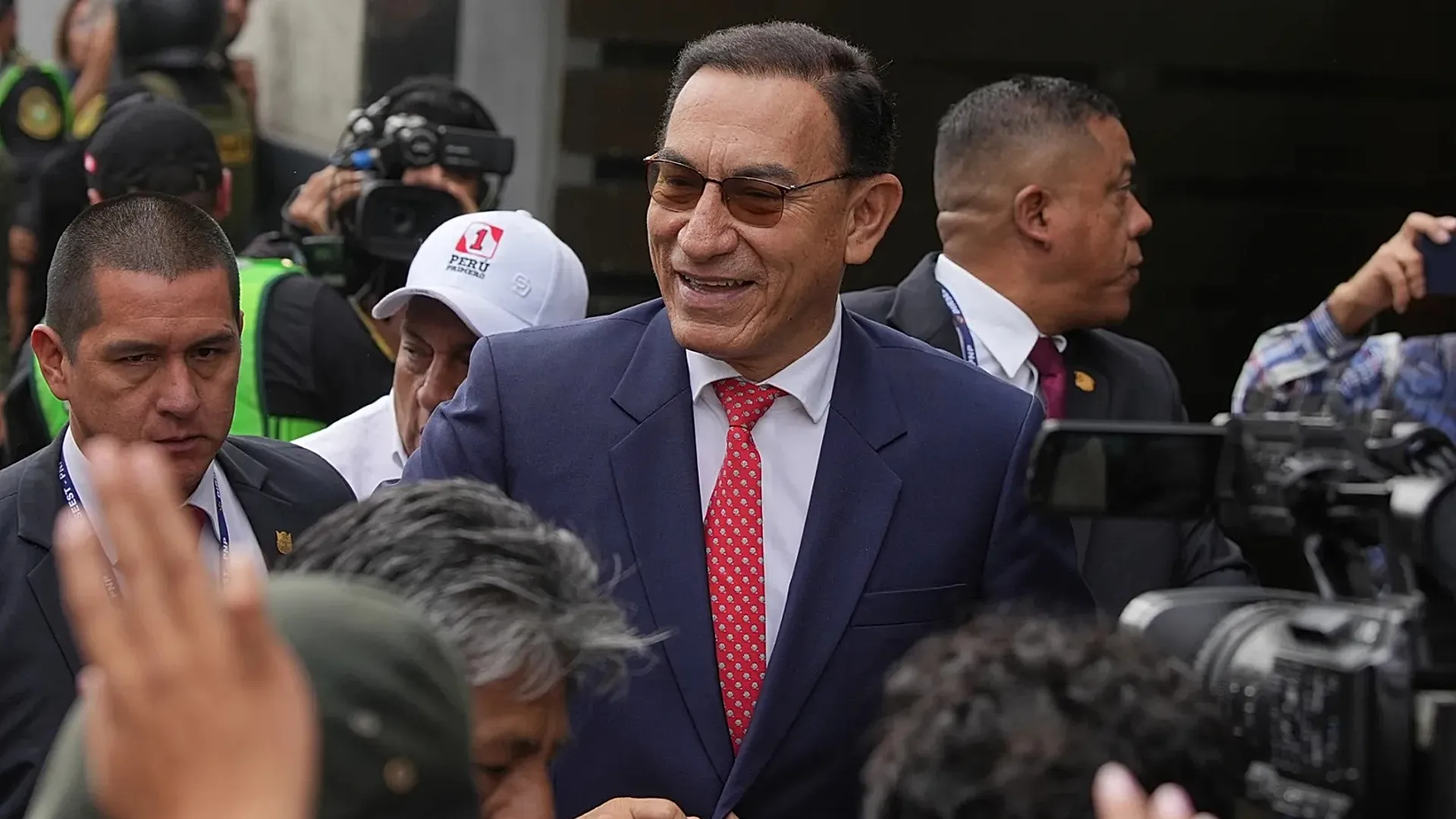
When a nation loses faith in its leaders, the courtroom becomes the last frontier of truth.
Lima, noviembre de 2025
The Peruvian judiciary delivered a ruling that will mark the country’s political memory for decades. Former president Martín Vizcarra received a fourteen year prison sentence after judges confirmed that he accepted bribes while serving as governor of Moquegua. The decision includes a lengthy ban on holding public office and the order for his immediate incarceration. The case, which has shadowed his public narrative for years, now becomes a definitive turning point in Peru’s long struggle against high level corruption.
According to the court’s findings, construction companies provided illicit payments in exchange for favorable treatment in major public works. These projects included a regional hospital and an irrigation system, both considered strategic investments at the time. The payments, which investigators described as structured and deliberate, formed part of a pattern that analysts in the region have linked to recurring vulnerabilities in public procurement systems. Experts at the Peterson Institute noted that similar schemes have destabilized political systems in multiple Latin American countries, where infrastructure contracts often become entry points for illicit financial influence.
From within Peru, legal scholars highlighted that the ruling reflects an institutional determination rarely seen in past decades. The judiciary’s decision arrives after years of scandals that have involved several former presidents, including Alejandro Toledo and Ollanta Humala. Political observers in Lima interpret the sentence as a signal that the era in which high office functioned as a shield may finally be eroding. For some, this moment represents an attempt by the state to reclaim authority after years of deterioration in public trust.
International analysts in Europe pointed out that the Vizcarra case mirrors structural weaknesses present across multiple democracies. According to researchers associated with the European Council on Foreign Relations, corruption scandals involving former heads of state often reveal systemic gaps that extend far beyond individual wrongdoing. This perspective suggests that the sentence is not only punitive but diagnostic, shedding light on the internal fractures of Peru’s administrative system.
In Asia, commentators at the Lowy Institute examined the case from a governance perspective. They observed that while Peru’s institutions have endured severe political shocks during the last decade, the ability of the judiciary to pursue charges against a former president demonstrates a capacity for institutional self correction. They cautioned, however, that such cases must be accompanied by broader structural reforms to prevent similar abuses. Their analysis frames the Vizcarra ruling not merely as an endpoint but as a potential catalyst for deeper changes in state accountability.
Reactions in Lima were immediate and divided. Supporters of the former president argued that the ruling represents a politically motivated attack and that due process was compromised. Critics countered that the evidence presented throughout the investigation was consistent and extensive. Civil society organizations emphasized that the court’s decision aligns with long standing demands for consequences that match the magnitude of public corruption. They stressed that public confidence cannot be rebuilt if those in positions of power are treated with impunity.
The human dimension of the case cannot be ignored. As Vizcarra listened to the sentencing, observers noted a marked shift in his demeanor. Reports from the courthouse described a figure who had once projected technocratic calm now facing the weight of judicial certainty. Moments after the ruling, he reiterated his claim of innocence and announced his intention to appeal. Nevertheless, legal specialists point out that the structure of the verdict leaves little room for reversal, given the consistency of the evidence and the procedural solidity maintained during the trial.
More broadly, the ruling places Peru at a crossroads. If the decision becomes the foundation for strengthening democratic institutions, it could signal a slow but meaningful shift toward public integrity. If, however, political polarization distorts the narrative, the country risks falling into a cycle where judicial decisions are interpreted not as legal facts but as weapons in partisan battles. Analysts in Bogotá and Santiago have warned that such cycles can erode institutional credibility even when courts act within the strict parameters of the law.
For the business community, the sentence carries additional implications. Investors often interpret high profile corruption cases as indicators of systemic instability, especially when public works are involved. Economists in Mexico City argued that transparency and accountability in procurement processes are essential for maintaining investor confidence and ensuring that development projects maintain legitimacy. The Vizcarra ruling may therefore influence both domestic planning and external perceptions of Peru’s governance environment.
The final significance of the case will emerge over time. What is clear today is that the Peruvian judiciary has delivered one of the most consequential rulings in the nation’s recent history. The state has declared, through its courts, that political authority does not grant immunity and that accountability must reach the highest offices. Whether this marks the beginning of a new institutional era or becomes another episode in a long cycle of political turbulence remains an open question. For now, the country confronts a historic moment in which the law asserts itself against a legacy of mistrust.
Más allá de la noticia, el patrón. / Beyond the news, the pattern.