

 Phoenix 24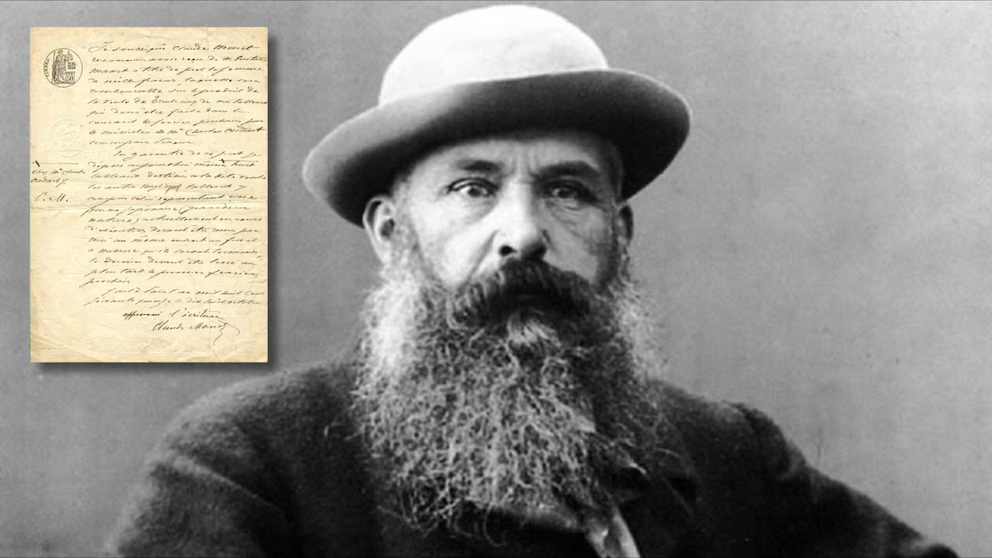
The movement’s beauty was built under pressure.
Paris, March 2026
A newly surfaced letter by Claude Monet has cast fresh light on the precarious financial reality that surrounded the early years of Impressionism, revealing how one of the movement’s defining figures was forced to use his own paintings as collateral to secure a loan. Far from the image of Impressionism as an already celebrated artistic revolution, the document shows a moment when its leading painters were still struggling to sustain their work under severe economic uncertainty.
The letter, dated October 18, 1875, was addressed to Gustave Manet, brother of Édouard Manet, and details how Monet obtained a loan of one thousand francs. In return, he pledged to repay the sum through the future sale of 35 of his paintings. The document also notes that he had already handed eight works to the auctioneer Charles Oudart, while mentioning another canvas still in progress, a life-size depiction of a Japanese woman.
That unfinished painting would later become La Japonaise, one of Monet’s best-known works, portraying his wife Camille Doncieux in a kimono. Today the painting belongs to the Museum of Fine Arts in Boston and is associated with a market value vastly removed from the precarious circumstances under which it emerged. The contrast is striking because it captures the distance between later canonization and the material insecurity that shaped the movement’s formative years.
The importance of the letter lies not only in the financial detail it contains, but in what it reveals about the structure of artistic survival in the nineteenth century. Impressionism is often remembered as a triumph of visual innovation and modern sensibility, yet its early protagonists were also navigating unstable markets, limited institutional support and uncertain buyers. Monet’s decision to leverage his own paintings for liquidity shows how fragile that environment could be, even for a figure who would later become central to art history.
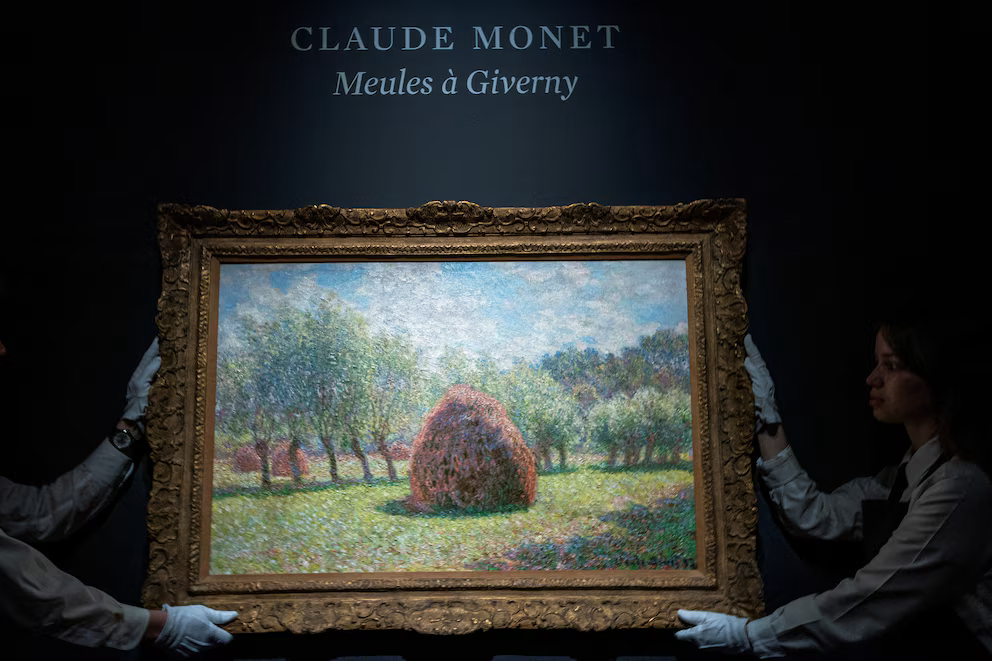
That fragility was not unique to Monet. The first generation of Impressionists worked outside many of the dominant academic and commercial structures of their time, which meant that formal recognition did not automatically translate into financial security. Their experimentation came with practical consequences. Innovation required not only aesthetic courage, but also strategies for endurance, negotiation and material survival in a market that was not yet ready to reward them consistently.
The letter therefore helps reposition Impressionism as more than a stylistic breakthrough. It becomes evidence of an economic struggle behind the movement’s visual legacy. The early Impressionists were not only inventing new ways of seeing. They were also trying to preserve the conditions needed to keep painting at all. That tension between artistic ambition and financial instability shaped the path of many of the works now treated as untouchable masterpieces.
The document is set to be auctioned later this month, adding a further historical irony to the story. A letter once written in the context of debt and artistic uncertainty is now itself an object of value, sought for the insight it offers into one of the most celebrated moments in modern art. That reversal underlines how strongly the market has absorbed, and transformed, the history of Impressionism.
For now, the rediscovered letter leaves one central point in view. The rise of Impressionism was not built on immediate acclaim or secure patronage. It was built through improvisation, pressure and the repeated effort to keep creating under financial strain. Monet’s words bring that reality back into focus with unusual clarity.
Phoenix24: clarity in the grey zone. / Phoenix24: clarity in the grey zone.