

 Phoenix 24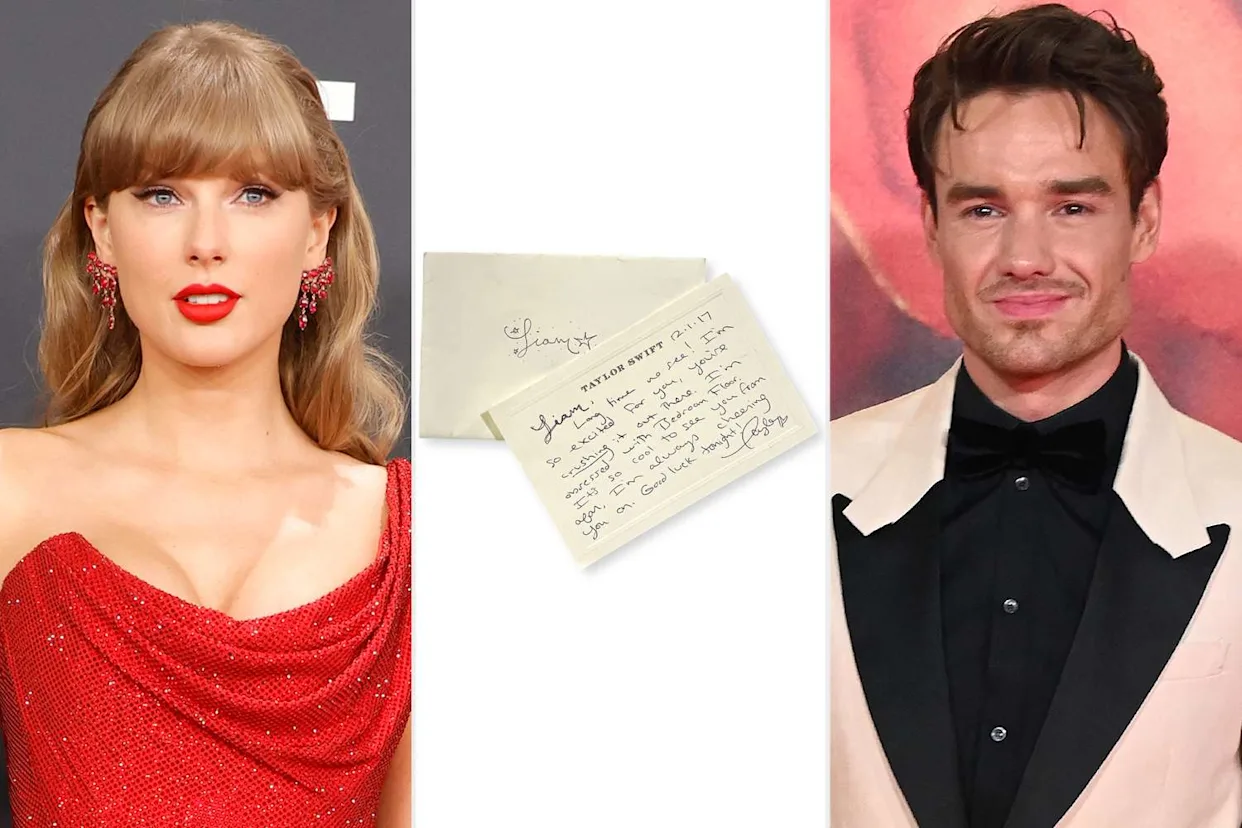
When a private message resurfaces as a public artifact, memory becomes a currency and grief becomes part of the archive.
London, November 2025.
Nearly one year after the death of Liam Payne, a handwritten letter sent to him by Taylor Swift in 2017 will be put up for auction in London on the second of December. The note, written in the days leading up to a shared performance in the United Kingdom, contains a short message of encouragement for Payne’s early solo career and now stands as a discreet yet poignant connection between two global pop figures. Auction specialists expect the piece to reach a starting estimate between six and thirteen thousand dollars, a range that reflects both its rarity and the emotional weight attached to it.
The letter was dated the first of December in 2017, just a week before the annual event in which both artists appeared on stage. It was handwritten on Swift’s personal stationery, sealed in a decorated envelope marked with stars and embossed with the letter T. In her message she wrote that she was excited for him and that she was always cheering him on. According to early accounts, Payne later gifted the note to a close acquaintance, suggesting that he had treasured it during a formative period of his post–One Direction transition.
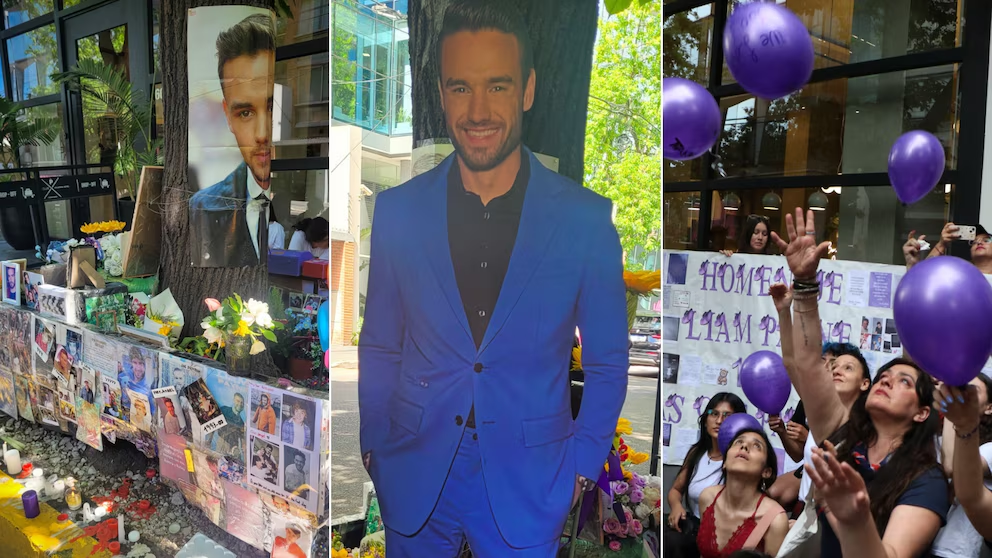
The timing of the auction inevitably recalls the events of the sixteenth of October in 2024, when Payne died at the age of thirty one after falling from the balcony of a hotel in Buenos Aires. His death sparked grief across the world and transformed even the smallest artifacts connected to him into vessels of remembrance. In this setting, the resurfacing of a letter written by one of the most influential artists of their generation becomes more than memorabilia. It becomes a capsule of an era, a fragment of youth culture that now carries the gravity of loss.
Swift’s involvement adds a significant layer to the narrative. Her words, written before the crescendo of her later global influence, convey a sincerity that stands apart from the often scripted interactions of the entertainment industry. Cultural analysts in several regions have noted that this kind of artifact disrupts the sanitized image of celebrity relationships and exposes a moment of genuine support, long before tragedy reshaped the public memory of Payne’s life.

Collectors see the piece as a convergence of three powerful elements: exclusivity, emotional context and historical value. In the world of music memorabilia, handwritten letters stand at the top of the hierarchy because they capture a moment that cannot be replicated, edited or polished. The fact that this message surfaces on the first anniversary of Payne’s death intensifies demand, as collectors often seek objects that encapsulate the arc of an artist’s journey from rise to remembrance.
In symbolic terms, the auction highlights how an artist’s legacy extends beyond recordings and performances. A note that once served as a simple gesture now carries the full weight of what Payne represented to millions of fans. For the industry, the moment serves as a reminder that the intimate traces left behind by artists often become part of a larger cultural narrative, preserved not only for sentimental value but as historical testimony.
For admirers of One Direction and worldwide pop culture, the letter acts as a bridge between what Payne was and what he continues to mean. In a world where digital noise erases timelines in seconds, a handwritten message resists disappearance. Its journey from a private envelope to a public auction room demonstrates how memory moves, how it changes hands and how it continues to speak.
Phoenix24: clarity in the grey zone. / Phoenix24: claridad en la zona gris.