

 Phoenix 24

A quiet shift in listening habits has become a global wake up call for the music industry, researchers and audiences alike.
London, December 2025.
A recent international survey has revealed that an overwhelming majority of listeners cannot distinguish between songs created by artificial intelligence and those composed by human artists. The findings suggest a cultural and technological turning point in which the ear alone is no longer a reliable guide for identifying authenticity. Research teams across Europe, Asia and North America note that the scale of the result indicates not only improved synthetic production techniques but also a profound evolution in how audiences interact with sound. For artists, producers and regulators, the implications now demand immediate attention.
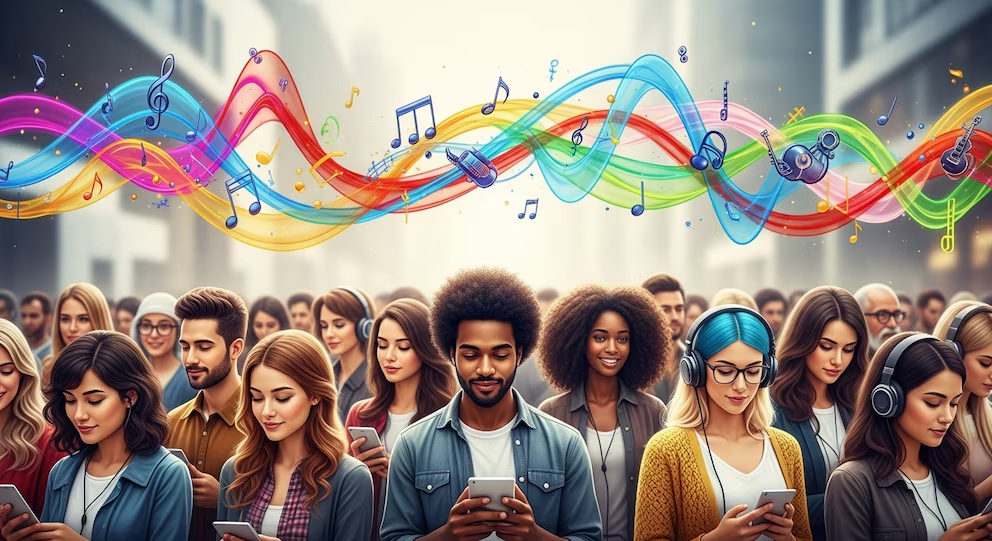
Participants in the study were asked to listen to several tracks without knowing their origin. Almost all listeners failed to identify which songs came from algorithms and which from human creativity. The result aligns with independent acoustic analyses showing that contemporary music algorithms have learned to replicate emotional cues, melodic structures and production textures with remarkable precision. Specialists in Japan attribute this shift to neural architectures trained on vast musical libraries. These systems can now generate arrangements that blend harmonic familiarity with subtle variations designed to mimic human improvisation. Meanwhile analysts in the United States highlight that advanced mixing tools can copy the imperfections once regarded as hallmarks of human expression.
For listeners the revelation carries psychological weight. Music has traditionally served as a bridge between individual emotion and shared cultural identity. When algorithms replicate emotional resonance convincingly, questions emerge about the distinction between expression and simulation. Ethnomusicologists in South America argue that the perception of authenticity becomes fragile when audiences cannot rely on conventional indicators of human presence. Rather than hearing the soul of an artist, listeners may instead be responding to precisely calibrated emotional triggers produced by machines. The phenomenon complicates long standing assumptions about what defines artistic legitimacy.
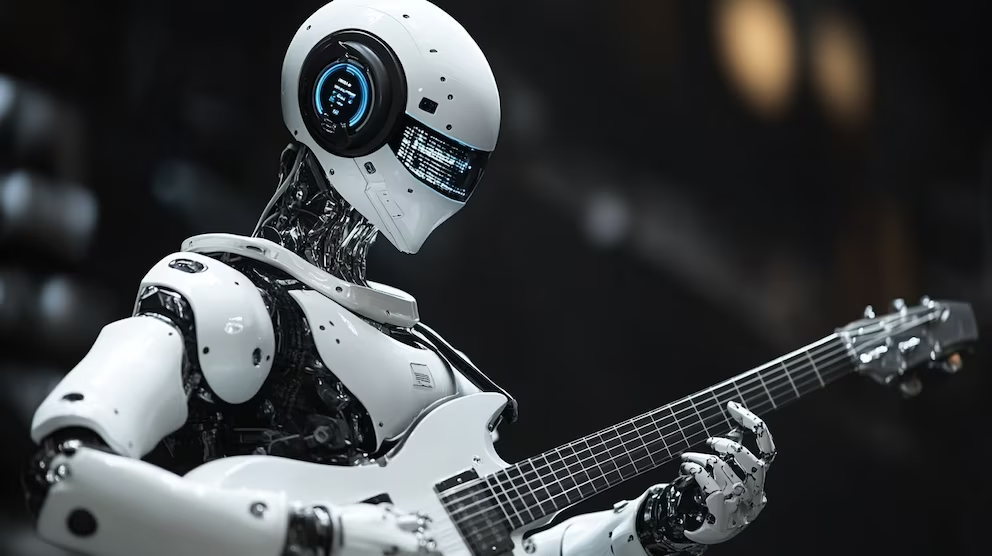
Economic implications extend across the global music ecosystem. Producers warn that the surge of synthetic tracks may flood streaming platforms with volumes that human artists cannot match. As automated systems generate material at industrial scale, the visibility of emerging musicians may shrink. Observers from European creative rights organisations caution that royalty structures designed for human output will require revision. If synthetic music becomes ubiquitous, streaming algorithms may prioritise quantity and engagement over craftsmanship, reshaping the distribution of earnings. Several industry specialists emphasise that without transparent labeling, audiences may unknowingly contribute to models that disadvantage human creators.
Despite these concerns, the public reaction blends fascination with confusion. Many listeners express curiosity about the capabilities of artificial intelligence, while others feel disoriented by the erosion of their intuitive understanding of music. Psychologists studying media perception in Australia suggest that the inability to differentiate stems from cognitive expectations rather than technical limitations. Once a melody conforms to familiar patterns, the brain categorises it as recognisable regardless of origin. This cognitive bias allows AI systems to exploit established musical conventions to appear authentic.
The question of transparency has therefore moved to the forefront of policy discussions. Cultural ministries in Europe and digital regulators in North America are evaluating guidelines that would require explicit disclosure when music is algorithmically generated. Advocates argue that transparency preserves the listener’s right to informed choice and protects human artists from being overshadowed. Critics counter that excessive regulation may hinder innovation, yet experts from Asian technology institutes contend that disclosure is a minimal safeguard in an environment where synthetic content can spread instantly across platforms.
Behind the scenes, developers of music algorithms acknowledge the ethical challenges. Some research laboratories are exploring ways to watermark synthetic audio using inaudible signatures. These signatures could allow platforms to detect AI-generated tracks automatically without relying on labeling alone. Meanwhile advocacy groups warn that watermarking will be effective only if supported by cross-industry cooperation and consistent enforcement. Otherwise synthetic tracks may circulate freely and anonymously, intensifying the confusion already identified by global surveys.
For artists the news arrives at a complex moment. Many rely on streaming platforms to reach audiences, yet these same platforms now face pressure to balance human creativity with algorithmic production. Musicians in Latin America and Europe have voiced concern that their work may compete not just with other artists but with endless flows of automated compositions. Industry mentors argue that artists may need to adapt by emphasising live performance, community engagement and creative processes that machines cannot easily replicate. Still they acknowledge that even these strategies may not fully counter the rising influence of synthetic music.
As the industry grapples with the implications, one conclusion grows increasingly difficult to ignore. The boundary between human and machine-generated culture has blurred to a degree that challenges long standing artistic norms. Whether audiences feel threatened or inspired will shape the trajectory of musical innovation in the coming decade. For now the survey stands as evidence of a new reality. The soundscape of global music is no longer defined solely by human hands.
Narrative is power too.
La narrativa también es poder.