

 Phoenix 24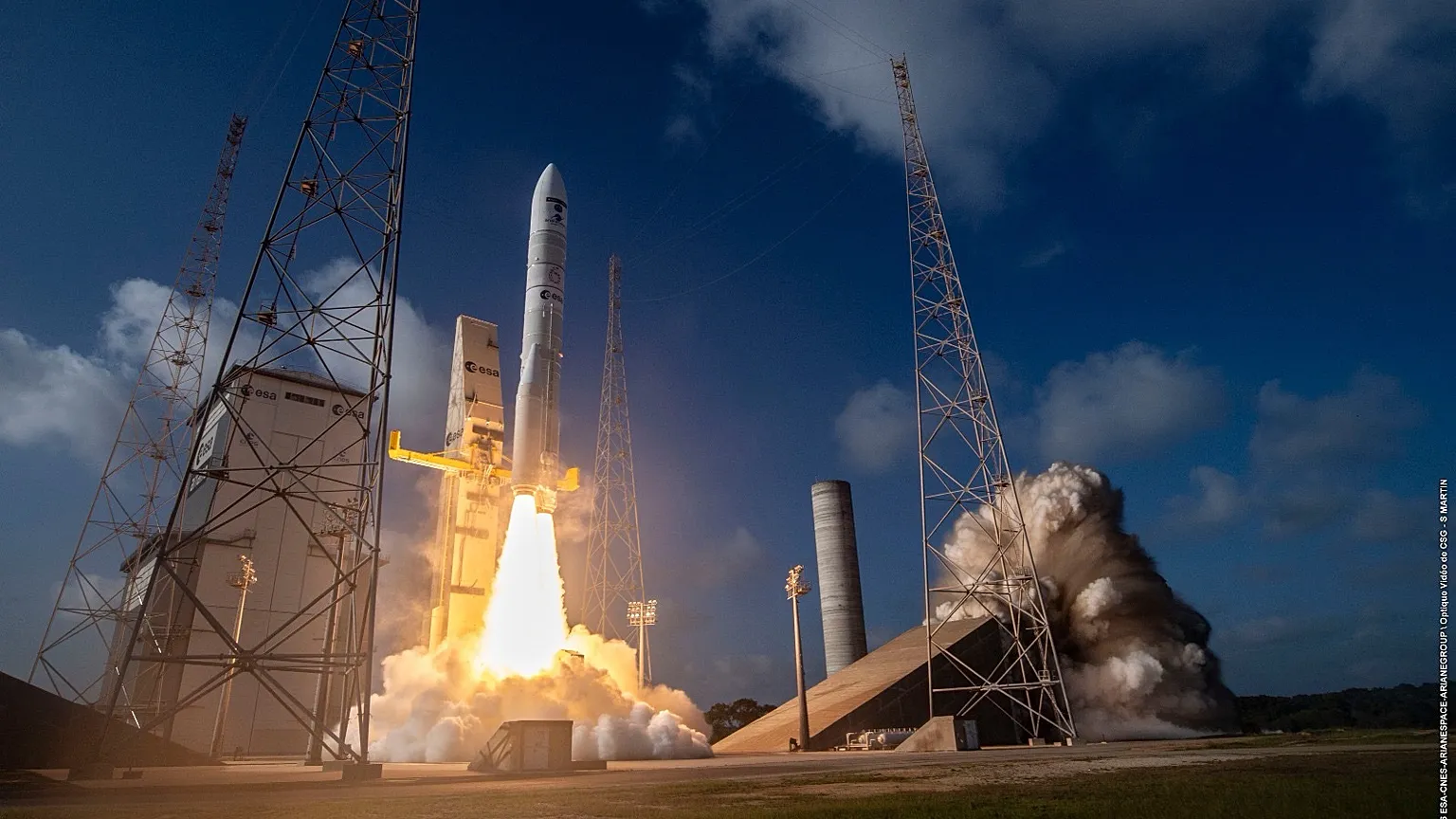
Faster observations could turn minutes into lives saved during extreme weather.
KOUROU, FRENCH GUIANA
Europe has successfully launched the MTG-I2 meteorological satellite aboard an Ariane 6 rocket, completing the first operational family of the Meteosat Third Generation programme. The spacecraft lifted off from Europe’s Spaceport in Kourou and separated from the launcher approximately 36 minutes later after being placed into geostationary transfer orbit.
MTG-I2 will now perform a series of manoeuvres to reach its final position approximately 36,000 kilometres above the equator. Engineers must deploy its solar arrays, activate its control systems and complete an extensive commissioning process before operational data become available. The successful launch therefore completes the initial three-satellite configuration, but the new spacecraft is not yet providing forecasting services.
The satellite carries a Flexible Combined Imager capable of observing Europe and northern Africa every 2.5 minutes. Its second major instrument, the Lightning Imager, can continuously detect individual lightning events during both day and night. Together, these systems will allow meteorologists to follow rapidly developing storms, cloud dynamics and atmospheric changes with far greater frequency than previous Meteosat satellites.
The initial constellation also includes MTG-I1, launched in 2022, and the MTG-S1 sounding satellite, deployed in 2025. By combining images with three-dimensional atmospheric measurements, the system will strengthen short-term forecasting, known as nowcasting. Its data are expected to improve warnings for thunderstorms, torrential rain, floods and wildfires, while supporting aviation safety, agriculture, pollution monitoring and long-term climate research.
The mission also represented an important milestone for Ariane 6. It was the rocket’s ninth flight and its first mission carrying a satellite toward geostationary orbit, demonstrating a capability central to Europe’s independent access to space. MTG-I2 was launched using the Ariane 62 configuration, equipped with two solid-propellant boosters.
Descriptions of the mission as completing the entire MTG constellation require qualification. MTG-I2 completes only its first three-satellite operational family. A second sequence of replacement satellites is expected to begin launching from 2033, extending the programme beyond 2040. Once the present trio is fully commissioned, however, Europe will possess its most advanced geostationary weather-observation system, producing substantially more data and reducing the time between detection and warning.
Información que anticipa futuros. / Information that anticipates futures.