

 Phoenix 24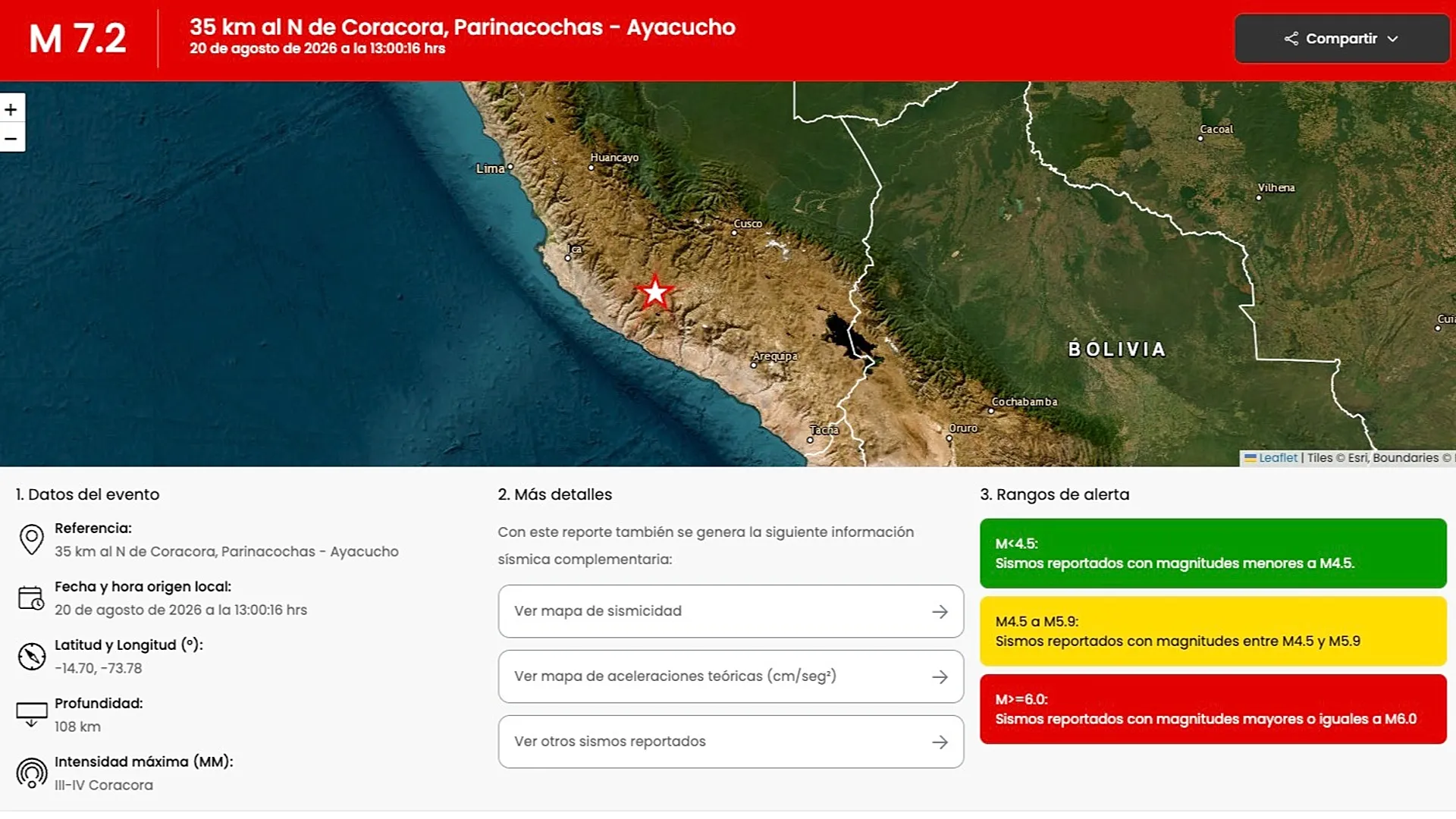
The ground moved far beyond the epicenter.
Ayacucho, Peru
A powerful earthquake struck Peru’s southern Andes, shaking communities across Ayacucho and sending residents into the streets as authorities began assessing damage. The Geophysical Institute of Peru measured the event at magnitude 7.2, while the United States Geological Survey issued a lower estimate of 6.7. Such differences are common when seismic agencies process information from separate monitoring networks and revise preliminary calculations. Despite those variations, both measurements confirmed a major seismic event felt across a broad section of the country.
The epicenter was located near Coracora and Upahuacho in the province of Parinacochas, while estimates placed its depth between approximately 67 and 108 kilometers. That depth helped distribute the seismic waves across several regions but also reduced the destructive force reaching the surface. The movement was reported in Lima, Ica, Arequipa, Huancavelica, Apurímac and Cusco, as well as in neighboring areas of Bolivia and Chile. Peru’s Navy ruled out a tsunami threat because the earthquake originated inland.
Initial assessments indicated that at least two people were injured during evacuations in Coracora. Authorities also reported damage affecting homes, health facilities and a school in communities including Puquio, Pullo, Upahuacho, San Pedro and Pichari. Rockfalls were detected along roads near the epicentral area, creating an additional risk for isolated Andean communities and emergency teams. Officials continued inspecting buildings and transportation routes because preliminary reports can underestimate damage in remote areas with limited communications.
The earthquake again highlighted Peru’s exposure to the Pacific Ring of Fire, where the Nazca Plate moves beneath the South American Plate. This tectonic interaction makes strong earthquakes a permanent national risk rather than an exceptional threat. The limited initial impact should not obscure the vulnerability of rural housing, medical infrastructure and mountain roads throughout the southern Andes. For Peru, the real measure of resilience will depend not only on surviving a powerful tremor, but also on maintaining preparedness before the next one arrives.
Information that anticipates futures. / Información que anticipa futuros.