

 Phoenix 24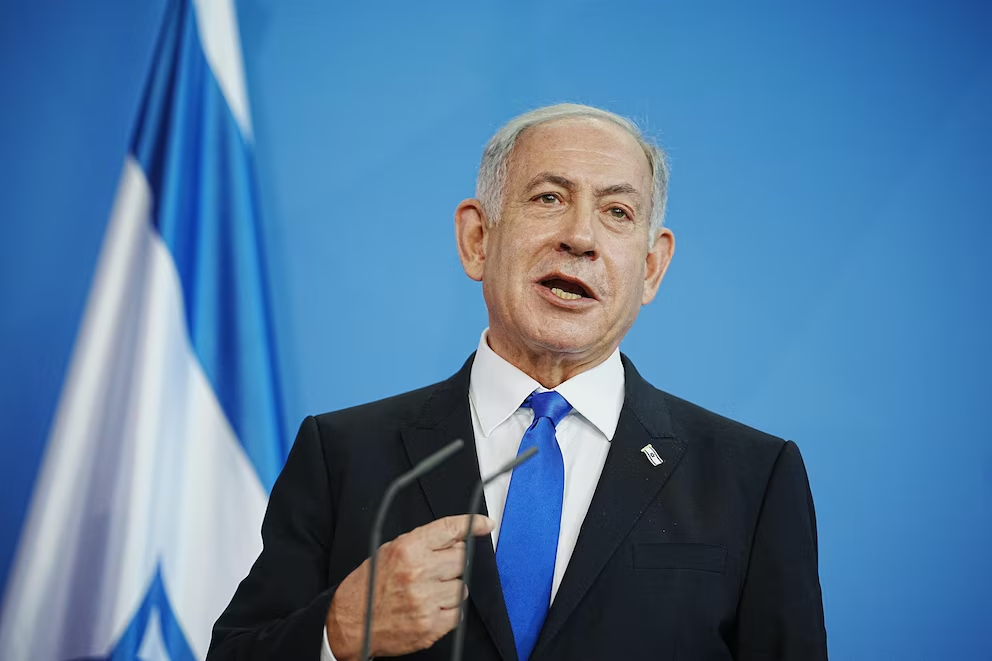
Israel launched deadly airstrikes across southern Lebanon after a Hezbollah drone attack, placing the fragile US-brokered ceasefire under its most severe pressure since June.
JERUSALEM–BEIRUT | CONFLICT & SECURITY | AUGUST 2026
Israeli Prime Minister Benjamin Netanyahu accused Hezbollah of violating the ceasefire in Lebanon after a drone attack seriously wounded three Israeli soldiers, triggering a wave of retaliatory airstrikes that killed at least 11 people in the country’s south.
The Israeli military said the soldiers were injured in an attack attributed to the Iran-backed armed group. Netanyahu described the incident as a deliberate breach of the truce and maintained that Israel would respond forcefully to any threat against its troops or territory.
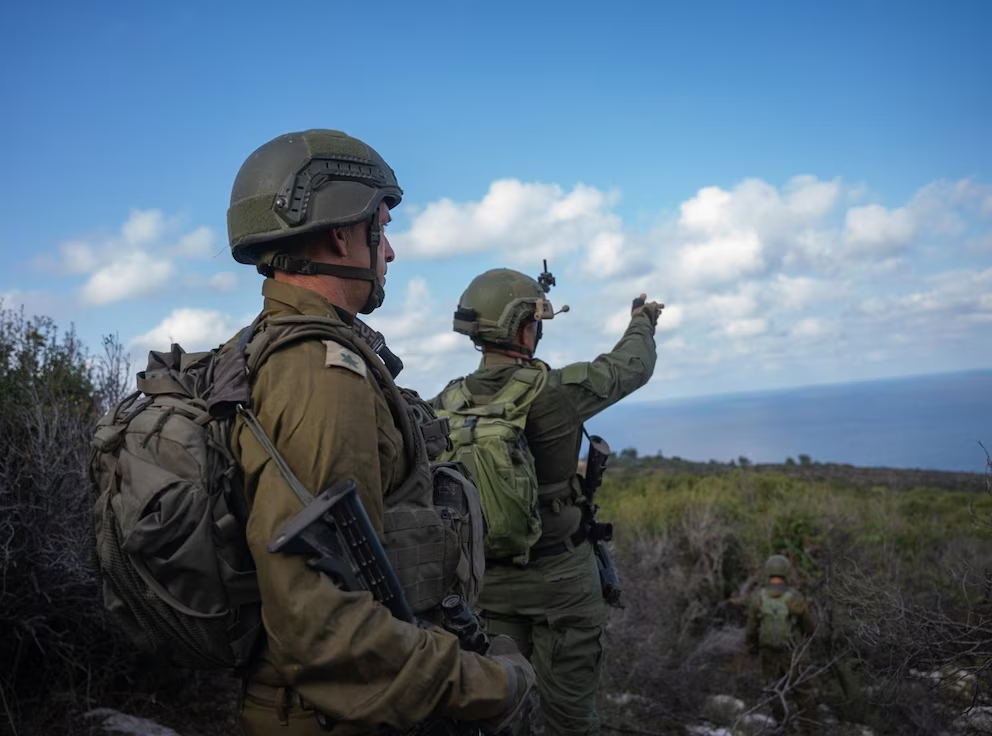
Israeli aircraft subsequently struck locations in and around Ansar, Deir al-Zahrani and other areas of southern Lebanon. The Israeli military said the operation targeted Hezbollah infrastructure and killed commander Ali Samir al-Haj Hassan.
Lebanese authorities reported that civilians were among the dead, including three children and two women. At least 17 other people were injured in Deir al-Zahrani, according to Lebanese health officials.
Prime Minister Nawaf Salam condemned the strikes, arguing that attacks causing civilian casualties undermine efforts to stabilize the country. President Joseph Aoun also warned that the escalation could damage negotiations intended to establish a more durable security arrangement along the border.
Hezbollah threatened retaliation and accused Netanyahu of exploiting the confrontation for political purposes. The organization continues to reject demands that it surrender its weapons, one of the principal conditions attached to Israel’s gradual withdrawal from Lebanese territory.
The June agreement, brokered by the United States, sought to halt hostilities and create a framework for disarming non-state armed groups. It also envisioned the progressive withdrawal of Israeli forces from positions occupied in southern Lebanon, although no definitive timetable has been established.
Both sides accuse the other of undermining the arrangement. Israel maintains that Hezbollah continues rebuilding military infrastructure and operating near its troops, while Lebanese officials argue that Israeli forces remain inside the country and repeatedly conduct strikes that violate Lebanese sovereignty.
The latest violence represents one of the deadliest episodes since the truce took effect. It also exposes the agreement’s central weakness: Hezbollah is not directly participating in the diplomatic negotiations, yet its military decisions can determine whether the ceasefire survives.
After months of conflict and thousands of deaths in Lebanon, the renewed confrontation risks restoring the cycle that diplomacy was meant to interrupt—an attack, retaliation, civilian casualties and another step toward open war.
Geopolítica, sin maquillaje. / Geopolitics, unmasked.