

 Phoenix 24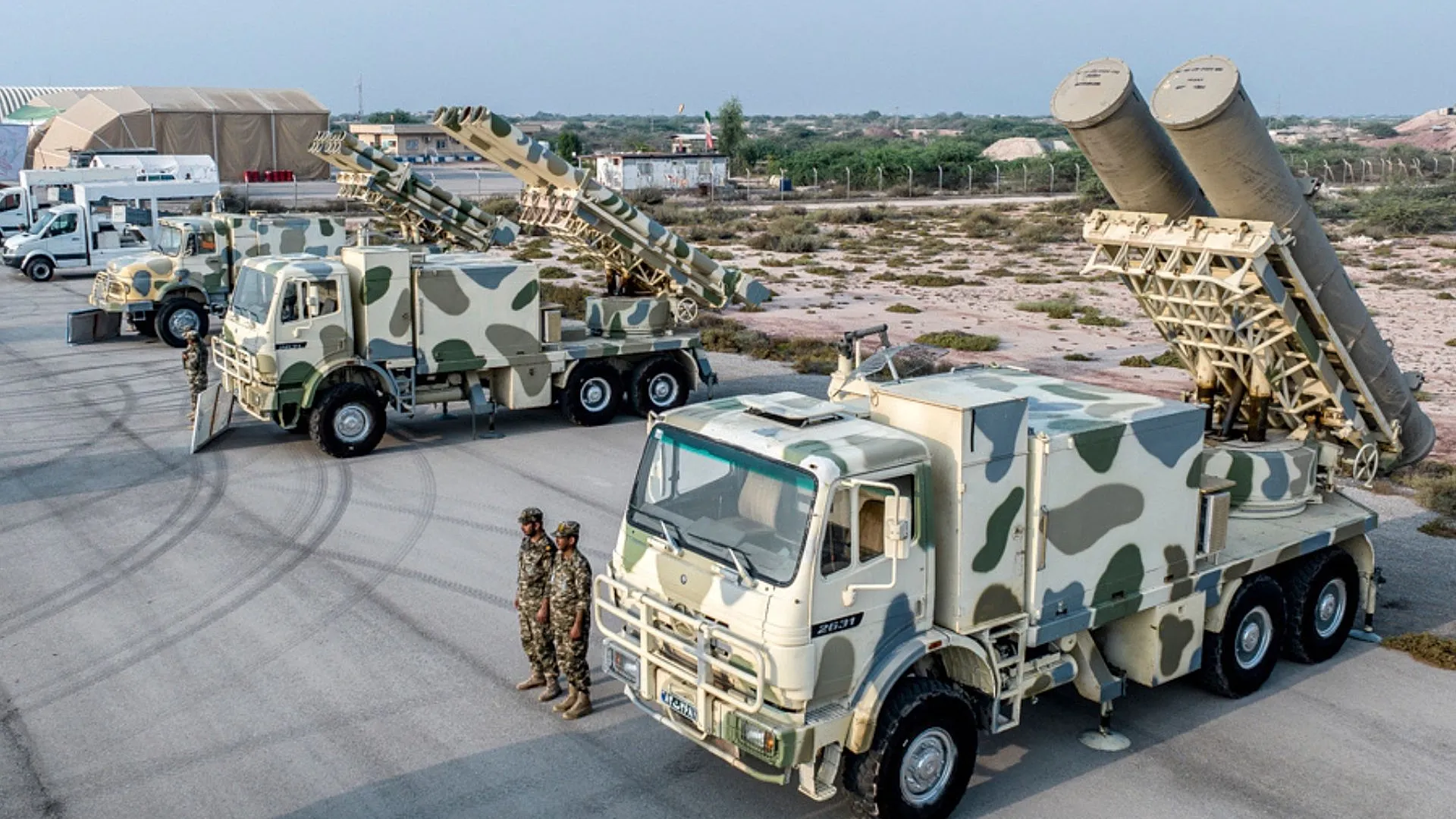
Two maritime chokepoints could reshape the global conflict.
Tehran | July 2026
Iran has warned that any new United States attack on its infrastructure could trigger a broader campaign against strategic facilities across the Gulf, raising the possibility that the conflict could expand beyond Iranian territory and disrupt two of the world’s most important maritime trade routes.
Colonel Ebrahim Zolfaqari, spokesperson for Iran’s Khatam al-Anbiya Central Headquarters, described the Strait of Hormuz as an “inviolable red line.” He said Tehran’s next response would not be proportional, but more extensive and destructive if Washington targets Iranian infrastructure or energy facilities.
The warning followed a fifth consecutive day of renewed attacks between the two countries. United States forces reported striking Iranian command centers, air-defense systems and missile and drone capabilities, including targets near Tehran, Qeshm Island, Chabahar and Semnan province.
Washington also said it attacked a vessel accused of attempting to violate the naval blockade imposed on Iranian ports. The blockade is intended to weaken Tehran’s control over shipping through the Strait of Hormuz, but it has intensified the confrontation around a passage carrying a major share of global energy exports.
Iran responded with missiles and drones against American military facilities in Jordan, Kuwait and Bahrain. The Islamic Revolutionary Guard Corps said it launched two waves of ballistic missiles toward a United States base in Jordan, while the Iranian military claimed attacks against installations in Kuwait and Bahrain.
The full extent of the damage and casualties has not been independently established. Tehran described one of its attacks as retaliation for an American strike near a children’s cancer hospital in Iran, an allegation that also remains independently unverified.
Iranian military leaders insist that their ability to influence the Strait of Hormuz does not depend exclusively on coastal bases or islands vulnerable to American bombardment. They claim that missiles, drones and other systems positioned across Iranian territory could continue threatening maritime traffic even after attacks on southern installations.
The confrontation could now extend toward Bab el-Mandeb, the narrow passage connecting the Red Sea with the Gulf of Aden. Reports indicate that Iran has asked the Houthi movement in Yemen to prepare for a possible closure of the route if Washington attacks Iranian power plants or other essential infrastructure.
A simultaneous threat to Hormuz and Bab el-Mandeb would place enormous pressure on global shipping. Hormuz connects Gulf energy producers with international markets, while Bab el-Mandeb forms part of the route linking the Indian Ocean, the Red Sea and the Suez Canal.
Closing or seriously disrupting both passages would force commercial vessels to adopt longer and more expensive routes. Insurance costs, fuel prices and delivery times could rise rapidly, affecting energy, food, manufactured goods and supply chains far beyond the Middle East.
Tehran’s strategy appears designed to demonstrate that the economic consequences of war cannot be contained inside Iran. By threatening infrastructure and maritime corridors used by neighboring states, it is attempting to increase the political cost of supporting American military operations.
Iran simultaneously says it has no dispute with Gulf countries and remains committed to regional cooperation. That claim becomes increasingly difficult to sustain when missiles and drones are directed toward American installations located inside neighboring states.
Those governments face their own strategic dilemma. They depend on United States security guarantees but also remain geographically exposed to Iranian retaliation. Even when an attack is aimed at an American base, the surrounding population, infrastructure and economy may absorb part of the risk.
Washington argues that its military campaign is intended to protect international navigation and reduce Iran’s capacity to threaten commercial shipping. Tehran portrays the same operations as an attempt to seize control of a waterway central to its sovereignty and national survival.
The dispute has therefore moved beyond isolated strikes. It now concerns who possesses the authority to regulate navigation through Hormuz, whether an American blockade can be enforced without a larger war and how far Iran is prepared to extend the conflict through regional allies.
Diplomatic space has not disappeared entirely. Iranian officials continue saying negotiations remain possible when they serve national interests, while international mediators are attempting to prevent the confrontation from expanding. Yet every new strike reduces the distance between controlled escalation and a regional war whose economic effects would be immediate.
The Gulf is no longer merely the location of the conflict. It is becoming the principal instrument through which both sides attempt to impose costs on the other.
Cuando dos estrechos se convierten en armas, el mundo entero entra en la zona de riesgo. / When two straits become weapons, the entire world enters the risk zone.