

 Phoenix 24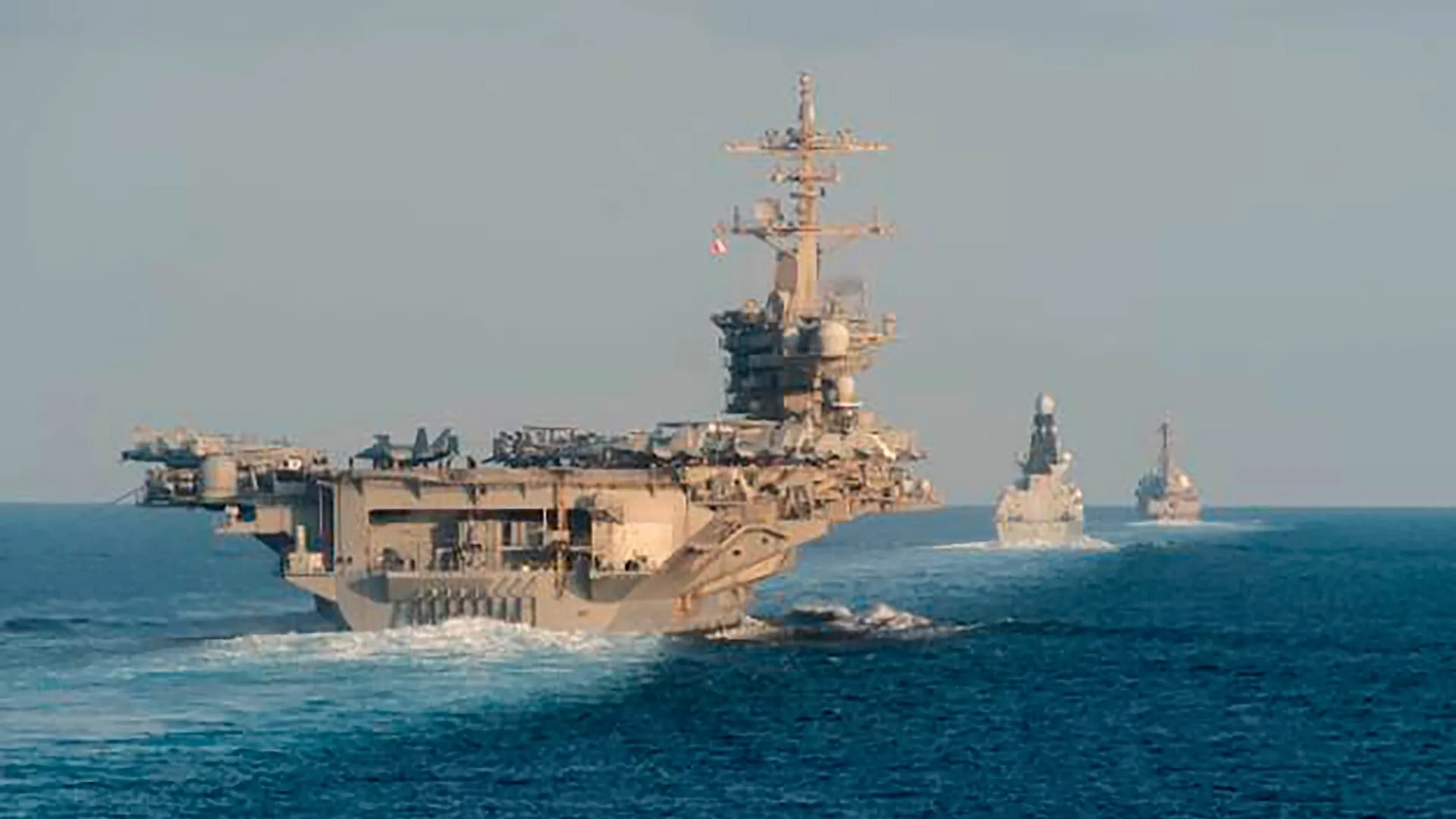
A maritime dispute is becoming a regional battlefield.
Bushehr | July 2026
United States forces struck four locations in the Iranian port city of Bushehr on July 14 as Tehran introduced legislation intended to strengthen its authority over the Strait of Hormuz. Bushehr hosts Iran’s only operating civilian nuclear power plant, although Iranian authorities reported no immediate damage to the facility itself. The simultaneous military and legislative actions intensified a confrontation now affecting shipping, energy markets and the security of several Gulf states.
Iranian officials said projectiles hit different areas of the city around midday. The reported attacks formed part of a wider American operation against Iranian coastal defenses, missile positions, drone installations and maritime capabilities. Washington says the campaign is intended to reduce Tehran’s ability to threaten commercial vessels moving through the strait.
Additional explosions were reported near Bandar Abbas, Qeshm Island, Abadan and Mahshahr. These locations occupy strategic positions along Iran’s southern coast and include ports, energy installations and military infrastructure. The geographic expansion of the strikes suggests that the conflict is no longer limited to isolated naval incidents.
The presence of the Bushehr nuclear plant makes any attack in the area particularly sensitive. Even when the facility is not directly targeted, military operations near a nuclear installation create risks involving miscalculation, infrastructure damage and public panic. No evidence had emerged that the reactor or its essential systems were affected, but the location immediately elevated international concern.
Iran responded to the renewed American pressure with attacks against commercial shipping and targets connected to United States allies. Two tankers associated with the United Arab Emirates were struck in the Strait of Hormuz, killing at least one seafarer and injuring several crew members. Another tanker was reportedly hit near the Omani coast as it left the waterway.
The attacks prompted India to protest after Indian nationals were among the casualties. They also increased pressure on Gulf governments, which depend on secure maritime routes but remain reluctant to become direct participants in the conflict. Any strike against their vessels, airspace or infrastructure narrows the space available for neutrality.
Bahrain reported intercepting Iranian aerial attacks after warning sirens sounded in Manama. Jordan said its forces destroyed four Iranian ballistic missiles that entered its airspace, while Kuwait announced that its military had engaged hostile aerial targets. Iran says its operations are directed against American military interests, but neighboring governments argue that the attacks threaten their sovereignty and civilian security.
Washington reinstated its blockade of Iranian ports after accusing Tehran of violating the provisional arrangement reached in June. The agreement had been designed to reduce hostilities, reopen the strait and create a sixty-day period for negotiations concerning maritime security, Iran’s nuclear program and a permanent settlement. Renewed attacks have placed that framework in serious danger.
President Donald Trump initially proposed charging ships a twenty percent fee for protected passage through the Strait of Hormuz. The plan generated opposition because international straits are generally governed by principles of free navigation rather than tolls imposed unilaterally by a military power. Trump later abandoned the fee and said Gulf states would instead pursue trade and investment agreements with the United States.
The blockade remains in force against Iranian ports and shipping connected to Iran. Washington maintains that non-Iranian commercial traffic can continue using the strait, but the presence of missiles, drones, warships and damaged tankers means formal access does not guarantee operational safety. Shipping companies must now calculate military risk alongside fuel, insurance and delivery costs.
Iran is attempting to convert its strategic position into a formal political doctrine. Its Parliament began considering legislation titled Strategic Action for the Security and Sustainable Development of the Strait of Hormuz and the Persian Gulf. The proposal is intended to reinforce Tehran’s claim that it possesses sovereign rights to manage security and navigation in the waterway.
The parliamentary initiative carries both domestic and international significance. Iranian lawmakers who oppose negotiations with Washington have criticized the provisional agreement and complained that Parliament was excluded from its formulation. By introducing legislation, they are seeking to limit diplomatic flexibility and place control of the strait within a more permanent national framework.
Iranian military officials have declared that the United States will not be allowed to manage the waterway. Tehran has also warned Gulf governments that cooperation with Washington against Iranian interests could be treated as an act of war. Such language raises the possibility that logistics, intelligence sharing or defensive support may be interpreted as direct participation.
The Strait of Hormuz is one of the most important energy passages in the world. Before the conflict, roughly one fifth of internationally traded crude oil and liquefied natural gas moved through it. Extended disruption would affect not only Gulf exporters, but also manufacturers, transportation systems and consumers far beyond the region.
Energy markets reacted immediately to the renewed confrontation. Brent crude briefly climbed above 87 dollars per barrel, while West Texas Intermediate approached 81 dollars. The movement reflected fears that damaged vessels, naval restrictions or a wider regional war could reduce supply and increase transportation costs.
Iran maintains that sanctions and military pressure have not prevented it from exporting substantial quantities of oil. Tehran says it has developed alternative commercial mechanisms capable of reducing the effects of American restrictions. The blockade will test those claims by targeting the maritime routes, intermediaries and customers supporting Iranian exports.
China called for the rapid restoration of safe and normal passage through the strait. Beijing depends heavily on Gulf energy supplies and has significant economic relationships with Iran and the Arab states. Its interest lies in preventing either Washington or Tehran from transforming the waterway into a permanent instrument of coercion.
The confrontation now involves three overlapping struggles. The first concerns freedom of navigation and who guarantees it. The second concerns Iran’s ability to export energy despite sanctions and blockades. The third concerns whether military pressure will force a negotiated settlement or destroy the remaining diplomatic framework.
Both Washington and Tehran appear to be using force to improve their position before future negotiations. The danger is that calibrated escalation can become uncontrolled once casualties, damaged infrastructure and retaliatory obligations accumulate. Gulf states may eventually conclude that defensive neutrality is impossible, while Iran may interpret their cooperation with the United States as hostile alignment.
The strikes on Bushehr therefore represent more than another episode in the exchange of fire. They place military operations near a nuclear facility while Iran attempts to institutionalize its claim over the world’s most consequential energy corridor. The battle for Hormuz is no longer only about ships crossing a narrow passage. It is becoming a contest over sovereignty, economic survival and who possesses the power to define order in the Persian Gulf.
Geopolítica, sin maquillaje. / Geopolitics, unmasked.