

 Phoenix 24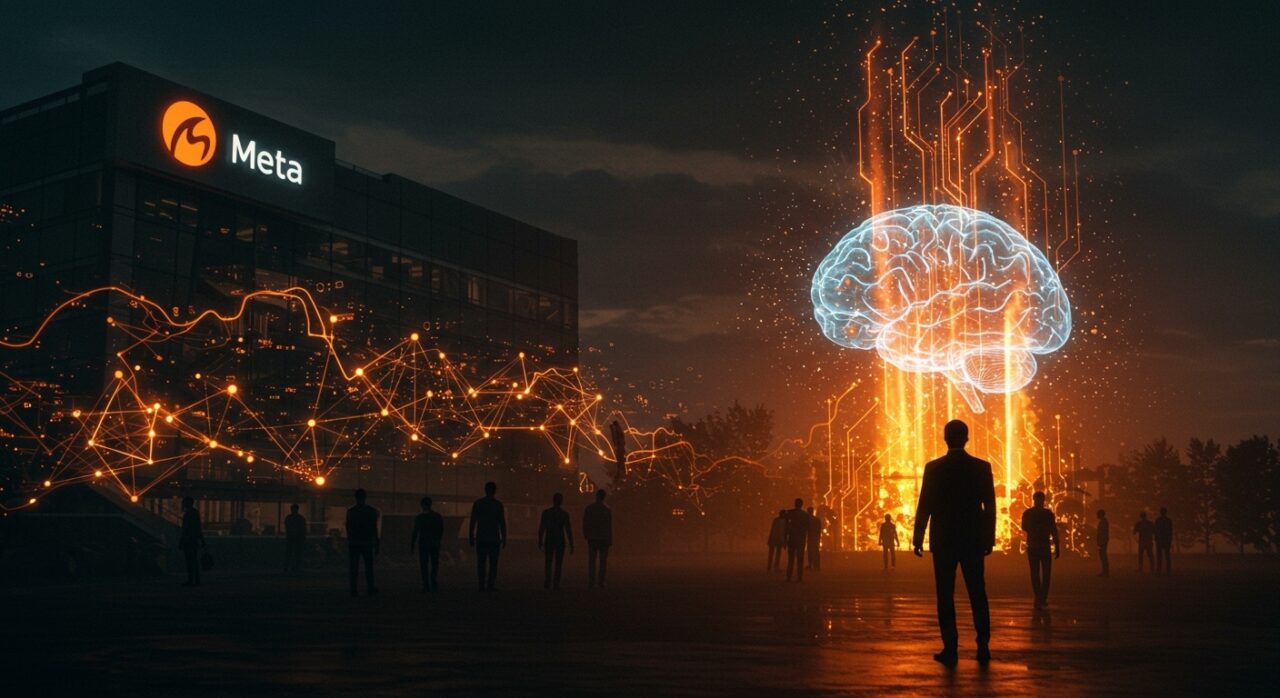
Automation promises growth while workers absorb the disruption.
MENLO PARK, CALIFORNIA | JULY 2026
Meta is defending an optimistic vision of artificial intelligence and employment after eliminating approximately 8,000 positions in April as part of a broad restructuring centered on automation, productivity and the financing of advanced AI development. The parent company of Facebook, Instagram and WhatsApp reduced close to 10 percent of its workforce and also left around 6,000 previously planned positions unfilled, redirecting resources toward infrastructure, research and the creation of its Superintelligence Laboratory. Chief Executive Mark Zuckerberg has described the adjustment as a corporate “reset” intended to simplify operations, accelerate decision-making and move employees toward work that produces greater strategic value. The contrast between thousands of immediate job losses and the promise of a better labor future has intensified debate over whether technology companies are preparing workers for transformation or using artificial intelligence primarily to justify rapid cost reductions.
Zuckerberg argues that AI does not have to produce a permanent decline in employment if companies invest in people at the same speed that they automate processes. His position is that training, stronger digital skills and access to intelligent tools can increase individual productivity quickly enough to generate new services, industries and occupations, creating more jobs over time rather than fewer. Under that model, repetitive administrative functions would increasingly be performed by software, while human workers would concentrate on supervision, creative judgment, product development, customer relationships and decisions that require contextual understanding. Meta therefore presents the layoffs not as evidence that human labor is becoming unnecessary, but as a difficult transition toward a smaller, more specialized organization in which employees use AI to complete more complex tasks with fewer layers of management.
The restructuring at Meta is part of a much broader movement across the technology industry, where companies are simultaneously reducing payrolls and announcing unprecedented investment in computing capacity, cloud platforms and artificial intelligence systems. Oracle reportedly eliminated about 21,000 jobs during the previous year, representing close to 13 percent of its workforce, while acknowledging that AI-related investment and organizational changes had contributed to reductions in staffing. The company spent approximately $1.8 billion on severance payments and restructuring expenses, even as it warned that the transition could temporarily create shortages of workers with the technical skills required to operate increasingly sophisticated systems. Amazon and Google have also announced workforce adjustments while committing enormous sums to advanced technology, with Amazon planning investment of roughly $200 billion and the technology sector collectively expected to allocate about $650 billion to AI infrastructure and related solutions during 2026.
Nearly 80,000 technology workers have reportedly lost their jobs during the year, placing executive optimism under growing scrutiny from employees, labor specialists and governments concerned about the speed of occupational displacement. Supporters of the transition, including several leading technology executives, maintain that AI will eventually produce labor shortages because companies will need engineers, researchers, safety specialists, data professionals, infrastructure technicians and workers capable of redesigning business processes around new tools. The central challenge is timing, because the occupations being eliminated today are not necessarily located in the same cities, industries or salary ranges as the jobs expected to emerge later. A customer-support employee, editor or administrative specialist cannot automatically become an AI engineer, meaning that the promise of future opportunity depends on accessible training, realistic transition periods and financial support for workers whose existing roles disappear before new ones become available.

Current assessments identify interpreters, translators, mathematicians, editors and writers among the professions facing particularly high exposure to automation, especially where tasks involve predictable digital outputs that generative systems can reproduce rapidly. Software development, scientific research and energy-related industries may demonstrate greater resilience because they still require human oversight, original investigation, safety management and decisions in environments where errors carry significant financial or physical consequences. Even in those sectors, however, job descriptions are likely to change as AI becomes integrated into coding, analysis, documentation, forecasting and operational control. The future of work described by Meta may therefore involve fewer purely routine positions, greater demand for hybrid technical and professional skills, and continuous retraining as employees learn to supervise systems that increasingly perform portions of their previous responsibilities.

Meta’s argument ultimately depends on whether productivity gains are distributed through expanded employment, improved wages and genuine opportunities for professional mobility rather than remaining concentrated among companies, investors and a limited group of highly skilled specialists. Training cannot be treated as a symbolic response after layoffs have already occurred, because effective reskilling requires time, recognized credentials, employer participation and clear pathways into available positions. Governments, universities and corporations will also need to determine who finances that transition and how workers are protected when automation moves faster than educational systems or labor regulation. The company insists that AI can empower people and create a more productive employment market, but the credibility of that promise will be measured by what happens to the thousands of workers already displaced during the race toward superintelligence.
The future may improve, but the transition is already costly.