

 Phoenix 24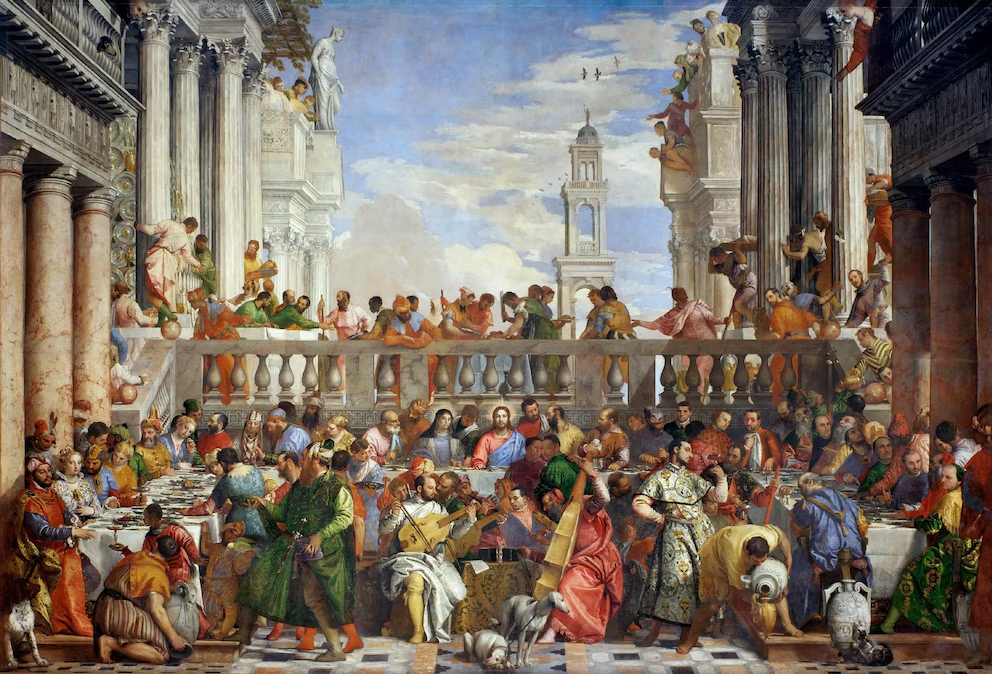
Art transforms an ordinary object into emotional territory.
PARIS, FRANCE — July 2026
Throughout art history, the table has served as far more than a domestic object used for eating, working or gathering. Painters have transformed its horizontal surface into a stage where affection, loneliness, celebration, poverty, secrecy and betrayal become visible. The people seated around it reveal social hierarchies, emotional distances and the bonds that unite or divide them. Viewed across centuries of painting, the table becomes a silent witness to the complexity of human relationships.
Vincent van Gogh explored several of these meanings through scenes shaped by solitude and hardship. In Café Terrace at Night, painted in 1888, empty tables beneath the intense yellow light of Arles create an atmosphere of urban isolation. The furniture appears prepared to receive visitors, yet the absence of diners suggests expectation, distance and melancholy. The scene turns a public café into a space suspended between companionship and abandonment.
The emotional weight of an unattended table also appears in nineteenth-century paintings portraying grief inside the home. In The Widower, Sir Luke Fildes depicts a family whose daily order has been shattered by the death of the mother. Pieces of bread left on the table reinforce the emptiness surrounding the surviving father and his children. Gaetano Chierici presents another expression of loss in The Widow’s Supper, where empty dishes and a distressed mother reflect hunger after the disappearance of the household provider.
Van Gogh offered a different interpretation of scarcity in The Potato Eaters, completed in 1885. Five peasants gather beneath a weak oil lamp and share a simple meal earned through demanding physical labour. Their rough hands and tired faces do not represent luxury, but the dignity of people sustained by family unity. The modest table functions as a domestic altar where limited food acquires value through the act of sharing.
Other artists transformed the table into a territory of deception, risk and psychological confrontation. In Caravaggio’s The Cardsharps, hidden cards and coordinated gestures reveal a carefully organized fraud against an inexperienced young player. Honoré Daumier’s The Chess Players replaces physical trickery with a silent intellectual struggle between two opponents. In both works, the table becomes a battlefield where concentration, strategy and manipulation determine who controls the encounter.
Its symbolic power becomes even greater in paintings connected to religion, politics and social hierarchy. Paolo Veronese’s monumental The Wedding at Cana presents an elaborate banquet whose arrangement reflects status, ceremony and the visual authority of the Renaissance elite. The table organizes the crowd and establishes the position occupied by every participant inside the celebration. Food, architecture and human figures combine to create an image in which religious meaning coexists with political representation.
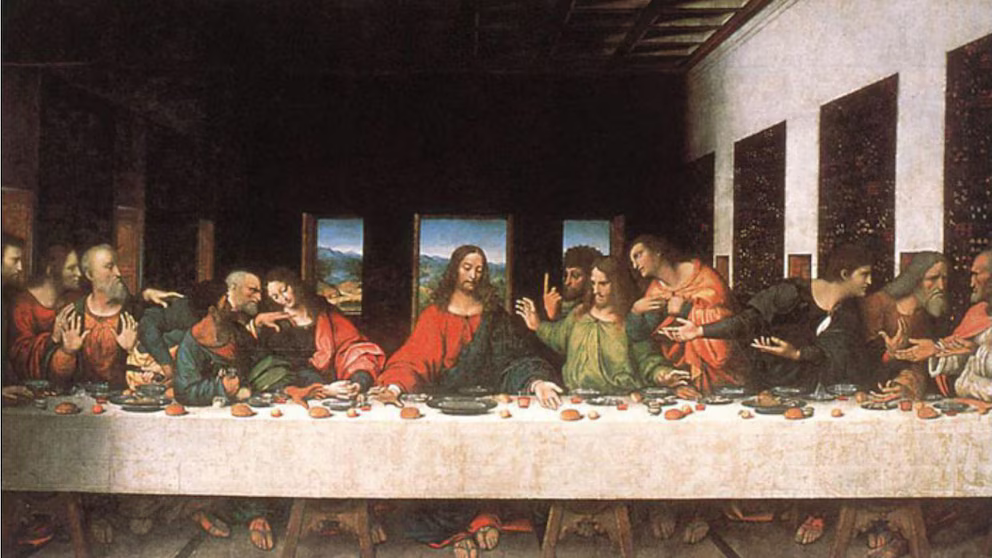
Leonardo da Vinci’s The Last Supper transformed the shared table into one of the most recognizable emotional structures in Western art. The announcement that one disciple will betray Jesus produces different reactions across the composition, including disbelief, fear, suspicion and anger. The long table simultaneously unites the group and exposes the fracture developing within it. It becomes the boundary between loyalty and betrayal, communal faith and imminent separation.
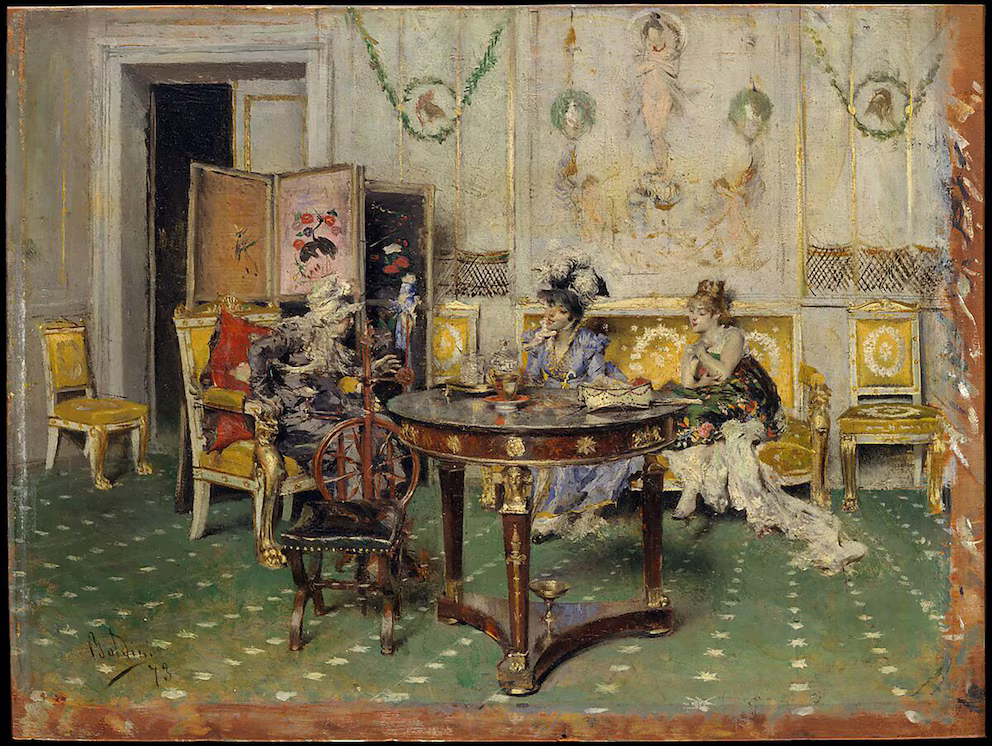
Beyond sacred narratives, artists also used tables to examine conversation, intimacy and social performance. Giovanni Boldini’s Gossip places upper-class women around a polished table that protects their private exchange from the outside world. Similar scenes by Vittorio Reggianini and Francis Coates Jones portray tea, furniture and carefully positioned bodies as elements of confidential female circles. The table provides closeness, but it can also establish a barrier separating those who belong from those who remain excluded.
Mary Cassatt challenged the apparent comfort of bourgeois domestic life in The Tea, painted in 1880. Silver objects, formal clothing and rigid etiquette create an elegant environment, but the table also reinforces the emotional distance between the women. Social protocol appears to regulate their movements and conceal what they may genuinely feel. The setting demonstrates how refinement can function as both a symbol of privilege and a mask for interpersonal restraint.
Pierre-Auguste Renoir offered a more spontaneous vision in Luncheon of the Boating Party. Bottles, glasses, fruit and relaxed bodies transform the table into the centre of a lively gathering among friends. Unlike the controlled interiors of bourgeois salons, Renoir’s outdoor scene communicates movement, affection and youthful freedom. The disorder of the meal becomes evidence of a community fully engaged in the pleasure of being together.
Dutch painter Jan Steen also celebrated collective joy in The Happy Family, created during the seventeenth century. Several generations gather around a table filled with music, food, wine and animated gestures. The scene avoids solemnity and instead presents family life as noisy, imperfect and deeply human. Its crowded composition suggests that happiness emerges through participation rather than rigid order.
Across these works, empty chairs can express bereavement, while crowded dining rooms can communicate affection, ceremony or social pressure. A table may protect secrets, expose inequality, organize power or offer refuge during difficult circumstances. Its meaning changes according to the people who approach it and the emotions they bring with them. What remains constant is its ability to connect private experience with broader questions about society and identity.
The artistic journey from Van Gogh to Renoir demonstrates that ordinary objects can carry extraordinary emotional significance. Tables record the traces of meals, arguments, celebrations and absences long after the participants have disappeared. They remind viewers that human life is repeatedly organized around the decision to sit together, share resources and recognize one another. Every new person who pulls up a chair changes the story unfolding around the table.
Art continues to reflect who we are.