

 Phoenix 24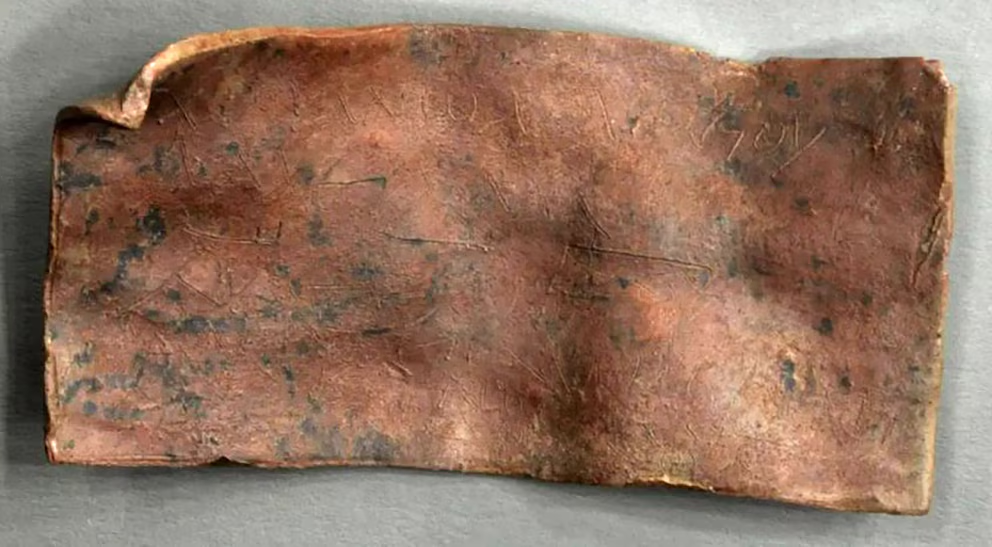
Ancient magic crossed languages, cultures and imperial borders.
HEERLEN, NETHERLANDS — July 2026
Researchers have deciphered an approximately 1,800-year-old Roman lead tablet containing a mysterious curse connected to four enslaved people from different cultural backgrounds. The object was recovered from a well beneath the town hall square in Heerlen, a city in the southern Netherlands. Specialists from Heidelberg University identified an unusual combination of Greek and Latin names alongside magical symbols linked to Egyptian ritual traditions. The discovery reveals how religious practices, languages and populations circulated across the vast territory of the Roman Empire.
The tablet dates from the second century and measures approximately 3.5 by 1.8 inches. It was made of lead, a material frequently used for ancient curse tablets because it could be easily inscribed, folded or pierced. Romans called these objects defixiones, while the Greek term was katadesmoi. They were believed to bind individuals physically, emotionally or spiritually through supernatural intervention.
Archaeologists found the object in an area once occupied by Coriovallum, an important Roman military settlement. The community stood along the Via Belgica, a major road connecting Tongeren in present-day Belgium with Cologne in modern Germany. Coriovallum developed as a strategic centre for soldiers, merchants, travellers and residents from different parts of the empire. Its surviving bath complex remains one of the most important visible Roman archaeological sites in the Netherlands.
The tablet’s damaged surface initially made its inscription extremely difficult to interpret. Researchers used reflectance transformation imaging, a method that combines photographs taken under different lighting conditions. The technique allowed specialists to examine subtle scratches and reconstruct letters that could not be clearly seen under normal illumination. This digital analysis revealed a ritual formula rarely documented in Roman northern Europe.
More than 1,500 Roman curse tablets have been discovered across territories extending from Syria to the United Kingdom. Most examples recovered in northern Europe were written primarily in Latin and followed local Roman magical conventions. The Heerlen object is exceptional because it contains ancient Greek and invokes supernatural forces through a formula strongly influenced by Egyptian practices. Its presence suggests that complex ritual knowledge travelled thousands of kilometres through imperial networks.
The inscription begins with three magical signs known as characteres. These symbols were intended to communicate with divine, demonic or supernatural forces through a language believed to possess hidden power. The tablet then records four personal names belonging to enslaved individuals. Two are male names written in Latin, while the other two are female names of Greek origin.
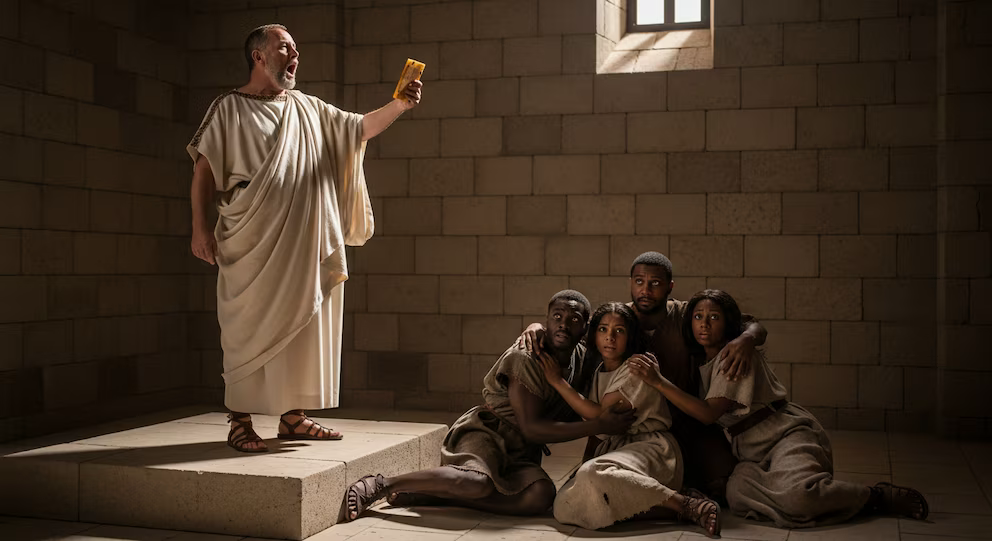
Researchers have not determined precisely who commissioned the curse or whom it was intended to harm. Rodney Ast, academic director of Heidelberg University’s Institute of Papyrology, explained that the tablet may have targeted the four enslaved people. Another possibility is that the curse was created on their behalf against an unidentified enemy. The incomplete wording prevents specialists from selecting either interpretation with certainty.
The combination of names provides evidence of the ethnic and linguistic diversity present within Roman slavery. Enslaved people were transported throughout the empire after wars, commercial transactions, family separations and forced migrations. Their names could reflect their birthplace, language, previous owners or identities imposed after enslavement. The Heerlen tablet therefore preserves rare traces of people who would otherwise remain almost entirely absent from the historical record.
Researcher Julia Lougovaya suggested that one of the two women named on the tablet could have created or commissioned the inscription. She may have arrived from Roman Egypt carrying knowledge of rituals used to communicate with supernatural powers. This interpretation would place an enslaved woman at the centre of a sophisticated act of magical practice. However, researchers emphasize that the surviving evidence does not allow her role to be conclusively established.
Magic remained closely connected to religion, fear and personal conflict throughout Roman society. People used spells to seek protection, influence legal disputes, damage rivals, recover stolen property or control romantic relationships. Harmful rituals were generally more socially taboo than practices intended for healing or self-preservation. Their continued use shows that official Roman religion existed alongside private and sometimes forbidden supernatural traditions.
Egyptian, Greek, Roman, Jewish, Near Eastern and early Christian ideas increasingly interacted during the first centuries of the Common Era. Soldiers, traders, enslaved populations and migrants transported rituals and beliefs between distant provinces. The Heerlen tablet demonstrates that cultural exchange did not occur only in major Mediterranean cities. It also reached military settlements near the empire’s northern frontier.
The object will be displayed at the Heerlen Museum, allowing the public to examine one of the region’s most unusual Roman discoveries. Its inscription is also expected to appear in a specialized academic publication. Further study could clarify the meaning of its symbols and the social relationships surrounding the four named individuals. For now, the tablet remains a powerful record of cultural diversity, enslavement and hidden religious practices in Roman Europe.
History preserves the voices that power tried to erase.