

 Phoenix 24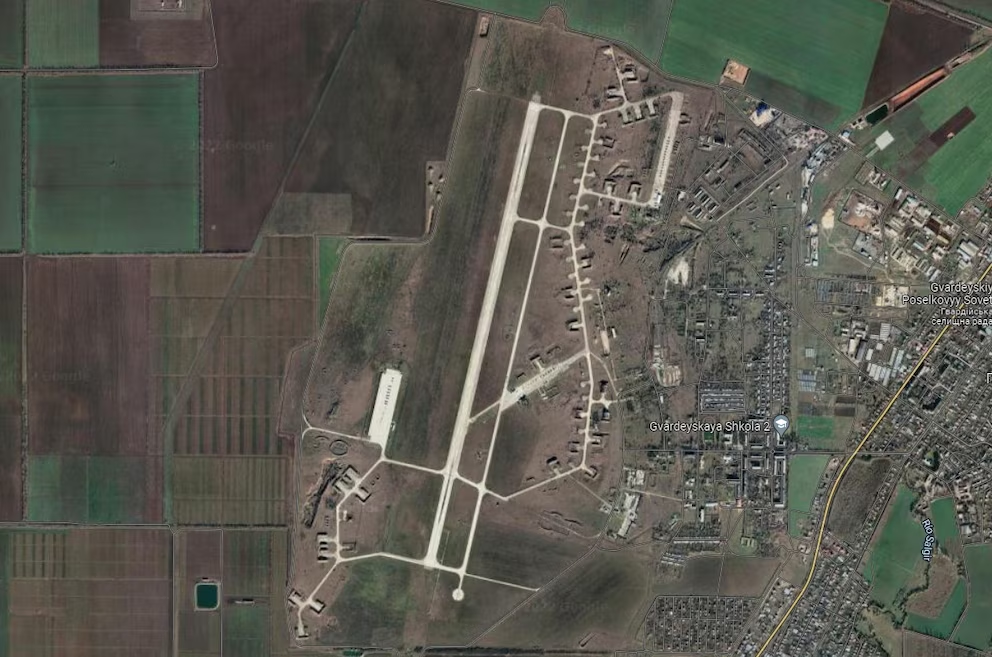
Military escalation continues alongside renewed diplomatic contacts.
KYIV | JULY 2026
Ukrainian forces reported a successful strike against the Gvardeyskoye military airfield, one of Russia’s principal tactical and naval aviation bases in occupied Crimea. Ukraine’s General Staff said the facility provides logistical support, aircraft maintenance and operational capabilities for Russian combat missions. The attack formed part of a broader overnight campaign against military infrastructure across territories controlled by Moscow. It occurred as both Ukrainian President Volodymyr Zelenskyy and Russian President Vladimir Putin maintained separate diplomatic contacts with United States President Donald Trump.
The Gvardeyskoye airbase is located near Simferopol and has strategic value because it supports Russian aviation operating over southern Ukraine and the Black Sea region. Ukraine has repeatedly targeted military installations across Crimea in an effort to weaken Moscow’s ability to launch air operations, move equipment and defend the peninsula. Kyiv considers Crimea Ukrainian territory under Russian occupation following Moscow’s annexation in 2014. Russia continues treating the peninsula as part of its national territory and has expanded its military presence there throughout the war.
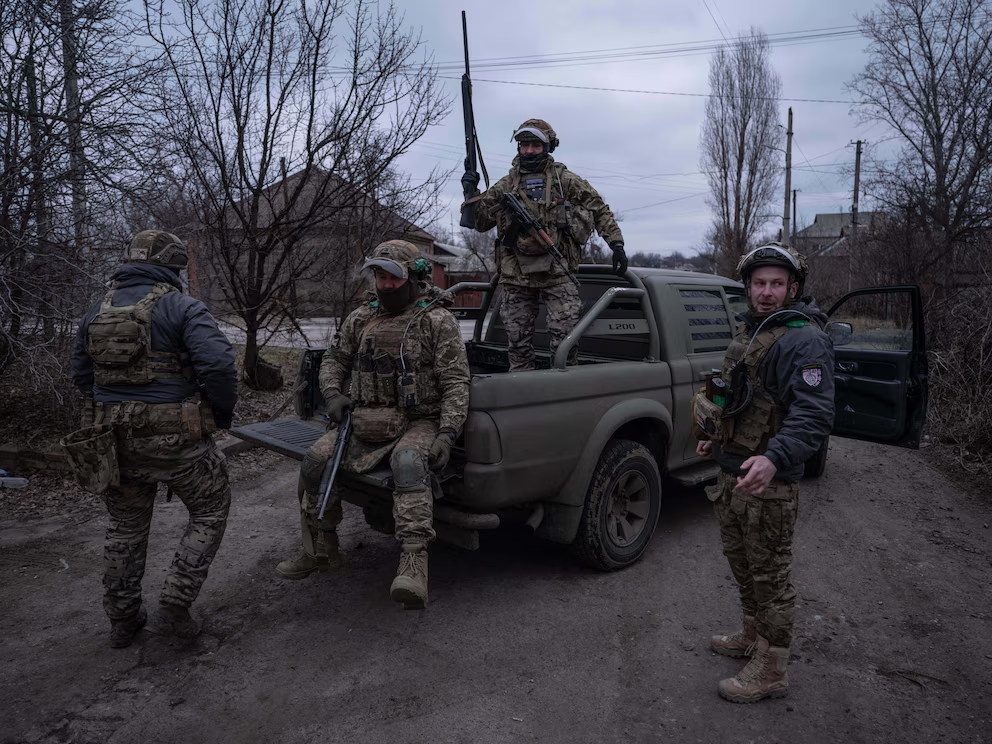
Ukrainian forces also reported strikes against bridges over the Hruzkyi Yalanchyk and Kalmius rivers in the Donetsk region. These structures are used by Russian forces to transport personnel, weapons, ammunition and other supplies toward active sectors of the front. By attacking bridges and logistical routes, Kyiv seeks to delay Russian reinforcements and complicate the movement of heavy equipment. Ukrainian officials additionally announced the destruction of three ammunition depots in the Donetsk, Luhansk and Kherson regions.
The operation demonstrated the continuing expansion of Ukraine’s long-range strike campaign against Russian military assets. Drones and other precision weapons have allowed Ukrainian forces to attack targets far beyond the immediate battlefield. Kyiv argues that these operations are necessary to reduce Russia’s offensive capacity and prevent further attacks against Ukrainian cities. Moscow describes the strikes as terrorism and says many of the targeted drones are intercepted before reaching their objectives.
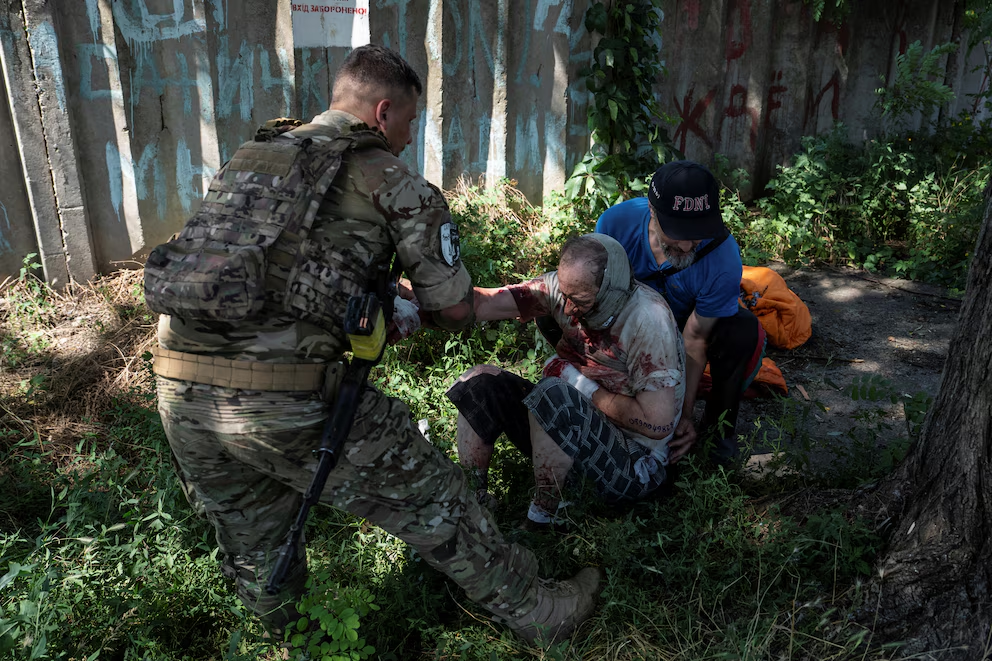
Russian-installed officials reported casualties from the Ukrainian attacks in northern Crimea. Regional leader Sergei Aksyonov said one person was killed and two others were wounded, including one who remained in serious condition. Russian authorities did not immediately provide detailed information about the identity of the victims or the precise location of the incident. Ukraine did not comment directly on the reported civilian casualties.
Russia’s Defense Ministry said its air-defense systems intercepted 71 Ukrainian fixed-wing drones over several regions. The reported interceptions occurred over Belgorod, Bryansk, Rostov, the Black Sea and Crimea. Russian officials said the number of drones was lower than during the previous day, when nearly 400 aircraft were reportedly launched against strategic targets. Those earlier attacks included strikes aimed at oil terminals, energy infrastructure and facilities supporting Russia’s economy and military operations.
Ukraine simultaneously faced another major wave of Russian aerial attacks. The Ukrainian Air Force reported intercepting 112 attack drones and three Kh-59 or Kh-69 guided missiles. Russian forces also launched Kh-31 air-to-surface missiles from the Black Sea region, although Ukrainian officials said they failed to reach their principal targets. Direct impacts were nevertheless recorded at three locations, illustrating the continuing difficulty of protecting the country against large and coordinated aerial offensives.
The reciprocal attacks highlighted the growing importance of drones in a conflict that has entered its fifth year. Both countries now conduct frequent long-range operations intended to damage military facilities, logistics networks, energy systems and industrial infrastructure. The expanding scale of these campaigns has forced Russia and Ukraine to distribute air-defense resources across extensive territories. It has also increased risks for civilians living far from the traditional front lines.
Conflicting reports continued to emerge from Kostyantynivka, a strategically important city in the eastern Donetsk region. Kremlin foreign policy adviser Yuri Ushakov said Putin had informed Trump that Russian forces had captured the Ukrainian stronghold. Moscow presented the alleged advance as an important step toward securing greater control over the Donbas. Before the war, Kostyantynivka had a population of approximately 78,000 people and served as a critical transportation and defensive center.
Ukraine categorically rejected Russia’s claim and maintained that the city remained under its control. Ukrainian military spokesperson Andriy Kovalyov acknowledged that small Russian infiltration groups had attempted to establish positions within the urban area. He said Ukrainian forces were conducting operations to identify and remove those units. Zelenskyy described Moscow’s announcement as another false Russian claim intended to create the impression of progress.
The military escalation unfolded during increased diplomatic activity involving Washington. Putin and Zelenskyy separately congratulated Trump on the 250th anniversary of American independence and discussed possible routes toward ending the conflict. Zelenskyy said there was a realistic prospect of achieving progress before the next NATO summit in Ankara. The Kremlin maintained that any negotiated settlement must recognize what it describes as Russia’s fundamental territorial and security interests.
American envoys Steve Witkoff and Jared Kushner were preparing to continue mediation efforts in Moscow. Washington’s renewed involvement has raised expectations that another diplomatic initiative could emerge, although major disagreements remain unresolved. Ukraine insists that any peace agreement must preserve its sovereignty and provide credible security guarantees. Russia continues demanding recognition of its territorial claims and restrictions on Ukraine’s future military alignment.
The attack on Gvardeyskoye therefore illustrated the contradiction defining the current stage of the war. Diplomatic conversations are continuing, but neither side has reduced its military operations or long-range attacks. Ukraine is seeking to weaken Russia’s aviation and logistics systems while demonstrating that occupied Crimea remains vulnerable. Moscow is maintaining pressure through drone and missile strikes while claiming additional territorial advances in eastern Ukraine.
Diplomacy advances cautiously while the battlefield continues to expand.