

 Phoenix 24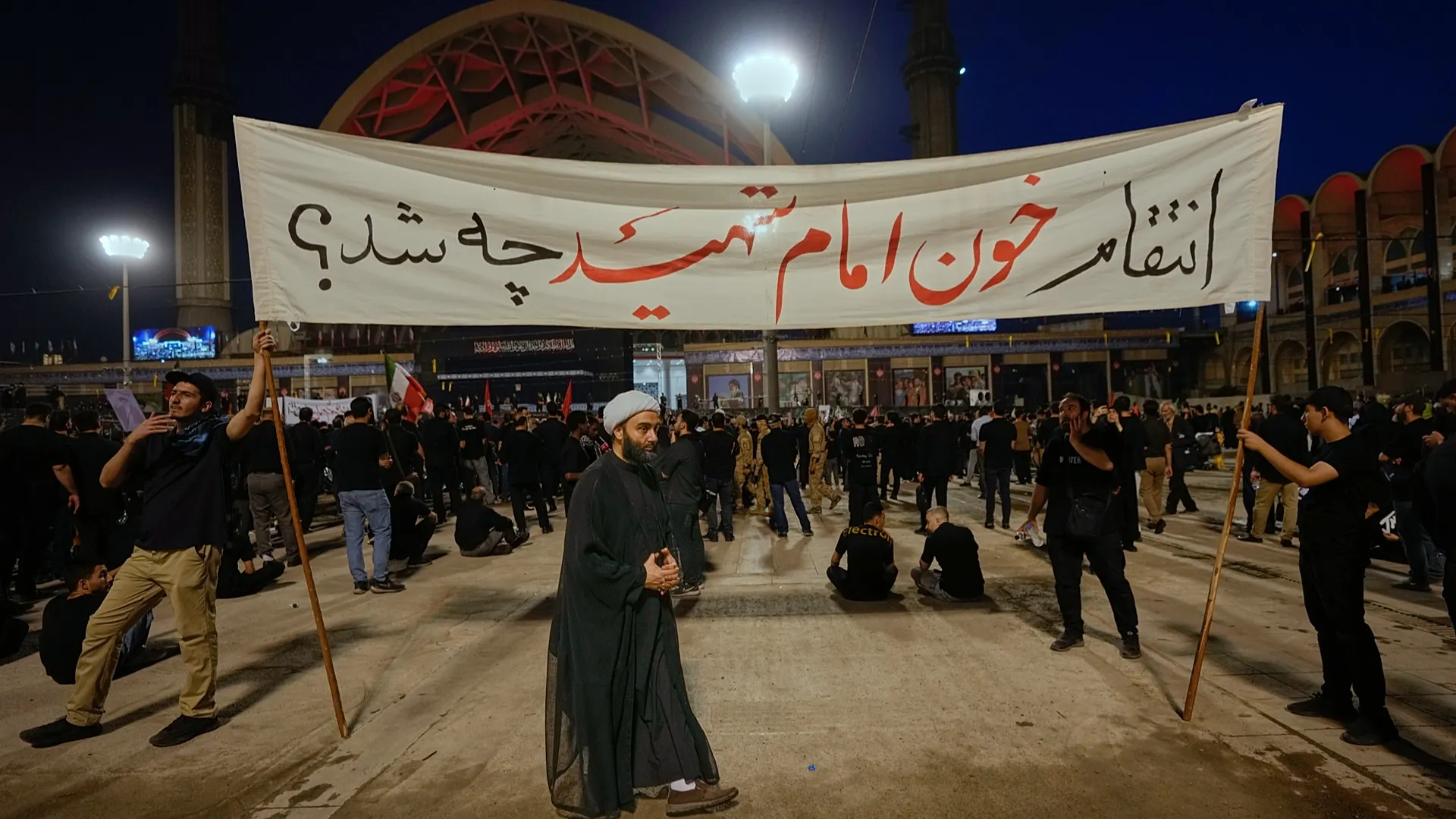
Revenge rhetoric rises as fragile diplomacy remains suspended.
TEHRAN | JULY 2026
A religious reciter participating in the funeral ceremonies for former Iranian Supreme Leader Ayatollah Ali Khamenei called for the killing of United States President Donald Trump before hundreds of thousands of mourners gathered in Tehran. Mohammad Rasouli delivered the remarks through loudspeakers shortly before funeral prayers began at the Imam Khomeini Grand Mosalla, accusing Trump of responsibility for the attack that killed Khamenei and several members of his family. The crowd responded with applause and repeated slogans against the United States and Israel. Banners and graffiti displayed around the religious complex also demanded retaliation against Trump and Israeli Prime Minister Benjamin Netanyahu.
Rasouli used the language of religious martyrdom to portray revenge as an obligation owed to Khamenei, whom supporters of the Islamic Republic frequently described as their imam and national leader. During his recitation, he questioned why the person he blamed for Khamenei’s death remained alive and urged mourners to demand punishment for those responsible for the attack. Participants responded by chanting “Death to America” and “Death to Israel,” slogans that have long formed part of the Islamic Republic’s political ceremonies. Their repetition during the funeral gave the calls for retaliation greater political and symbolic force.
A red flag bearing a traditional Shiite call for vengeance over the blood of Hussein ibn Ali was raised above the prayer complex. The symbol connected Khamenei’s death with religious narratives of sacrifice, injustice and retribution. The funeral consequently became more than a ceremony of national mourning, evolving into a public expression of anger against Washington and Israel. The threats also reflected the intensity of the political atmosphere surrounding Iran’s leadership transition.
The funeral prayers were attended by senior figures from Iran’s political, military and religious establishment. President Masoud Pezeshkian, Parliament Speaker Mohammad Bagher Qalibaf and Revolutionary Guard commander General Ahmad Vahidi were among the officials present. Three of Khamenei’s sons—Masoud, Meysam and Mostafa—also appeared publicly beside their father’s coffin after remaining largely out of view during the conflict. Their presence was interpreted as an attempt to demonstrate institutional continuity during a period of uncertainty.
Iran’s new supreme leader, Ayatollah Mojtaba Khamenei, did not attend the ceremony and has not appeared publicly since he was reportedly wounded in the same airstrike that killed his father and other relatives. The absence intensified speculation about his health and ability to assume full control of the Islamic Republic. Iranian authorities have nevertheless continued presenting the leadership transition as orderly and constitutionally managed. The funeral ceremonies formed part of several days of mourning across Tehran, Qom, Najaf, Karbala and Mashhad.
The threats emerged while Tehran and Washington were attempting to negotiate a permanent end to a conflict that has disrupted regional security and unsettled global energy markets. Trump announced that discussions had been postponed for one week because of the funeral ceremonies and stated that neither side would attack during that period. His accompanying language, however, remained confrontational and emphasized the military damage inflicted on Iran. The simultaneous declarations from Tehran and Washington showed how diplomacy continued alongside threats, accusations and warnings of renewed violence.
United States security agencies have monitored Iranian threats against Trump and other American officials for years, particularly following the January 2020 operation that killed Iranian Quds Force commander Qassem Soleimani in Baghdad. Iranian authorities have repeatedly denied organizing an assassination plot against the American president. Hard-line media and political demonstrations, however, have frequently portrayed Trump as a possible target for retaliation. The latest remarks therefore revived longstanding concerns about the security consequences of the confrontation between both governments.
The call was delivered by a religious performer rather than announced as official government policy. Its presentation during a nationally organized funeral and the positive reaction from the crowd nevertheless increased the political importance of the message. The episode demonstrated the depth of public anger among supporters of the Islamic Republic and the pressure facing Iranian authorities to respond forcefully. It also complicated diplomatic efforts intended to prevent the conflict from returning to full-scale warfare.
Mourning, retaliation and diplomacy now converge at a dangerous moment.