

 Phoenix 24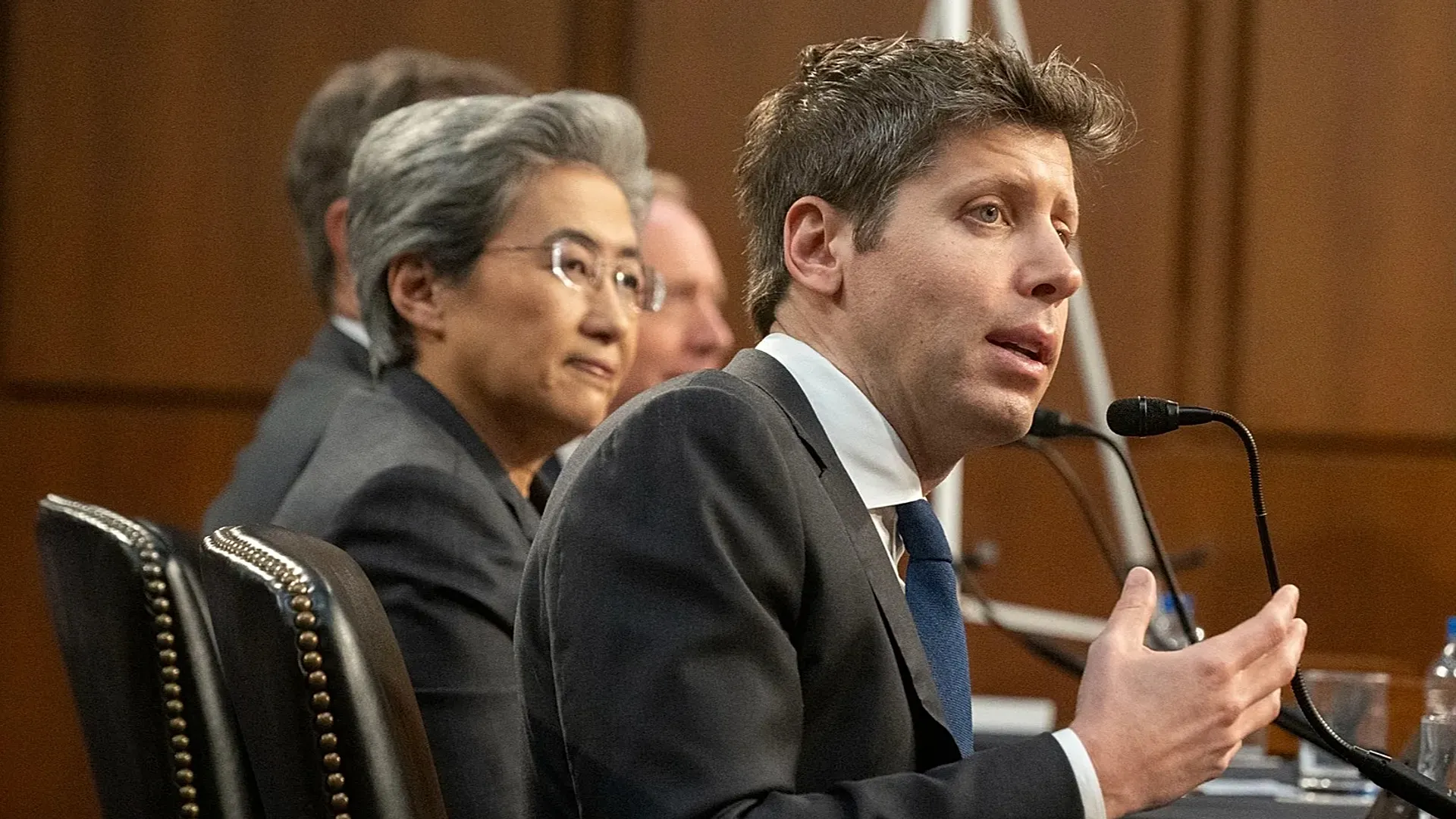
Public ownership could reshape America’s artificial intelligence economy.
WASHINGTON, UNITED STATES — July 2026.
OpenAI has reportedly discussed granting the United States government a five percent ownership stake as political scrutiny of the artificial intelligence industry intensifies in Washington. The preliminary proposal would give the public sector a direct financial interest in one of the world’s most valuable privately held technology companies. Based on OpenAI’s reported valuation of $852 billion following its March financing round, the proposed stake could be worth approximately $42.6 billion. No final agreement has been announced, and the talks remain at an early and potentially changeable stage.
Chief executive Sam Altman has presented public ownership as a mechanism for sharing the economic benefits generated by advanced artificial intelligence with ordinary Americans. The concept would involve placing the government’s equity inside a publicly controlled investment vehicle rather than treating the shares as a conventional corporate acquisition. Returns produced by increasing valuations, dividends or future share sales could theoretically support public programs or direct financial distributions. The proposal reflects growing concern that the wealth created by artificial intelligence could otherwise become concentrated among founders, investors and major technology corporations.
Altman has reportedly encouraged other prominent American artificial intelligence developers, including Anthropic, Google and Meta, to consider transferring similar five percent stakes. Such participation would create a government-owned portfolio spanning several of the companies responsible for developing the country’s most advanced models and computing infrastructure. It remains unclear whether any of those corporations would accept the proposal, and Anthropic has indicated that it has not held comparable equity discussions with the administration. Reaching a sector-wide arrangement would require negotiations over valuation, voting rights, governance protections and the treatment of future financing rounds.
The suggested structure draws inspiration from Alaska’s Permanent Fund, which invests a portion of the state’s natural-resource revenues and distributes annual dividends to eligible residents. Supporters of the comparison argue that artificial intelligence could become an economically transformative national asset similar to oil, energy infrastructure or strategic minerals. A public wealth fund could allow citizens to participate financially in productivity growth generated by automation, advanced computing and commercial AI adoption. Critics may question whether ownership in selected private companies provides the fairest or most reliable method for distributing those benefits across society.
Altman has discussed the broader idea with President Donald Trump, Commerce Secretary Howard Lutnick and Treasury Secretary Scott Bessent, according to reports surrounding the proposal. He has also engaged with Senator Bernie Sanders, whose approach to public ownership would demand a substantially larger contribution from major artificial intelligence companies. Sanders has argued that five percent would provide insufficient public participation in an industry whose technologies could displace workers and transform the wider economy. His alternative would create a much larger public fund through a one-time equity levy affecting OpenAI, Anthropic, xAI and other leading developers.
The Trump administration has acknowledged discussions about government stakes in artificial intelligence companies but has not confirmed that an agreement with OpenAI has been reached. Any transaction of this scale could require congressional authorization, detailed valuation procedures and rules governing how the government would exercise its ownership rights. Lawmakers would need to determine whether public shares should carry voting power, remain passive investments or include conditions related to safety and national security. They would also face questions about selling restrictions, financial transparency and the possible influence of political administrations over privately managed technology businesses.
For OpenAI, the proposal could strengthen relations with Washington as regulators and national-security officials take a more active interest in advanced model development. Government ownership might align the company more closely with federal priorities involving computing infrastructure, cybersecurity, defense applications and competition with foreign artificial intelligence systems. It could also provide political reassurance that part of OpenAI’s future financial success would benefit the public rather than only private investors. However, a government stake could expose the company to additional oversight and complicate decisions involving international markets, model access and controversial commercial partnerships.
The arrangement would introduce potential conflicts between the government’s responsibilities as regulator, customer, investor and national-security authority. Federal officials could be placed in the unusual position of supervising a company while also benefiting financially from its rising valuation and commercial expansion. Competitors might argue that public ownership gives OpenAI privileged access to contracts, infrastructure or regulatory decision-makers, even if formal safeguards are established. Clear separation between investment management and regulatory agencies would therefore be necessary to preserve competition and public confidence.
The reported offer illustrates how artificial intelligence policy is expanding beyond questions of privacy, safety and technical regulation into debates over ownership and economic distribution. Governments increasingly recognize that advanced models may influence employment, productivity, national security and the concentration of corporate power for decades. OpenAI’s proposal attempts to address those concerns by giving the public a direct financial position in the industry’s potential growth. Whether the plan advances will depend on political negotiations, corporate participation and the creation of governance rules capable of protecting both public value and technological independence.
Phoenix24 — Global news with clarity and perspective.