

 Phoenix 24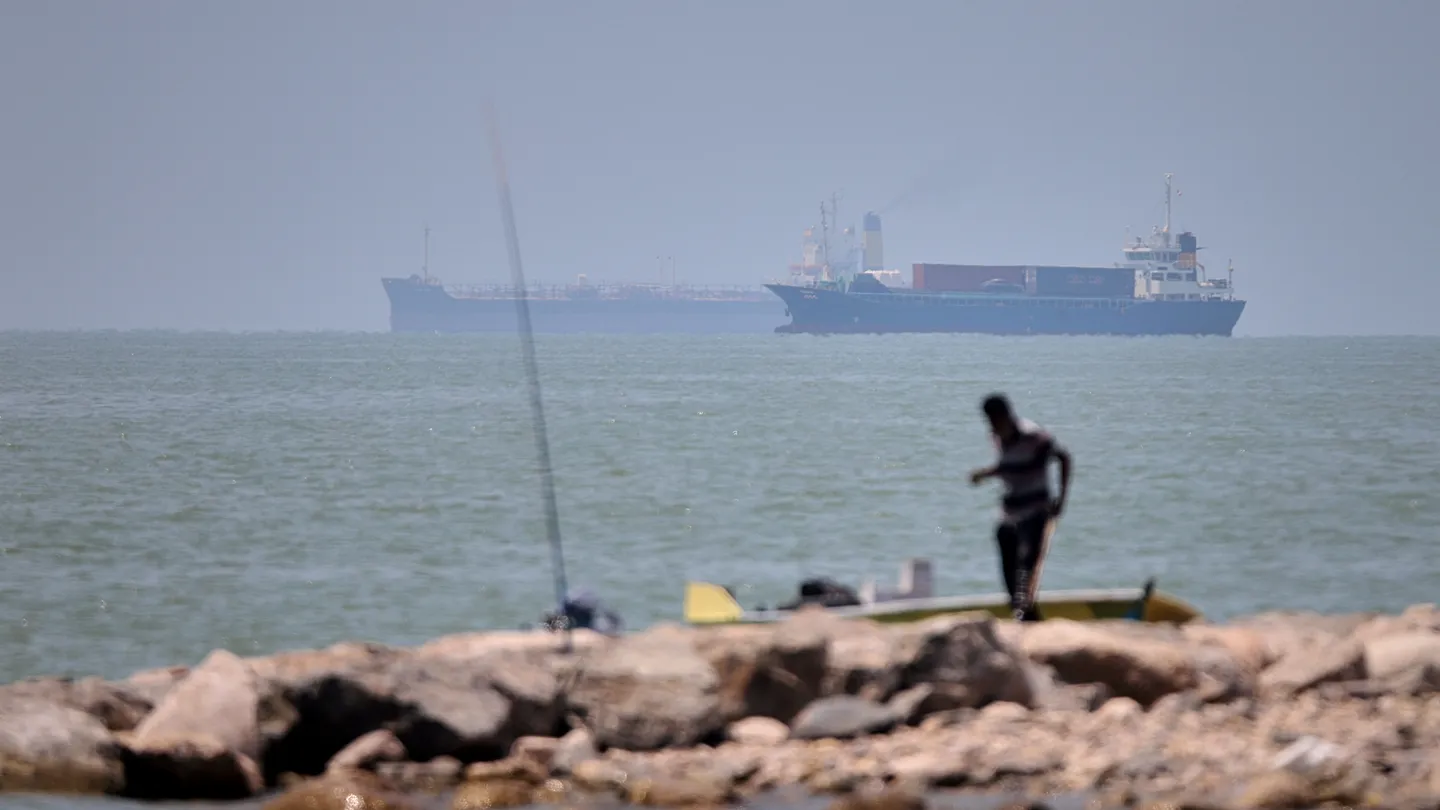
The exchange threatens a fragile peace arrangement and places commercial shipping in the Strait of Hormuz under renewed danger.
Washington, June 2026
The United States launched airstrikes against Iranian military targets after accusing Tehran of carrying out a drone attack on a commercial cargo ship near the Strait of Hormuz. The confrontation marked the most serious escalation between the two countries since they reached an interim agreement intended to end months of direct conflict and reopen one of the world’s most important maritime corridors.
United States Central Command said the operation targeted Iranian missile and drone storage facilities, launch infrastructure and coastal radar systems associated with attacks on commercial navigation. Washington described the strikes as a defensive response designed to protect international shipping and prevent additional operations against vessels crossing the region.
The military action followed an attack on a Singapore-flagged cargo ship near the Omani side of the strait. The vessel suffered damage but remained afloat, and its crew was reported safe. The incident nevertheless intensified concern among shipowners, insurers and governments because it occurred while commercial traffic was gradually returning after months of severe disruption.
American officials accused Iran of violating the interim peace arrangement reached approximately two weeks earlier. That agreement was intended to halt the four-month conflict between the two countries, establish a temporary period for diplomatic negotiations and guarantee the movement of ships through the Strait of Hormuz without politically imposed fees or restrictions.
Vice President JD Vance defended the strikes and warned that attacks would receive a military response. He said the United States remained committed to diplomacy but would not accept violence against commercial vessels or American interests in the region. His message suggested that Washington considers maritime security a fundamental condition for preserving the broader agreement.
Iran rejected the American justification and accused Washington of violating both international law and the memorandum that had suspended the conflict. The Iranian Foreign Ministry said the strikes targeted areas along the country’s southern coast and represented a renewed act of aggression against Iranian sovereignty.
Tehran subsequently announced retaliatory attacks against locations it described as connected to United States forces. Iranian officials did not initially provide a detailed list of the targets or confirm their precise locations, creating uncertainty about the scale and effectiveness of the response.
Iran’s Revolutionary Guard later claimed responsibility for attacks directed at American military interests in the Gulf. Bahrain reported an Iranian drone attack on its territory, where the United States Navy’s Fifth Fleet is headquartered. Bahraini authorities condemned the operation as a serious threat to national and regional security.
No major damage was immediately reported in Bahrain, but the attack carried considerable political significance. Gulf states have repeatedly attempted to avoid becoming direct battlefields in the confrontation between Washington and Tehran, even while hosting American military facilities and supporting freedom of navigation through the region.
The exchange continued when another tanker reported being struck by a projectile in the Strait of Hormuz. The impact damaged the vessel’s bridge, although all crew members were reported safe. Maritime authorities raised their assessment of the threat level and warned ships that the risk of additional attacks remained significant.
Iran has renewed its effort to assert greater authority over the strait, arguing that vessels should coordinate their passage with Tehran and Oman. Iranian officials have warned that ships ignoring its instructions or using routes established without its approval could face consequences.
The United States and its regional partners reject any Iranian claim to unilateral control over the waterway. Washington maintains that the strait is an international maritime passage and that commercial vessels must be able to cross without political authorization, transit charges or military intimidation.
The disagreement has become one of the central obstacles to a lasting settlement. Iran views its geographical position as an important source of strategic leverage, while the United States considers unrestricted passage essential to global energy security and the credibility of its alliances in the Gulf.
The Strait of Hormuz connects the Persian Gulf with the Gulf of Oman and the Arabian Sea. A substantial share of the world’s seaborne oil and liquefied natural gas passes through its narrow channels, making even limited disruption capable of influencing fuel prices, shipping costs and international supply chains.
Commercial traffic had begun recovering before the latest violence. Tankers carrying crude oil, refined products and fertilizer were cautiously returning to the route, contributing to a decline in oil prices and easing fears of an immediate supply crisis. The new attacks may reverse some of that progress.
Shipping companies must now reassess whether available security guarantees are sufficient. The decision involves not only the possibility of physical damage but also higher insurance premiums, delayed cargoes and increased responsibility for crews operating in a potential combat zone.
International maritime organizations had been coordinating temporary corridors for vessels seeking to leave or enter the Gulf. Some of those operations were suspended after the cargo ship attack because authorities could no longer guarantee the conditions required for an organized passage.
The confrontation also revealed the weakness of the interim agreement. Although it reduced large-scale military operations, the arrangement did not resolve the underlying disputes over maritime control, sanctions, regional military deployments and Iran’s missile and drone capabilities.
Each side now accuses the other of breaking the agreement first. Washington argues that the cargo ship attack justified a proportionate response, while Tehran says the American strikes destroyed the conditions necessary for restraint. That dispute creates space for further retaliation because both governments present their actions as defensive.
Regional governments have called for de-escalation while condemning attacks that threaten their territory or commercial interests. Bahrain, Kuwait and the United Arab Emirates have emphasized the importance of sovereignty and maritime security, reflecting concern that a renewed war could spread rapidly across the Gulf.
The immediate danger lies in the possibility of miscalculation. A drone that causes limited damage may provoke airstrikes, which may then trigger attacks against military bases, tankers or infrastructure in neighboring countries. Each response increases the number of actors and assets exposed to the conflict.
Diplomatic channels remain open, but their capacity to contain the crisis is uncertain. The interim agreement was supposed to create a 60-day period for negotiations toward a more durable peace. The latest exchange may consume political trust faster than negotiators can rebuild it.
For commercial crews crossing the Strait of Hormuz, the dispute is no longer an abstract contest between governments. Radar systems, drones, missiles and naval patrols now shape daily decisions about routes, speed and whether a voyage should proceed at all.
The United States says its strikes were intended to defend navigation rather than restart the war. Iran says its retaliation was necessary to defend sovereignty and deter further attacks. Between those competing claims, the fragile peace arrangement has become increasingly difficult to distinguish from an active confrontation.
Una tregua solo sobrevive cuando la fuerza deja de sustituir a la confianza. / A truce survives only when force stops replacing trust.