

 Phoenix 24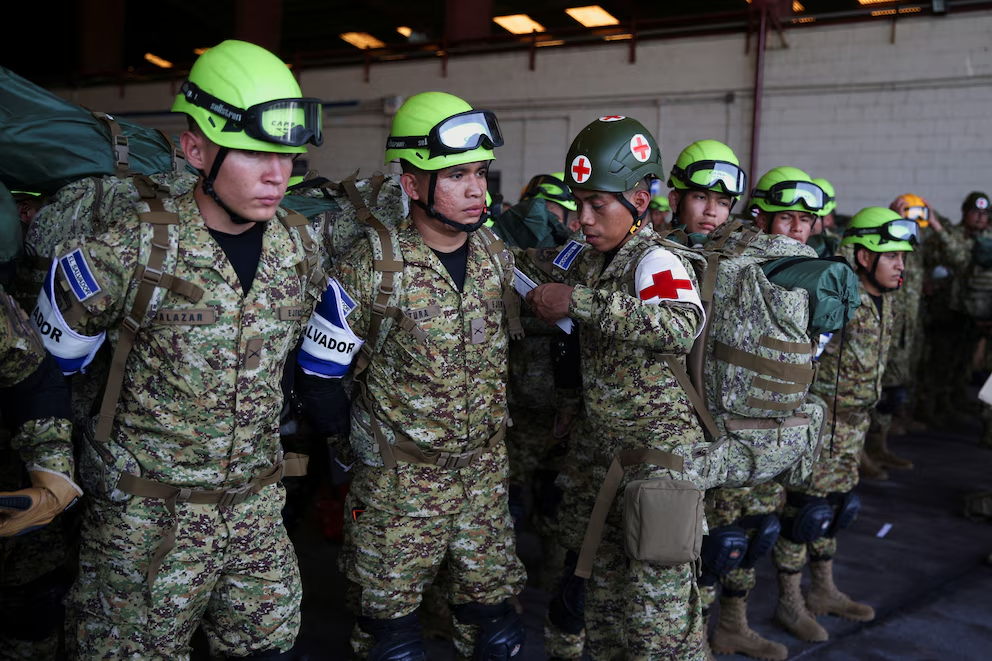
Firefighters, search dogs, drones and forensic specialists are joining a rapidly expanding humanitarian response.
Caracas, June 2026
An extensive international relief operation is taking shape in Venezuela after two powerful earthquakes caused widespread destruction across the country’s northern region. Governments, multilateral institutions and humanitarian organizations have mobilized search teams, medical personnel, specialized dogs, drones, emergency supplies and financial assistance as Venezuelan authorities continue trying to locate survivors beneath collapsed buildings.
The United Nations reported that at least 16 countries had deployed or prepared search-and-rescue teams, bringing the number of international specialists involved to more than 1,000. Switzerland, the United States, the Netherlands, France, Qatar, the Czech Republic, Germany, Jordan, the United Kingdom, Spain, Chile, Colombia, Ecuador, Italy, El Salvador and Mexico were among the countries participating in the response.
The assistance reflects the urgency created by the scale of the destruction. Rescue teams are working against time because the chances of finding people alive beneath rubble decrease as the hours pass. Repeated aftershocks, damaged roads, unstable buildings and interruptions to electricity and communications have complicated access to some of the most severely affected communities.
International crews have brought equipment designed for operations in collapsed structures. Search dogs can detect human scent in spaces that cameras and rescuers cannot immediately reach, while drones provide aerial images of damaged neighborhoods and help identify areas where access is unsafe. Engineers and structural specialists evaluate buildings before rescue personnel enter them, reducing the possibility of additional collapses.
Forensic medical teams are also being deployed to assist with the identification of victims. Their work becomes particularly important when conventional identification is difficult because of severe injuries, damaged documentation or the number of people affected. The process also provides families with verified information in an emergency where uncertainty can persist for days.
The United Nations humanitarian office released $15 million from its Central Emergency Response Fund to support immediate operations in Venezuela. The funding is intended to help provide shelter, food, water, medical care and other urgent assistance. The World Bank Group also expressed support for Venezuela and began assessing possible forms of assistance.
The International Federation of Red Cross and Red Crescent Societies launched an emergency appeal for 50 million Swiss francs, equivalent to approximately $61 million. It also released two million Swiss francs from its disaster-response fund and dispatched 17 tons of humanitarian supplies from its regional logistics center in Panama.
The United States announced $150 million in humanitarian assistance. Of that total, $100 million was allocated to United Nations humanitarian operations in Venezuela, while another $50 million was directed toward organizations working inside the country. Two specialized urban search-and-rescue brigades from the Fairfax County Fire and Rescue Department in Virginia and the Los Angeles County Fire Department in California were also deployed.
India sent two Air Force aircraft carrying more than 35 tons of medical supplies, medicines and emergency equipment. The contribution demonstrated the geographical reach of the response, with assistance arriving not only from Venezuela’s neighbors and traditional Western partners but also from governments in Asia and the Middle East.
Spain committed one million euros through multilateral organizations operating in Venezuela. A Spanish Air Force A330 transported 59 members of the Military Emergency Unit, rescue personnel from the Community of Madrid, Army engineers, eight canine units and a team from the Spanish Agency for International Development Cooperation. The aircraft also carried first-aid materials.
Switzerland sent approximately 80 specialists and 18 tons of equipment, including trained search dogs. Swiss rescue teams have extensive experience in collapsed-structure operations and frequently participate in international disaster missions. Their equipment allows them to detect movement, sound and signs of life beneath heavy debris.
Mexico mounted one of the largest national deployments. Its assistance included 18 canine teams, 4.4 tons of tools and rescue equipment, 2.7 tons of medical supplies and two aircraft carrying humanitarian aid. A total of 261 members of the Mexican Army, Air Force and National Guard were assigned to the mission.
Brazil prepared a military cargo aircraft carrying 36 firefighters, four civil-defense specialists and four telecommunications experts. The contingent also included equipment for establishing a field hospital. Telecommunications personnel are particularly important when damaged networks prevent authorities from coordinating rescue teams or communicating with isolated communities.
Chile, one of the countries with the world’s greatest experience in major earthquakes, initially deployed 37 rescue specialists and announced that another 10 would follow. Their expertise includes working in unstable structures, coordinating urban search operations and evaluating the risks created by aftershocks.
Argentina offered rescuers, military personnel, aircraft, emergency physicians, ambulances, nurses and structural-collapse specialists. It also placed drones, four urban search-and-rescue brigades and military canine teams at Venezuela’s disposal. The diversity of the proposed assistance reflects the multiple needs created by a disaster that has damaged housing, hospitals, roads and public services simultaneously.
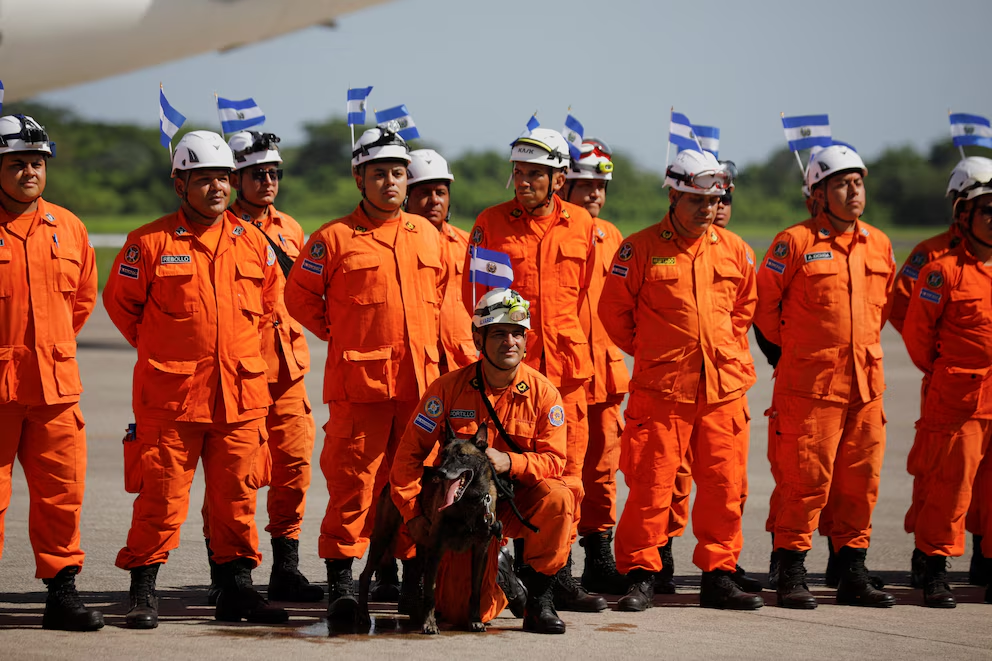
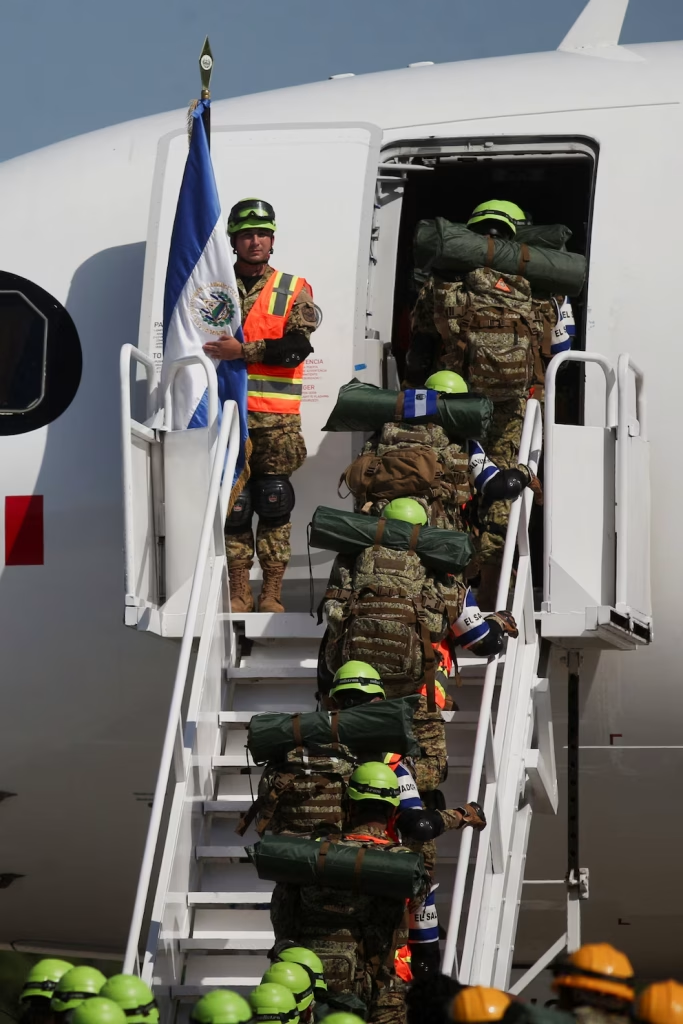
Colombia sent an initial team of 63 urban search-and-rescue specialists. El Salvador contributed rescuers, medical personnel and trained dogs, while the Quito Fire Department in Ecuador deployed 47 rescuers and two canine units. Smaller national contingents can still provide decisive assistance when they contain specialized personnel capable of working in specific rescue zones.
Venezuelan communities abroad have also organized support. In Ecuador, members of the Venezuelan diaspora created collection centers for water, clothing, nonperishable food and medical supplies. These initiatives complement institutional assistance and allow expatriate communities to contribute directly to relief efforts.
Coordination remains one of the central challenges. International teams must be assigned to priority zones, transported safely and integrated with Venezuelan emergency services. Each contingent arrives with its own equipment, procedures and communication systems, making centralized organization essential to avoid duplication or delays.
The relief operation must also move beyond the immediate search for survivors. Thousands of displaced people require temporary shelter, clean water, food, medicine and psychological support. Hospitals treating large numbers of injured patients need additional supplies, while damaged power and water networks must be restored to prevent a secondary public-health crisis.
The earthquake response has brought together governments with sharply different political positions toward Venezuela. Humanitarian assistance has crossed ideological divisions as countries focused on rescue and medical needs. That cooperation will be tested as the operation moves from emergency response toward reconstruction.
Venezuela will eventually require long-term international support to rebuild homes, hospitals, roads and public infrastructure. The immediate priority, however, remains locating survivors and protecting communities exposed to damaged buildings and continued seismic activity.
Firefighters, dogs, drones, medical teams and financial commitments cannot reverse the disaster, but they can reduce its human consequences. In the first critical days after the earthquakes, international solidarity is being measured not through declarations, but through the people and equipment arriving where they are needed most.
La solidaridad internacional se demuestra sobre el terreno. / International solidarity is proven on the ground.