

 Phoenix 24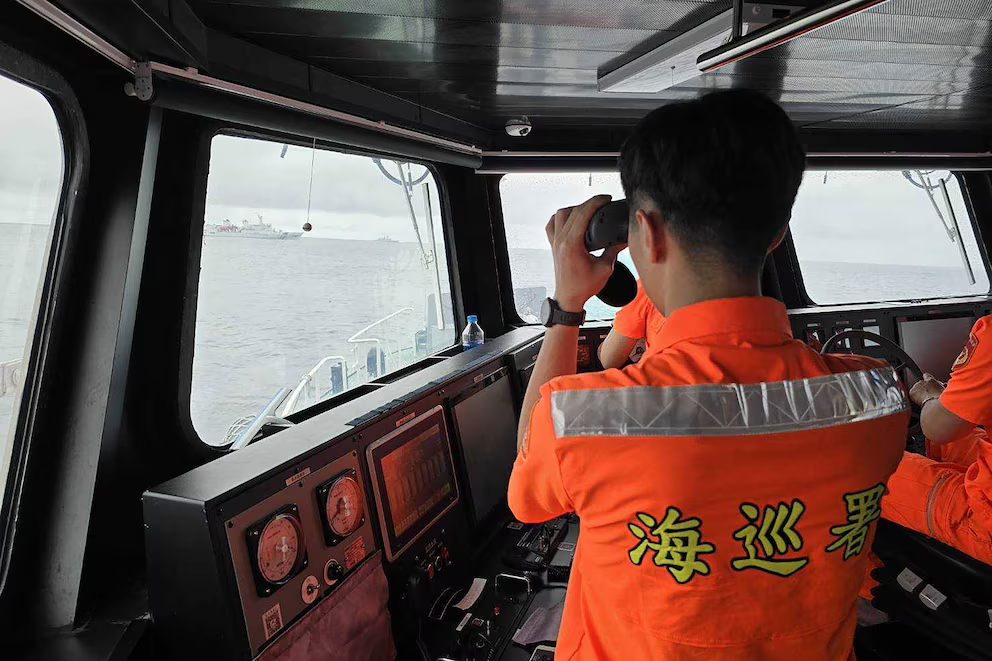
Civilian patrols and seabed mapping serve a deeper strategic purpose.
Taipei, June 2026
China is intensifying maritime pressure east of Taiwan through coast guard patrols, research vessels and seabed-mapping operations that blur the line between civilian activity and military preparation. Beijing describes these missions as legitimate law-enforcement and scientific work conducted within waters it claims as its own. Taiwan and several Western governments see a more calculated objective: establishing the appearance of Chinese jurisdiction, gathering intelligence and rehearsing methods capable of isolating the island without immediately beginning a conventional war.
The eastern side of Taiwan carries exceptional strategic importance because it opens directly into the Pacific Ocean. Unlike the narrower Taiwan Strait to the west, these waters provide greater depth and maneuvering space for submarines, aircraft carriers and international naval forces. They would also be crucial for any effort by the United States or its regional partners to support Taiwan during a crisis. Expanding regular Chinese activity in this area therefore changes the pressure surrounding the island.
Earlier in June, Chinese coast guard vessels conducted a five-day operation east of Taiwan and communicated directly with foreign commercial ships. According to Taiwanese authorities, the patrols requested information including vessel origins, destinations and crew numbers. The ships involved carried flags from countries such as Singapore, Liberia and Benin. Beijing presented these contacts as maritime management, but Taiwan viewed them as an attempt to impose Chinese authority over international shipping routes.
The operation stopped short of physically boarding or seizing the merchant vessels. That restraint is consistent with gray-zone strategy, which seeks political and operational advantages while remaining below the threshold that would normally trigger a military response. Radio instructions, warnings and jurisdictional claims can gradually normalize Chinese presence without producing the dramatic images associated with a blockade. Each uncontested encounter may help Beijing strengthen the argument that it already administers surrounding waters.
China has linked the patrols to maritime discussions between Japan and the Philippines, accusing both countries of addressing boundaries in areas Beijing considers Chinese territory. Its Foreign Ministry argues that coast guard activity east of Taiwan protects national sovereignty and regional order. That explanation depends on China’s claim that Taiwan forms part of its territory and that surrounding maritime rights therefore belong to Beijing. Taiwan rejects that premise and maintains that the People’s Republic of China has never governed the island.
Research ships operating in the same region add a more technical dimension. Seabed mapping records depth, underwater terrain, currents, salinity and other environmental characteristics. Such data has legitimate scientific and commercial value, including navigation, telecommunications and geological study. It is also indispensable for submarine warfare, underwater surveillance and the placement of sensors.
The continental shelf drops rapidly east of Taiwan into deep Pacific waters. That environment can provide submarines with routes for concealment, patrol and approach. Accurate maps allow naval planners to understand underwater ridges, channels and acoustic conditions that affect how submarines travel and how easily sonar systems can detect them. The same information can support both Chinese submarine operations and efforts to track American or allied vessels.
Beijing has expanded its submarine fleet and continues developing nuclear-powered attack and ballistic-missile submarines. Access from coastal bases to the deeper Pacific is strategically valuable because waters inside the first island chain are comparatively confined and monitored. Taiwan occupies a central position in that geographic barrier, which stretches through Japan, Taiwan and the Philippines. Greater familiarity with the seabed east of the island could help Chinese submarines move toward the wider ocean with reduced vulnerability.
Mapping also supports anti-submarine warfare. A detailed environmental database helps operators distinguish the acoustic signature of a vessel from background underwater noise. It can guide the placement of hydrophones, autonomous vehicles and fixed detection systems. During conflict, such knowledge could assist China in identifying submarines attempting to approach Taiwan or threaten Chinese naval forces from the Pacific side.
The combination of coast guard vessels and research ships is particularly significant. Coast guard patrols create a legal and administrative narrative, while scientific vessels gather information with potential military utility. Fishing fleets and other civilian platforms can further increase the volume of Chinese activity without requiring constant deployment of naval warships. Together, these assets can prepare the operating environment while preserving plausible deniability.
Taiwanese officials describe this pattern as cognitive and legal warfare as much as maritime pressure. Beijing can publish patrol routes, official statements and images intended to portray its presence as routine governance. If repeated frequently, those messages may influence foreign shipping companies, insurers and governments to behave cautiously around waters claimed by China. The strategic objective is not only physical control but acceptance of Chinese authority.
A possible quarantine or blockade would likely develop through similar incremental measures. China could require ships entering Taiwanese ports to register through its customs systems, submit cargo information or accept inspections by the coast guard. It could then increase interference gradually by delaying, redirecting, boarding or seizing selected vessels. Framing those actions as law enforcement rather than warfare would complicate the response of Taiwan and its partners.
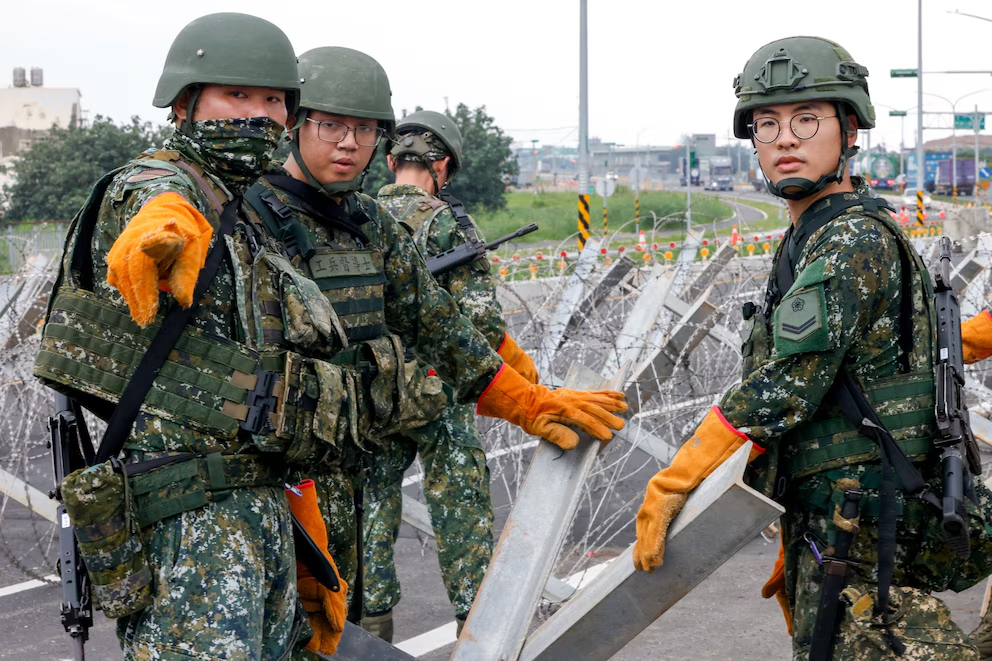
Taiwan has already conducted tabletop exercises based on such a scenario. Its government examined how to respond if Beijing demanded prior authorization for maritime traffic and used coast guard units to disrupt resupply. The exercise combined Taiwanese coast guard action, military readiness and diplomatic messaging. Its purpose was to prepare for coercion that may not begin with missiles or an amphibious assault.
The United States, Britain, France and Germany have expressed concern about the recent Chinese operations. Their criticism focused on regional stability, freedom of navigation and opposition to unilateral changes imposed through coercion. Beijing responded angrily, maintaining that foreign governments had no right to interfere. The diplomatic exchange illustrates how activity conducted by nominally civilian vessels can generate consequences normally associated with military escalation.
China’s newest aircraft carrier, Fujian, has also transited the Taiwan Strait amid the broader increase in pressure. The movement reinforces the message that coast guard and research missions do not occur separately from military power. Civilian, paramilitary and naval capabilities form complementary layers of the same strategic campaign. One asserts jurisdiction, another gathers data and the third provides force.
The immediate purpose may be to test Taiwan’s reactions and measure international willingness to object. The longer-term objective appears broader: creating the operational knowledge and legal narrative required to control access to the island. Seabed maps prepare the underwater environment, while civilian patrols rehearse authority over the surface. Neither activity alone constitutes an invasion, but together they can reduce the distance between peacetime pressure and an enforceable maritime cordon.
China’s strategy east of Taiwan is therefore not limited to scientific research or routine policing. It is a gradual effort to make Chinese presence permanent, resistance more difficult and future coercion appear less abrupt. The contest is unfolding through radio calls, survey instruments and patrol routes before it reaches the level of open combat. In gray-zone strategy, preparation becomes power long before the first shot is fired.
Lo cotidiano también puede ser estratégico. / The ordinary can also be strategic.