

 Phoenix 24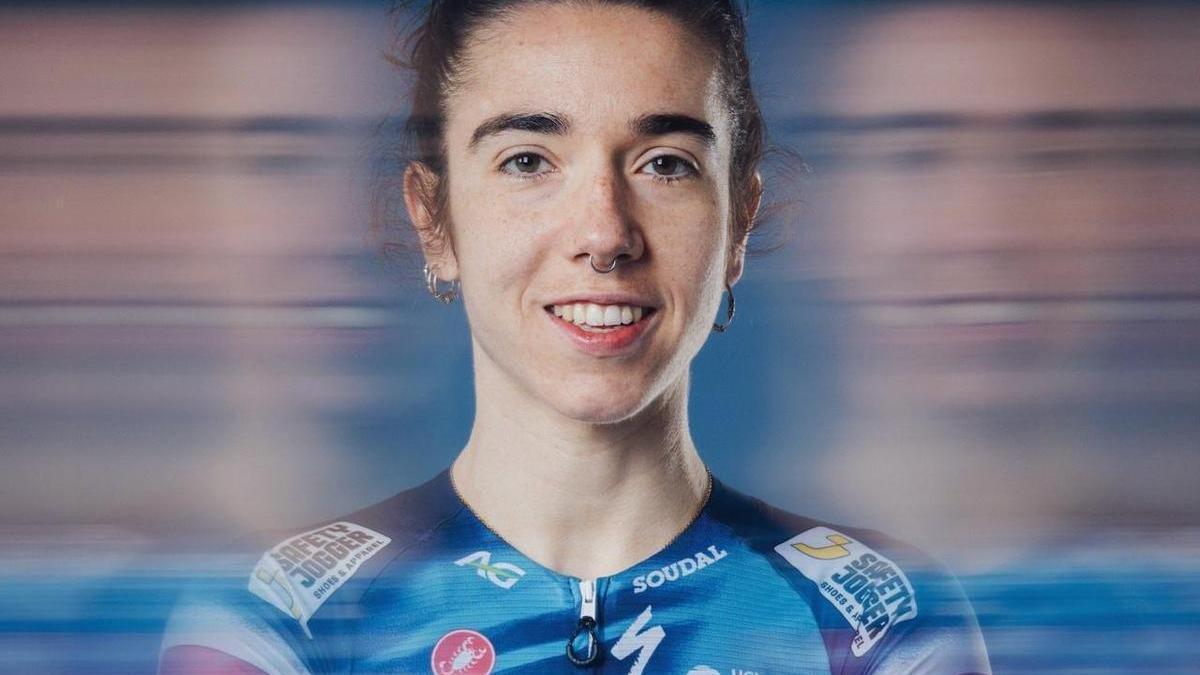
The Catalan specialist again proved untouchable against the clock.
Sabiñánigo, June 2026
Mireia Benito claimed her fourth consecutive Spanish elite women’s individual time trial championship after dominating the national race in Sabiñánigo. The Catalan rider completed the demanding 18.5-kilometer course in 25 minutes and 59 seconds, becoming the only competitor to break the 26-minute barrier. Sara Martín finished second, while Sandra Alonso completed the podium in third place. The victory confirmed Benito as the leading Spanish specialist in the discipline.
The championship was contested on a technical route in the province of Huesca, where changes in gradient required riders to manage both power and pacing carefully. Unlike a flat time trial decided almost entirely by sustained speed, the Sabiñánigo course demanded repeated adjustments in rhythm. Riders needed to conserve enough energy for the final section without losing time on the earlier climbs and faster segments. Benito executed that balance more effectively than any of her rivals.
Her finishing time established an average speed of more than 42 kilometers per hour. That figure was especially significant because the route did not offer uninterrupted flat terrain or ideal conditions for maintaining constant aerodynamic efficiency. Benito combined an aggressive opening with enough control to avoid weakening during the closing kilometers. Her performance left no doubt about the identity of the strongest rider on the day.
Sara Martín delivered one of the best rides of her career in the discipline to secure the silver medal. The Movistar rider remained competitive throughout the course and resisted a close challenge from Sandra Alonso. Martín ultimately finished six seconds ahead of the third-place rider, underlining how tightly contested the positions behind Benito became. Her result provided further evidence of her versatility across both time trials and road races.
Alonso’s bronze medal carried particular emotional significance because she returned to national championship competition after maternity. Her podium demonstrated that she had regained a high competitive level despite the physical and professional demands associated with returning to elite cycling. Crossing the line among the three fastest riders represented more than a statistical result. It marked the successful reactivation of a career interrupted by one of the most demanding transitions in professional sport.
The race was also shaped by the participation of Paula Blasi, who competed despite suffering a serious training accident the previous day. The young rider had been considered one of the principal contenders before crashing at high speed during preparation. She arrived at the start with visible injuries and pain around her ribs but decided not to withdraw. Her final position did not reflect her normal competitive potential, yet completing the race became an achievement in itself.
Blasi’s decision illustrated the tension riders often face between physical caution and the desire to contest a national championship. Time trials demand a sustained maximal effort that leaves little opportunity to protect an injured area. Any difficulty breathing, holding the aerodynamic position or transferring power can produce substantial time losses. Her participation therefore required both determination and careful management of pain.
Benito’s latest title extended a run that began in 2023 and continued through the following three national championships. That consistency is particularly difficult in an individual time trial because success depends entirely on personal performance rather than team tactics. There is no peloton to provide shelter, no teammate to control attacks and no opportunity to recover behind another rider. Each competitor races alone against the clock under identical competitive rules.
Winning four consecutive titles also reflects Benito’s technical specialization. Time trial success requires far more than physical strength. Riders must optimize aerodynamics, equipment setup, cadence, cornering technique and the distribution of effort across the complete course. Small inefficiencies can accumulate into decisive losses over less than half an hour of competition.
Benito has developed those details through years of work at national and international level. She represented Spain at the Paris 2024 Olympic Games and has competed in major stage races and world championship events. Those experiences exposed her to longer and more technically advanced international time trials. Returning to the Spanish championships, she brought both physical preparation and tactical knowledge acquired against the strongest specialists in the world.
The national title gives Benito the right to wear Spain’s distinctive champion’s jersey in individual time trials until the next edition of the championships. The garment carries practical and symbolic value because it makes the national champion immediately recognizable in international competition. It also rewards a full year of preparation for an event decided in less than 30 minutes. For riders and teams, the jersey offers prestige, visibility and commercial importance.
Her victory occurred during a period in which Spanish women’s cycling continues developing greater competitive depth. The presence of Martín, Alonso, Blasi and other emerging riders created a field capable of challenging the established champion. Although Benito again won convincingly, the close contest for the remaining medals demonstrated that the national discipline is becoming more competitive. Greater depth can strengthen Spain’s options in European, world and Olympic events.
The Sabiñánigo championships included junior, under-23 and elite competitions across several days. The region’s mountainous geography provided routes designed to test complete riders rather than specialists limited to flat courses. The individual time trials formed the opening phase before the road races, where tactical cooperation and endurance would become more important. Several riders, including Martín and Blasi, planned to continue competing in the road championship.
For Benito, the victory allowed celebration but little time for complete relaxation. The national road race offered a different challenge in which she would face attacks, team strategies and prolonged climbing. Her strength against the clock does not automatically guarantee the same dominance in a mass-start event. Nevertheless, the title confirmed that her condition was strong entering the remainder of the championships.
The result also places Benito closer to the most successful Spanish women in the history of the event. Dori Ruano remains the record holder with seven national time trial titles, while several riders have won four. Benito’s uninterrupted sequence now places her within that distinguished group. At 29, she may still have opportunities to extend the streak and challenge the historical record.
Her latest performance was defined by precision rather than drama. She established the fastest rhythm, maintained it across the entire course and finished below a time no rival could match. The clock provided the clearest possible verdict. Mireia Benito remains Spain’s dominant woman against time.
La precisión convierte segundos en historia. / Precision turns seconds into history.