

 Phoenix 24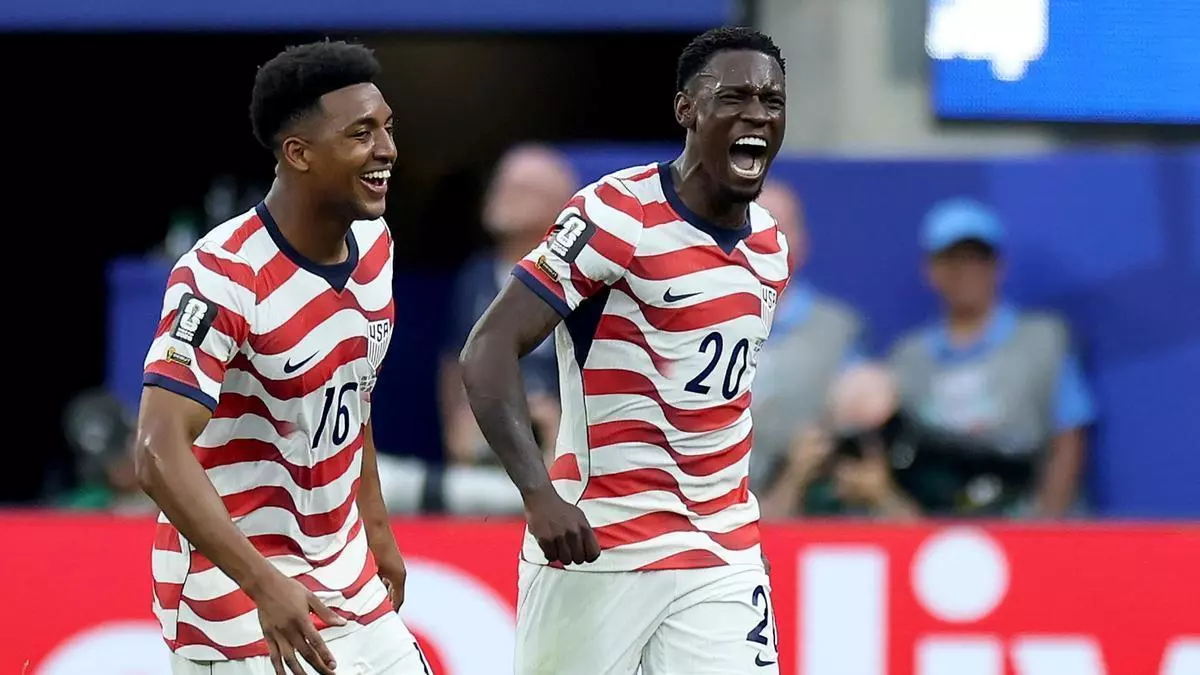
A missed flight created an international football destiny.
LOS ANGELES, United States | June 2026
Folarin Balogun has emerged as one of the defining figures of the United States’ 2026 World Cup campaign, but his eligibility to represent the host nation began with an unexpected event before he was born. His Nigerian parents were living in London when his pregnant mother traveled to New York to visit relatives. She was unable to board her planned return flight because of the advanced stage of her pregnancy. Balogun was subsequently born in Brooklyn on July 3, 2001.
The family returned to England shortly afterward, and Balogun grew up in London with little direct connection to the country listed on his birth certificate. His childhood, education and early football development were primarily British. He joined Arsenal’s academy at a young age and progressed through one of England’s most respected youth systems. For years, the United States appeared to be only one of several possible international identities.
Balogun was eligible to represent three countries. His birthplace qualified him for the United States, his upbringing allowed him to play for England and his parents made him eligible for Nigeria. He represented England at several youth levels and also appeared briefly for the United States under-18 team. The competition for his senior international commitment intensified as his club career began attracting attention.
His breakthrough arrived during the 2022-23 season while on loan from Arsenal at Stade de Reims. Balogun scored more than 20 goals in France and became one of the most productive young forwards in Europe’s major leagues. His pace, movement and ability to finish with either foot transformed him from a promising academy player into an international recruitment target. England, Nigeria and the United States all had reasons to pursue him.
The United States offered something the others could not guarantee: an immediate central role. The national team had struggled for years to develop a consistent specialist striker capable of converting possession into goals. During the 2022 World Cup, the Americans created promising attacks but scored only three times in four matches. Balogun represented a possible solution before he had even played a senior international game.
American officials and players made an intense effort to convince him. During a visit to the United States in 2023, supporters filled his social media accounts with messages asking him to choose the country of his birth. He also spent time with members of the national team structure and attended American sporting events. The attention made him feel that the United States genuinely wanted to build around him.
FIFA approved his international switch in May 2023. Balogun made his senior debut the following month and quickly scored his first goal in the Concacaf Nations League final against Canada. That performance provided an early indication that his playing style could address one of the team’s greatest weaknesses. He later became a regular part of the attacking group.
His club career also required difficult decisions. Arsenal had developed him but could not guarantee enough first-team opportunities because of competition within the squad. Balogun chose to leave rather than remain a secondary option, joining Monaco in 2023. The transfer reflected the same desire for responsibility that influenced his international choice.
The 2026 World Cup has given that decision its largest stage. Balogun scored twice as the United States defeated Paraguay 4-1 in its opening match. The performance made him the first American player since the inaugural 1930 tournament to score multiple goals in a World Cup game. It also turned his unusual birth story into one of the competition’s most discussed narratives.
His movement against Paraguay demonstrated why the United States recruited him so aggressively. Balogun attacked spaces behind the defense, combined with teammates and finished opportunities with the composure expected from a specialist center forward. He did not need to dominate possession to influence the match. His presence gave the American attack a direct threat that forced defenders to retreat.
The United States followed its opening victory with a 2-0 win over Australia, securing qualification for the knockout stage and strengthening its position at the top of Group D. Balogun remained an important reference even when he did not score. His runs created space for teammates and prevented opponents from defending too far forward. The team’s success has reinforced the belief that he supplied a missing piece.
Balogun describes his identity as broader than one country. He was born in the United States, raised in England and shaped by a Nigerian family. Rather than treating those influences as competing loyalties, he has presented them as parts of the same personal history. His experience reflects a United States squad composed of players with connections to several countries and football cultures.
That diversity has become one of the team’s central characteristics. Several American internationals were born abroad, raised in other nations or eligible for multiple national teams. Their backgrounds challenge narrow definitions of what an American footballer should look or sound like. Balogun’s story is especially striking because a temporary travel problem determined the passport that later changed his international career.
The striker has also expressed pride in representing the country hosting the tournament. Playing a World Cup in American stadiums gives his decision a significance that would have been difficult to imagine when he switched allegiance three years earlier. Every goal strengthens the connection between a player raised abroad and supporters who now regard him as one of their leading figures. His success has made the accident of his birthplace feel almost predetermined.
The story also reveals how modern international football depends on migration and dual nationality. National federations monitor players across continents and compete to convince them that a particular sporting project offers belonging and opportunity. These decisions can involve family history, emotional identity and professional ambition simultaneously. Balogun chose the United States because all three factors eventually aligned.
His immediate challenge is to maintain his form as the tournament becomes more demanding. Opponents will study his movement more closely, while the pressure surrounding the host nation will increase during the knockout rounds. A yellow card also requires careful management to avoid suspension. The journey that began with a missed flight has now reached its most consequential stage.
Balogun’s rise is not a miracle in the sporting sense because it rests on years of training, difficult career choices and sustained performance. The miraculous element lies in the coincidence that made his American career possible. Had his mother boarded that flight back to London, the United States might never have acquired the striker now leading its attack. One unexpected delay changed the future of a family and, decades later, the ambitions of a national team.
Destiny sometimes begins with a journey that never happened. / El destino a veces comienza con un viaje que nunca ocurrió.