

 Phoenix 24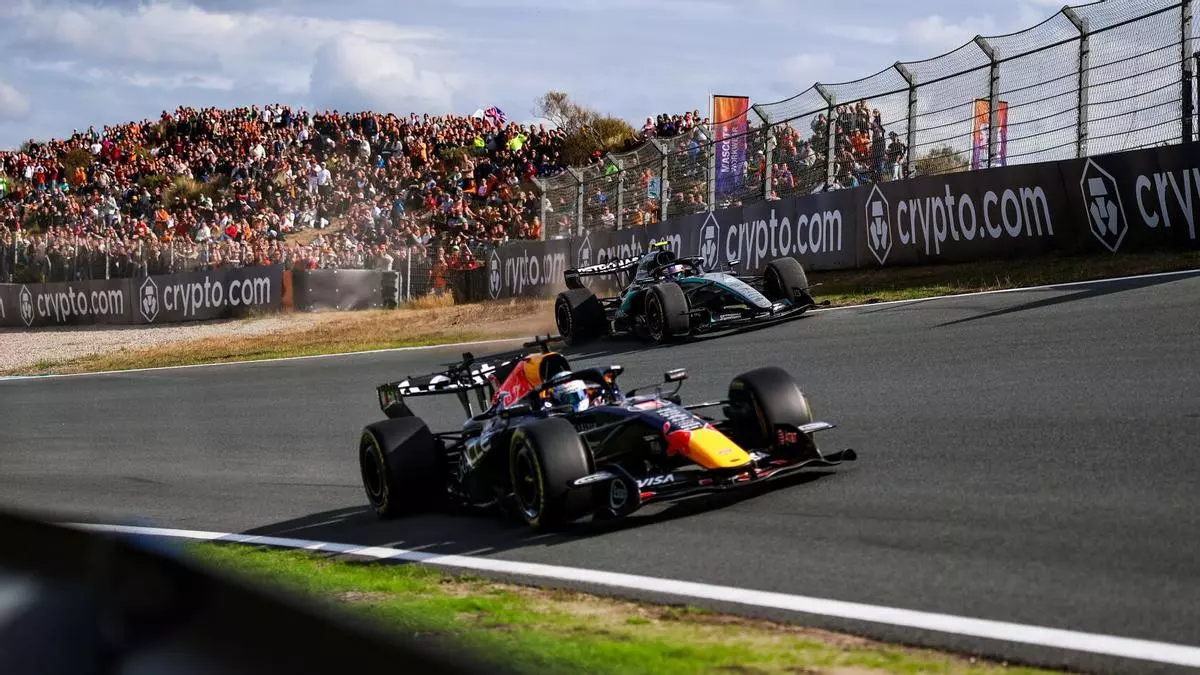
The technical ranking contrasts sharply with results on the track.
PARIS, FRANCE
The FIA has confirmed that Red Bull-Ford remains Formula One’s benchmark manufacturer for internal-combustion engine performance following the second evaluation under the Additional Development and Upgrade Opportunities system. Known as ADUO, the mechanism is designed to help manufacturers reduce significant power deficits during the first seasons of the championship’s new engine regulations.
Data collected between the Australian and Hungarian Grands Prix placed Mercedes between two and four percent behind the Red Bull-Ford combustion engine. Audi, Ferrari and Honda were classified more than four percent below the benchmark. The resulting concessions allow Mercedes one additional engine homologation during 2026 and another in 2027, while Audi, Ferrari and Honda receive two opportunities in each season.
Red Bull-Ford receives no additional development allowance because its combustion engine establishes the reference level. That result appears surprising because Red Bull has not converted its technical ranking into race victories, while Mercedes-powered cars have dominated much of the season. Ferrari has secured the remaining wins, further complicating the apparent relationship between the FIA’s assessment and competitive performance.
The explanation lies in what ADUO measures. Its calculation examines only the V6 internal-combustion engine through parameters including torque, engine speed and estimated effect on lap time. It does not rank the complete hybrid power unit, electrical energy deployment, battery performance, reliability, chassis efficiency, aerodynamics or vehicle setup.
Under the 2026 regulations, the combustion component provides approximately 53 percent of the hybrid unit’s power. A manufacturer can therefore possess the strongest combustion engine while remaining weaker in electrical performance or overall vehicle integration. Conversely, Mercedes may qualify for an additional combustion-engine modification while maintaining an advantage through its complete power-unit package and the competitiveness of the cars using it.
The permitted changes can begin with the Italian Grand Prix, although manufacturers cannot necessarily produce effective upgrades immediately. Redesigning components, validating reliability and introducing a new homologation can require months of engineering and testing. Unused opportunities expire within their corresponding season.
The system remains controversial because it grants development freedom according to one part of the power unit rather than championship position or total performance. The FIA maintains that its analysis is technically rigorous and must remain partly confidential to prevent manufacturers from manipulating the evaluation. A final assessment is expected after the Mexican Grand Prix, creating another opportunity for the competitive hierarchy to change before the season ends.
Detrás de cada dato, la intención. / Behind every data point, the intention.